
Kathmandu, November 8
“The people of Nepal have been feeling that justice is dead. How much can you contribute to stopping the over-politicisation and political interference in the judiciary, and how would you do it?”
That was the question put to Gokarna Dangi, one of the candidates for appointment as a Supreme Court justice, during his parliamentary hearing. Nepali Congress lawmaker Arjun Narsingh KC raised concerns about political interference in the judiciary, the growing backlog of cases and structural problems affecting the delivery of justice.
Dangi’s response was measured. He acknowledged that public confidence in the judiciary had weakened and that even judges sometimes felt that justice was no longer being served.
“The feeling that justice is dead is, in fact, something we sometimes share,” he said. “We need to be conscious of whether people are actually receiving justice, whether justice is being delayed and whether those entrusted with public service are genuinely serving the people.”
That was just one example of the questions and answers that sought to expose the state of the judiciary during the hearings. Lawmakers and the proposed justices themselves offered glimpses of the problems facing the courts.
Citizens seeking justice often have to attend hearings for years without knowing when their cases will be resolved. They remain uncertain about whether the verdict will be in their favour and, even if it is, whether it will ever be implemented.
Allegations of middlemen operating inside courts, collusion between judges and intermediaries, politically influenced appointments and the buying and selling of justice through money have moved beyond public speculation. These concerns were also examined during the parliamentary hearings.
During the proceedings, lawmakers repeatedly questioned the nominees about the judiciary’s shortcomings. They asked about delays in delivering justice, weak enforcement of court decisions, judges’ connections with intermediaries, political influence over appointments and concerns about judges’ own conduct.
The nominees did not dismiss these concerns. Some acknowledged the decline in the judiciary’s credibility, others called for investigations into corruption and the activities of intermediaries, while some pledged to resign rather than remain in office if they failed to uphold judicial standards.
KC also asked Dangi why judges in the past had been able to rule against decisions made by the king in the interest of justice, while today’s judges seemed unable to do the same.
“Judges must look at what justice requires,” Dangi replied. “My firm conviction is that judges must never abandon the interests of the people, the foundations of justice, the Constitution or the law.”
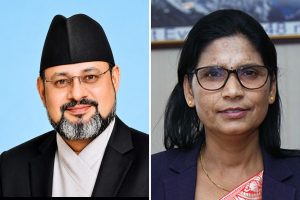
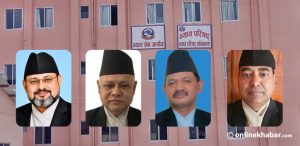
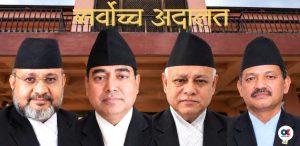
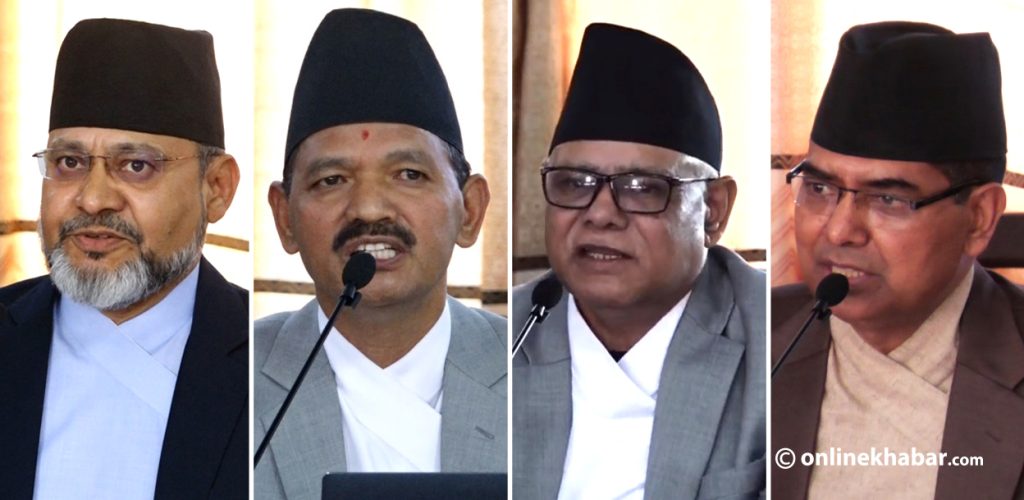
The hearings involved four nominees for the Supreme Court — Dangi, who is serving at the temporary bench of the High Court in Birgunj and is currently on deputation to the Supreme Court; Chandra Bahadur Saru of the High Court Patan; Chief Judge Dr Ratna Bahadur Bagchand of the High Court Pokhara; and Janak Pandey of the Hetauda bench of the High Court Patan.
The Judicial Council recommended the four on October 6, 2026. The Parliamentary Hearing Committee invited complaints against them on October 26. By the October 4 deadline in the Nepali calendar, 13 complaints had been filed. The committee opened the complaints and held discussions with the complainants the following day. It also conducted hearings for Saru and Dr Bagchand on the same day.
The condition of the judiciary again took centre stage during Friday’s hearings, with lawmakers raising questions about intermediaries, pressure and factionalism within the courts.
Drawing on the Inam Sapkota case, lawmakers questioned the judiciary’s credibility, enforcement of verdicts, and the impartiality and accountability of judges. The nominees largely acknowledged the concerns and pledged to work towards reforms.
The same pattern continued on Saturday.
According to Rastriya Swatantra Party lawmaker Madhu Kumar Chaulagain, anyone approaching a court in search of justice first encounters one hearing date, then another, and then yet another. There is no certainty about when a case will finally be settled.
“People are already worried about whether the verdict will be in their favour. Even if they win, they remain uncertain whether it will be implemented,” he said. “There are complaints that intermediaries operate inside courts, judges can be influenced, money changes hands and people with political connections get justice.”
Supreme Court nominee Janak Pandey did not reject these concerns. Instead, he said judges and other court officials needed to remain vigilant to prevent delays and the influence of intermediaries.
“The court has already prepared a report on intermediaries under the coordination of former Chief Justice Hari Krishna Karki. Everyone in the judiciary must remain alert to this, including judges,” Pandey said.
He also referred to a passage in a book by former Chief Justice Sushila Karki.
“She has written in her book that one should not even greet people. When you go to court, even a greeting could cost you Rs 100,000. I am only sharing what is written in her book,” Pandey said.
A study committee led by then Supreme Court justice Hari Krishna Karki had submitted a report in July 2021, identifying widespread influence of intermediaries within the judiciary.
The 234-page report said judges, court employees, lawyers, journalists, politicians and other influential individuals were involved in intermediary activities in different ways.
Pages 54 and 55 of the report noted that some judges themselves acted as intermediaries, that middlemen took cases on contract and that professional intermediaries had made the problem more complex.
Page 123 stated that intermediaries had negatively affected judicial proceedings and, in some cases, caused deviations from justice. The report also concluded that intermediaries operated under the protection of powerful individuals but were rarely brought within the ambit of the law.
The parliamentary hearings revisited these findings against the backdrop of the Inam Sapkota case.
Sapkota was detained by police at the airport on October 11 while preparing to travel to Delhi. Details of his alleged contacts, information found on his mobile phone and audio recordings linked to him have since become public.
Information suggesting connections with former chief justices, serving and former judges, political leaders and senior officials has also emerged. Lawmakers used the case to question the nominees about the judiciary’s present condition and seek their plans for reform.
Without naming Sapkota, Nepali Congress lawmaker Anand Prasad Dhungana asked Dangi about reports of contact between judges and intermediaries.
“There is public discussion about judges maintaining contact with intermediaries. What do you have to say about this?” he asked.
Dangi described allegations of corruption and the influence of intermediaries in the courts as unfortunate and concerning. He called for an investigation.
“The full court should issue a statement and investigate. If I am involved or anyone else is responsible, they must face the consequences,” he said.
How much influence do political parties have?

Whether judges are free from political pressure was another contentious issue during the hearings.
CPN-UML lawmaker Padma Aryal asked how judges could remain independent of external influence and factionalism based on political affiliations.
Dangi asked lawmakers to examine his record and conduct during his time at the High Court.
“Look only at my conduct and record during my time at the High Court. Do not look at what came before that. I cannot say what I may have been like during my student days,” he said. “But in my 10 years at the High Court, there is not a single record of me delivering a verdict in favour of any political party. I can say that with confidence.”
He said deciding cases on the basis of political affiliation would violate judicial conduct. Having worked at the High Court for 10 years, including in a leadership role, he claimed that no employee or other party could accuse him of deciding cases based on political connections.
“Look at my conduct. I have spent 10 years there and have also held a leadership position. My conduct does not show that I have delivered verdicts based on ties to any political party,” Dangi said. “That will not happen in the future either. I make this commitment in full confidence.”
Pandey faced similar questions.
Aryal referred to the case involving Bhutanese refugees, which has also been viewed through a political lens, and questioned Pandey about the differing opinions in the case.
“There are claims that different views were taken in the same case involving the Bhutanese refugee scam,” she said. “How will you ensure judicial conduct and accountability, financial transparency, manage conflicts of interest and uphold ethical responsibility?”
Pandey replied that he had left politics outside the courtroom after becoming a judge.
“Once I enter the court, I take off my political shoes outside,” he said. “After becoming judges, we do not engage in politics, nor should we. We must keep our political affiliations at a distance.”
The Bhutanese refugee scam involved the collection of millions of rupees from people on the promise of sending them to the United States by falsely identifying them as Bhutanese refugees. Former deputy prime minister Top Bahadur Rayamajhi, former home minister Bal Krishna Khand and then home secretary Tek Narayan Pandey, among other senior political and administrative figures, were charged in the case.
In December 2023, a joint bench of High Court Patan judges Janak Pandey and Prakash Kharel issued an order on the detention of the accused. The two judges, however, disagreed over whether Khand should remain in custody or be released on bail.
Pandey argued that Khand should be released on bail of Rs 30 million to stand trial, saying there was no direct evidence of his involvement, no specific complaint naming him and no accused other than then home secretary Tek Narayan Pandey had implicated him.
Kharel disagreed, citing mobile conversations between Tek Narayan Pandey and intermediary Keshav Dulal, a document addressed to Khand’s personal secretary and other evidence. He argued that Khand could not be considered innocent on the basis of the available material.
After the two judges differed, a third judge, Krishna Ram Koirala, ordered Khand’s release on bail of Rs 30 million.
Aryal used the case to question Pandey about consistency, impartiality and accountability in judicial decisions.
In response, Pandey defended the opinion he had given in Khand’s case. He said he had based his view on the evidence available at the time and that the other judge had reached a different conclusion. The final decision, he said, was made only after the third judge gave his opinion.
He noted that thousands of cases involving political leaders and party workers were pending in the courts, and said judges must decide them on the basis of case files and evidence rather than political backgrounds.
“Once we sit on the bench, politics and everything else goes out of the picture. All that matters is what the evidence shows and what is in the case file,” he said.
Lawmakers also asked the nominees how well they could withstand pressure from the government.
“There is considerable executive pressure as well. How much of it can you withstand?” KC asked during Friday’s hearing. “If a Supreme Court justice simply goes wherever they are summoned, that raises serious questions about judicial independence.”
Dr Bagchand replied that he would leave office if he failed to uphold the dignity and honour of the judiciary.
“If I have done wrong, I must leave that position. If I cannot maintain the dignity and honour of being a judge, I must step down,” he said. “If I fail to honour any commitment I have made here, I am prepared to leave the service myself.”
Senior advocate Rajesh Kafle had filed complaints against all four nominees. During discussions on his complaint on Friday, he raised questions not only about misconduct within the courts but also about whether the judicial appointment process itself was free from controversy.
“The entire file relating to the Judicial Council’s recommendations should be summoned and examined,” Kafle said. “There were differences of opinion among Judicial Council members regarding the recommendations of all four nominees. The committee should examine what those differences were.”
He also alleged that political parties’ sister organisations were being used to recruit people into the judiciary and raised concerns about corruption and judicial conduct. He urged the committee to assess appointments on the basis of seniority, experience, subject knowledge, professional competence, integrity and impartiality.
The hearing committee, however, did not pursue these issues.
Judges must take responsibility
Who should be responsible for correcting the problems within the judiciary? This was a common question raised by lawmakers during the hearings.
All four nominees identified judges themselves as primarily responsible for bringing about change.
For Dr Bagchand, commitments to reform would mean little if judges failed to maintain proper conduct. He said there would be no justification for remaining in office if a judge could not uphold judicial standards.
The hearings also addressed delays in delivering justice, whether citizens were receiving fair treatment and whether court services were effective. Delays in implementing verdicts were another major concern.
KC pointed out that not only ordinary cases but also matters of national importance and constitutional issues often remained unresolved for years.
“If the Supreme Court takes four and a half years to decide cases concerning the appointment of constitutional office-holders, how should people respect the law of this country and the Supreme Court?” he asked.
Pandey proposed that cases of national importance should be resolved within three to six months to prevent them from dragging on for years.
“We have also discussed this in the Supreme Court after this case, saying that national issues should not take more than six months, or ideally more than three months,” he said.
He said the Supreme Court had discussed the prolonged case concerning the appointment of 52 constitutional office-holders and that it would soon develop an institutional position on how such cases should be resolved.
RSP lawmaker Deepak Raj Bohara pointed to another problem — the enforcement of court verdicts. Citizens may spend years fighting a case and win, only to find that the decision is not implemented. As a result, they are unable to feel that justice has been served.
Bohara asked how much capacity the courts had to ensure that their decisions were enforced.
Dr Bagchand proposed a new mechanism to improve coordination between the executive and judiciary. He suggested an “Executive-Judiciary Control System”, under which a team led by the executive would be responsible for implementing court decisions, while the judiciary would retain an important and decisive role.
“The court delivers a verdict, but the executive has the power to implement it,” he said. “An effective mechanism between the two institutions is therefore necessary to ensure that court decisions are enforced.”
Dangi said verdicts should be written in language that ordinary people could understand and that justice should be delivered on time. He pledged to work towards these goals.
Pandey also committed to strengthening judicial independence, ensuring impartial justice and rebuilding public confidence in the judiciary.
“I will regularly review and evaluate my own performance. I will pay particular attention to case management and timely delivery of verdicts,” he said. “I will ensure the quality of decisions, proper application of precedents and procedural fairness, and fully comply with the applicable judicial code of conduct.”
Saru proposed reducing the number of cases pending for more than five years by 70 per cent within three years.
He set a target of resolving all 2,846 cases that had been pending for more than five years. His plan also aims to settle 70 per cent of cases pending for more than three years and 60 per cent of those pending for more than two years.
Dangi said judicial discipline begins with judges themselves following the code of conduct.
“Judges must first fully embrace the values of the judicial code of conduct formulated by the Judicial Council and the Bangalore Principles of Judicial Conduct,” he said. “They must fully comply with the code themselves, and then there must be effective monitoring of its implementation.”
Continued public scrutiny
Members of the parliamentary hearing committee said the hearings had exposed the judiciary’s present condition. The nominees, too, had acknowledged the problems and identified areas requiring reform.
The committee approved the nominees after drawing attention to the challenges facing the judiciary. Whether they will take concrete steps to address those problems remains to be seen.
During the hearings, the nominees said they understood the need for reform and presented proposals to address the shortcomings.
According to hearing committee chairperson Bodh Narayan Shrestha, however, the public will be responsible for continuously monitoring the commitments made during the hearings.
Before the committee decided on the nominees, Shrestha told them that its responsibility would end once they were approved. But he urged them to publish their action plans on the Supreme Court’s website so that citizens could assess their progress.
“Once you are approved from here, the hearing committee’s responsibility will end. But if you publish the action plans you presented here on the Supreme Court’s website, citizens will be able to evaluate how much work has been done,” he said.
There is also a provision requiring constitutional office-holders appointed after parliamentary hearings to publish performance progress reports every four months.
Section 29 of the Parliamentary Hearing Committee’s Working Procedure 2026 outlines the requirement for performance evaluation and progress reports.
It states that nominees appointed after parliamentary hearings under the Constitution must have their results-based action plans recorded by the relevant institution and commit to publishing performance progress reports every four months through the institution’s electronic communication channels. The provision is intended to promote effective performance evaluation.
The requirement has been introduced during the current term of the Federal Parliament.
The nominees have accepted the provision, which is intended to make their commitments and progress publicly accessible so that citizens can assess whether they have been implemented.
Dangi went further, arguing that judges’ day-to-day conduct and performance should also be monitored to ensure good governance in the judiciary.
He said there should be an effective system to assess how judges conduct themselves and whether they are fulfilling their responsibilities.
“My view is that there must be effective monitoring of judges’ performance, including whether they are carrying out their duties properly and how they conduct themselves in their daily work,” he said.