


Syabrubesi, September 23
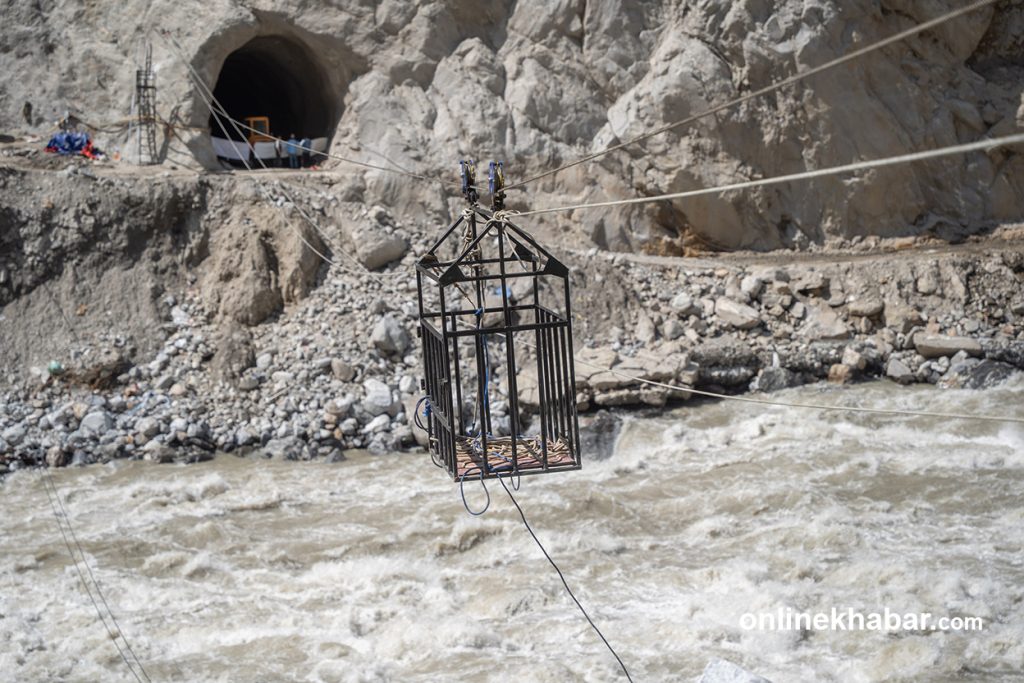
Twenty-seven days after a devastating flood tore through Syabrubesi, Phurba Maya Tamang and Kanchhi Tamang were finally crossing the Bhotekoshi River. They had been stranded on the western bank of the river after the flood swept away the bridges connecting Syabrubesi to the rest of the area.
Then, last week, on September 14, a lifeline appeared. With the initiative of security personnel and local residents, a tarping cable crossing, or tuin, was put into operation across the Bhotekoshi.
It is no replacement for a bridge. But for people who had been unable to move around for 19 days, it has brought some relief.
When the Onlinekhabar team arrived, Phurba Maya and Kanchhi were taking turns crossing the river using the tuin. A joint team from the Nepal Police and Armed Police Force also helped carry across sacks of consumer goods the women had brought from Dhunche, the district headquarters.
“Of course, a tuin cannot provide the convenience of a road and a bridge,” said Assistant Sub-Inspector Rampravesh Patel, who leads the team operating it. “But people who could not move around for 19 days can now travel back and forth.”
Police operate the crossing from 9am to 4pm every day.
“Because this is a geographically difficult area, we are helping operate the tuin ourselves,” Patel said.
The need for it is visible in the people gathered around the crossing.
According to police, up to 40 people cross the Bhotekoshi by tuin every day. The number is significant given that the flood swept away a large part of the area, including the Syabrubesi market, and many displaced residents have already been moved to Kathmandu and elsewhere.
Near the tunnel of the Chilime Hydropower Project, workers were also building an iron staircase to make it easier for people to get on and off the tuin.
“We are working to make it easier to get on and off the tuin,” said an employee of the Nepal Electricity Authority.
For residents who have spent weeks cut off by the loss of roads and bridges, the crossing has offered a small return to movement.
But beyond it lies a landscape that is almost unrecognisable.
Where Syabrubesi once stood

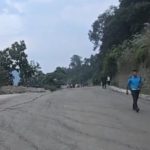
After crossing the river, Phurba Maya, Kanchhi and the Onlinekhabar team walked along the Bhotekoshi riverbed towards a rough road that had been opened through the area.
“We never imagined something like this could happen. It is unbelievable,” Phurba Maya said as she carried a sack.
Until August 26 — the day the flood struck — Syabrubesi had looked very different.
“People in Syabrubesi earned more than the average Nepali,” said Kaisang Nurpu Tamang, chairman of Gosainkunda Rural Municipality. “There probably wasn’t a household that did not earn several hundred thousand rupees a year.”
The village lies on major routes to the Kerung border point, Mansarovar and Gosainkunda, which had helped make it relatively prosperous.
The rural municipality office was also located there, making Syabrubesi an administrative centre.
“Administratively, Syabrubesi was the centre,” Tamang said. “The hotel business was the main identity of this place.”
Foreign tourists travelling to Manasarovar, Gosainkunda and the Langtang trekking route also passed through the settlement, prompting significant investment in hotels.
According to Tamang, some individuals had invested tens of millions of rupees in the hotel business.
“No one could have imagined that everything would be destroyed all at once,” he said. “We kept investing, dreaming big.”
Then, on the morning of August 26, the flood arrived. It was something Syabrubesi had never imagined.
‘Everyone was shouting, run’
Tara Ghale, 54, was preparing food when she heard a sound that reminded her of a landslide.
“I was cooking when I heard a sound like the cliff had collapsed,” she said. “When I came outside, everyone was shouting, ‘Run, run.’ I ran too, and I survived.”
Other residents who survived the flood described similar moments to the Onlinekhabar team.
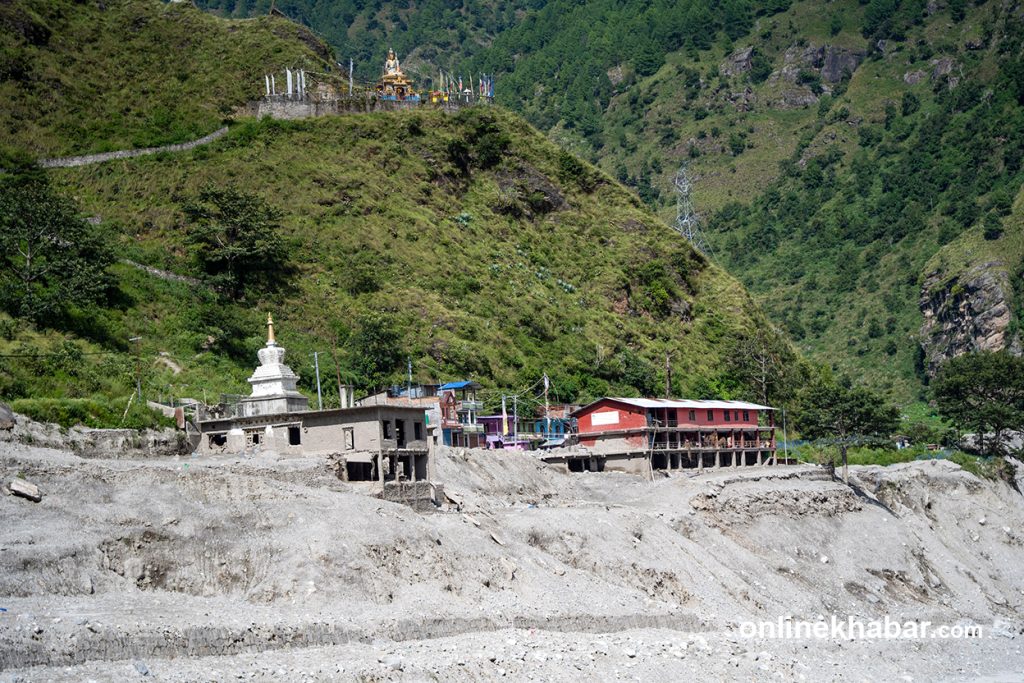
Today, only a few houses remain in one corner of Syabrubesi.
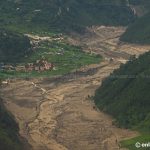
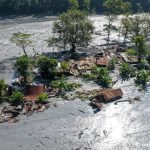
The Bhotekoshi, once a river running through the settlement, now appears in places like a small stream beneath a huge waterfall. In other places, the remains of houses can be seen. Much of the land has been turned into a riverbed.
For those who escaped, the landscape is a reminder of how quickly everything disappeared.
Deju Ghale, 80, still does not feel safe sleeping at night.
“We are afraid to sleep here at night. Everyone goes up to the school, the holding centre,” she said. “No one is willing to stay even in the houses that survived.”
Deju was picking vegetables from the kitchen garden that survived the flood when she recalled the night.
“Everyone ran. My husband and I could not run,” she said. “We survived only by chance at night. They picked us up and took us to the school.”
Everything below her house has now become a riverbed.
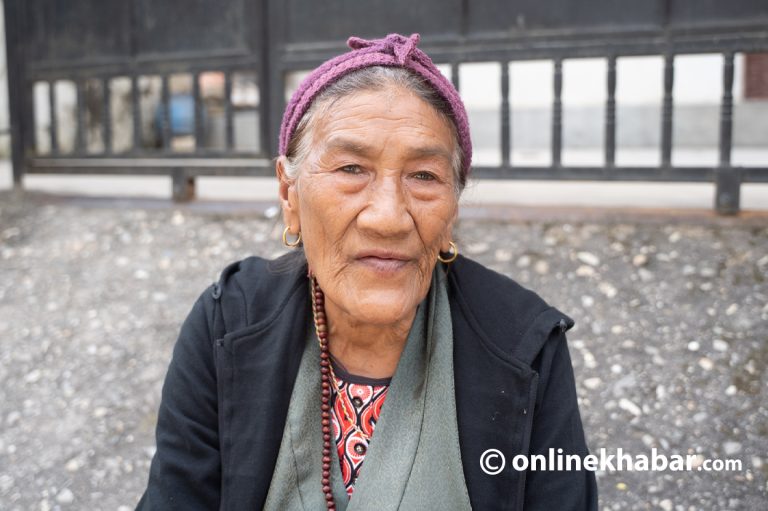
Deju and her husband were rescued after the flood, surviving almost by coincidence. Many others in Syabrubesi who escaped the disaster have similar stories.
But for weeks, there were few people around to hear those stories.
The bridges had been swept away, making it difficult even for journalists and others to cross the Bhotekoshi and reach the survivors.
“No media had come until today,” said local resident Buddhiman Tamang. “I am happy to see you. We could not tell our story. We had no one to tell it to.”
‘At first, we did not even know it was a flood’
When the flood struck, Buddhiman was at his shop with his young son.
His wife, Kanchhi Tamang, a teacher, called him and urged him to run.
“I was filming with my phone after seeing what looked like smoke. Then I saw the water coming,” Kanchhi recalled.
“At first, I did not even realise it was a flood. When I saw the frightening flood, I told my husband. He did not believe me. He said it might be a flood, but it would not reach our shop.”
The Bhotekoshi had also flooded in October last year, causing extensive damage in Rasuwagadhi and Timure and killing several people.
Kanchhi believes that memory may have contributed to the tragedy this time.
“I estimate that many people were swept away because they were misled by last year’s flood,” she said. “Many did not run in time because they thought it would be similar to the flood last year.”
But after Kanchhi repeatedly urged him to leave, Buddhiman took their son and ran, also telling others to escape.
“If I had stayed at the shop, I would have been swept away,” Buddhiman said. “So many people were swept away.”
The ward chairman and deputy chair remain missing
Among those still missing are Dawa Mingmar Tamang, ward chairman of Syabrubesi in Gosainkunda Rural Municipality-5, and rural municipality deputy chair Pratima Tamang.
According to local residents, ward chairman Tamang was caught in the flood while running to help save others.
“He was telling everyone to run and was heading towards the police station when he was swept away,” said Tara Ghale.
“He was riding his motorcycle because he thought that if he informed the police, more people could be evacuated.”
According to the rural municipality office, 176 people from Syafru alone remain missing.
The 2021 census put the population of the area at around 450.
More than 400 houses have been reduced to riverbed.
The rural municipality office, ward office, army barracks and health post are among the structures that were swept away.
Life now depends on helicopters
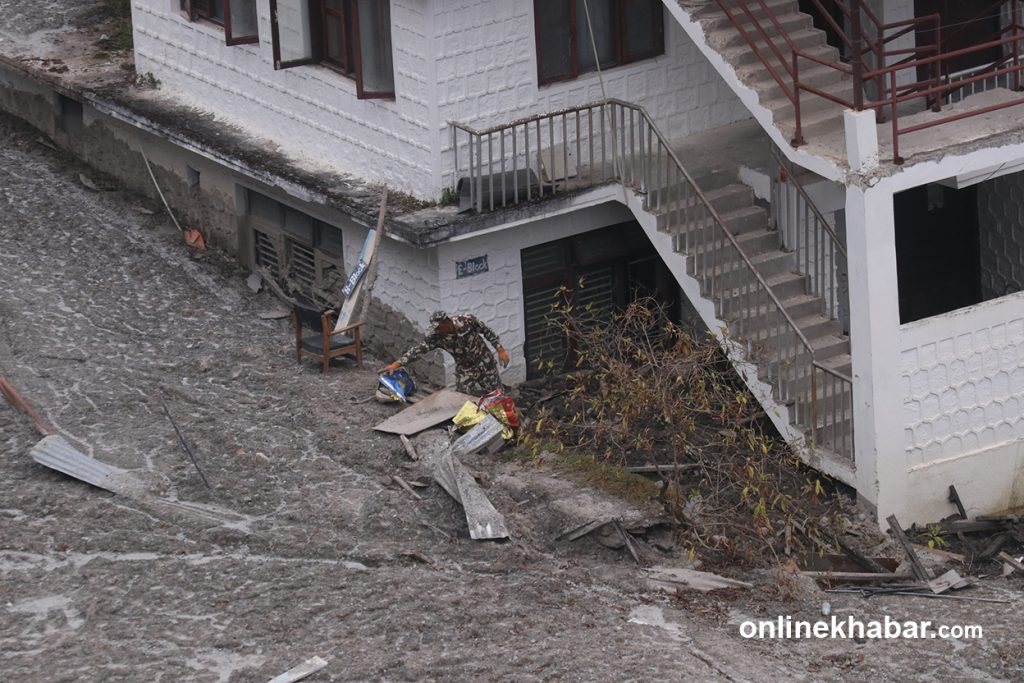
The Komin Syamewangphel Basic School, located near the hillside along with a few surviving houses, remains standing.
It has now become a holding centre for people displaced by the flood.
The centre is in one of the highest parts of Rasuwa, and displaced people are still living there.
People displaced from Rasuwagadhi and Timure have been moved to Kathmandu and other places. Those who remain here, however, continue to depend on helicopters.
Even with the tuin operating, large quantities of food and other supplies cannot be transported across the river.
“So far, helicopters have been bringing us food,” said local resident Dupsang Tamang, 54. “Even if we need to go somewhere, we have to depend on helicopters.”
The tuin may have restored a limited form of movement, but it has not restored the road network that once connected Syabrubesi to the outside world.
From relief to rebuilding
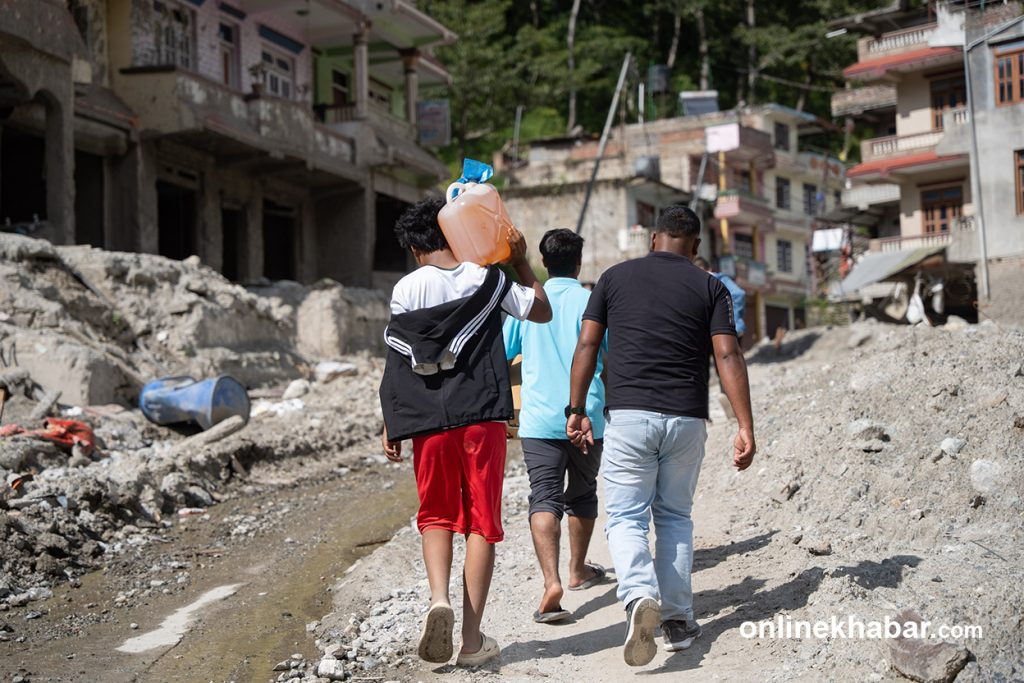
Kaisang Nurpu Tamang, chairman of Gosainkunda Rural Municipality, says Syabrubesi could move away from its dependence on helicopters once a Bailey bridge is built across the Bhotekoshi.
“At the moment, we are using helicopters to keep the displaced people alive. But this cannot continue for a long time,” he said. “A bridge over the Bhotekoshi has to be built as soon as possible.”
A Bailey bridge, he said, would also help bring Gosainkunda Rural Municipality’s Syabrubesi, as well as wards of Aamachhodingmo and Uttargaya rural municipalities, out of the current state of isolation.
For now, relief supplies are being transported not only by helicopter but, on a limited basis, by drones operated by the Nepal Army.
But for residents, relief is only the immediate need.
They are already thinking about what happens after the relief stops.
“Food is arriving,” said local resident Pasang Tamang. “But people are scattered in different places. It would be better if everyone could be provided with a place to live together.”
Twenty-three members of Pasang’s family and relatives are missing.
After so many of her relatives disappeared, she was left devastated. But she has slowly begun returning to everyday work.
When the Onlinekhabar team visited, she was taking several goats towards the shed.
The flood had spared her goat shed.
“I graze the goats during the day and go to the school in the evening,” she said.
For Pasang and the other survivors of Syabrubesi, life has begun moving again in small ways.
A tuin now carries people across the Bhotekoshi. Helicopters bring food to those still stranded. Farmers and residents have started returning to small daily tasks.
But beneath that fragile return to routine is a settlement that has lost its roads, bridges, homes and livelihoods — and hundreds of people who remain missing.
The immediate emergency is being met with relief.
The harder question is how Syabrubesi will rebuild what the flood took away.
(All photos: Chandra Bahadur Ale)