Butwal, September 3
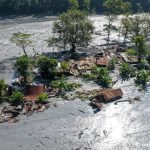
Flooding in the Narayani River has swept away a silk cotton tree that had long been recognised as marking the Nepal-India border in Susta Rural Municipality-5 of West Nawalparasi.
Locals said flooding entered the area from the same location after construction of a 132-meter embankment along the Narayani River was halted for two months following objections from India’s Sashastra Seema Bal (SSB). The government had begun constructing the embankment to protect Susta village from flooding.
Adam Khan, chair of the Susta Bachau Abhiyan and a ward member of Susta-5, said Wednesday night’s flood swept away the silk cotton tree that had been recognised as a border marker.
The tree, located in Tharu Tole across the Narayani River, had been agreed upon as a de facto border marker 18 years ago, in 2008, with the participation of district-level security officials from Nepal and India and residents.
Following the loss of the tree, residents of Susta have demanded that a permanent border pillar be installed immediately.
Tek Narayan Upadhyay, chair of Susta Rural Municipality, has urged the federal government to install a permanent border pillar, saying the absence of one has repeatedly led to disputes with the Indian side.
“Because there is no permanent border pillar, the Indian side has repeatedly encroached on Nepali territory and created disputes,” Upadhyay said.
Flooding two days ago also entered Tharu Tole in Susta, damaging sugarcane crops planted across around 20 bighas of land.
Susta-5, an area that has long been subject to a border dispute, is home to 1,457 people from 220 households.
Upadhyay stated that the Indian side gained an advantage in the Susta border dispute after Prime Minister Balen Shah, speaking from the parliamentary rostrum, remarked that Nepal had encroached upon India’s territory at several locations along the border.