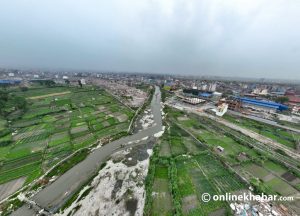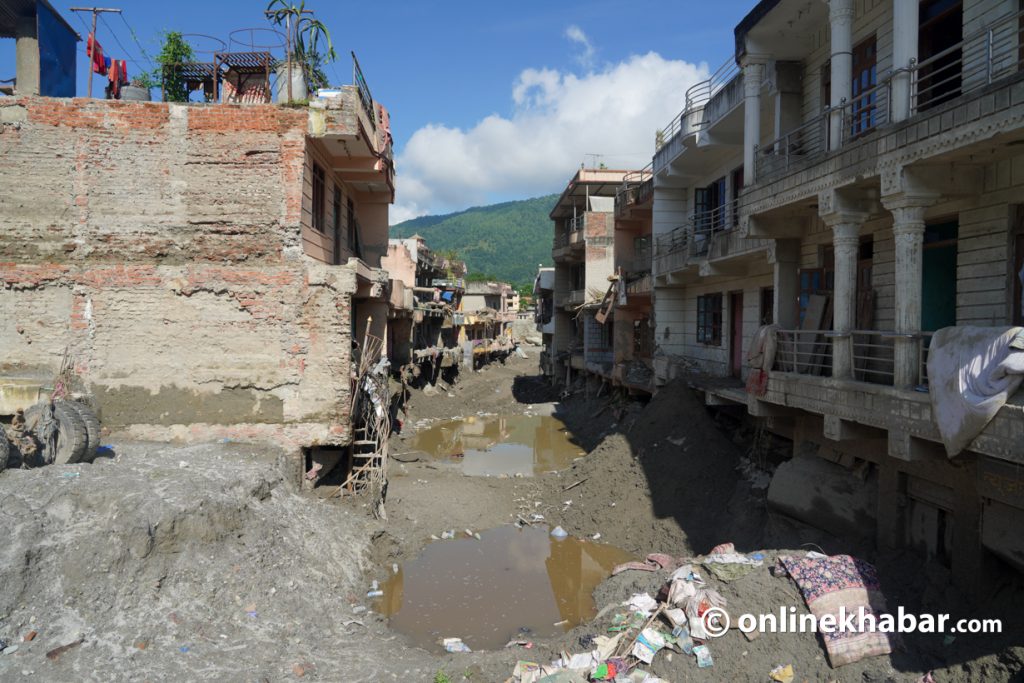


A heavy silence hung over the informal settlement along the Manohara River before the bulldozers arrived. For years, the fear of displacement had lingered quietly in the minds of residents. On Sunday, that fear turned into reality, right before their eyes.
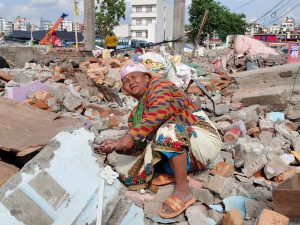
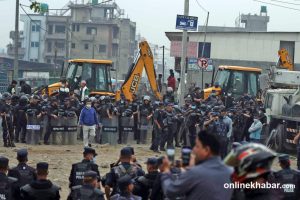
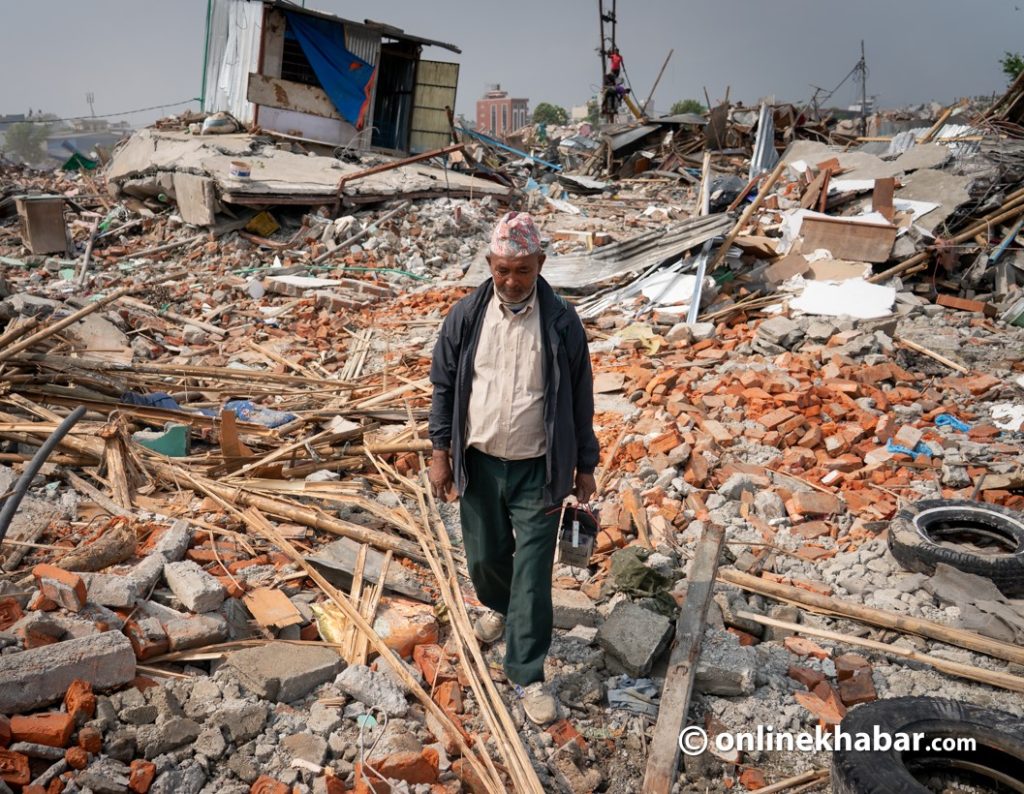
When government bulldozers, backed by armed security personnel, entered the settlement, 64-year-old Som Bahadur BK panicked. He rushed into his hut and began throwing out whatever he could grab—clothes, utensils, bedding. In a matter of moments, the life he had built over 22 years lay scattered under the open sky.
In the chaos, he did not even notice when his foot was cut. Later, he saw blood flowing, but the physical wound meant little compared to the emotional devastation. By the end of the day, the shelter he depended on had been reduced to rubble.
The next day, he returned to the ruins, his foot still untreated despite a deep injury. When asked why he had not sought medical care, he replied with stark honesty: he could not afford medicine, let alone treatment.
Now, all that remains are piles of bricks and mud. Dressed in worn clothes and old shoes, he sees the wound on his foot as a lasting mark of state-led displacement.
“I have nothing left. What can I do now?” he said, his voice breaking.
A life pushed to the margins
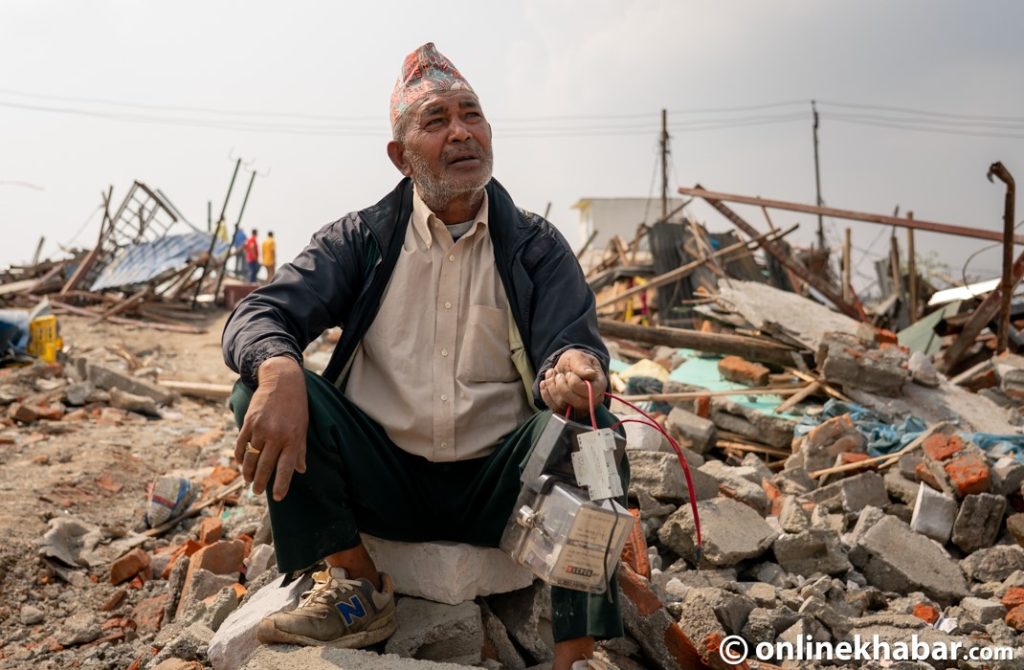
Som Bahadur believes that being born into a Dalit community and living in poverty has made him vulnerable to repeated marginalisation. He earned his livelihood running a small metal workshop in Jadibuti, surviving on daily wages.
He was not originally from Kathmandu. In his native Nuwakot, he had five to six ropani of ancestral land, though without formal ownership papers. Road construction projects in the name of development cut through his land multiple times, eventually displacing him.
Forced to migrate, he arrived in Kathmandu via Machhegaun and Kalanki. Living on public land was never his choice, but economic hardship left him with no alternative. Unable to afford rent and with three young children to feed, he eventually settled along the Manohara River 22 years ago after registering as a landless squatter.
He began with almost nothing, just a cooking pot and a few blankets. Over time, he rebuilt his life through relentless labour, earning a few hundred rupees a day, gradually improving his shelter.
Floods would come every year, washing away his belongings. Each time, he started again. But this time, it was not nature, it was the state.
Generational struggle and broken promises
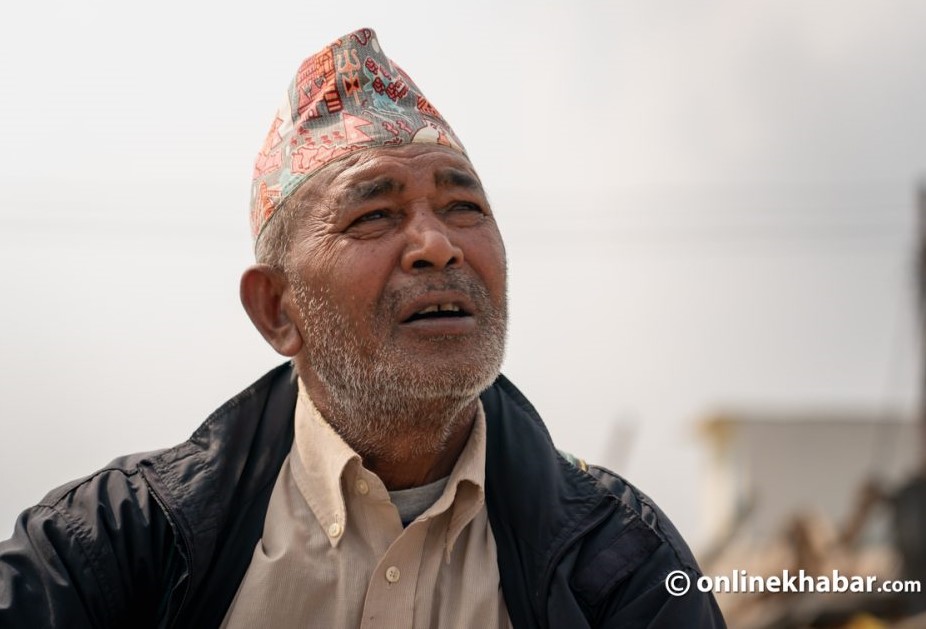
Som Bahadur’s story is also one of intergenerational hardship. He regrets not being able to provide adequately for his children. At times, he fed them leftover rice and tea for meals. Sending them to school meant scraping together even the smallest amounts.
His eldest son managed to study up to Grade 11 with support from a foreign organisation, but eventually had to drop out and work. After years of labour in Pokhara, he returned home and now survives on daily wage work.
Despite decades of hardship, Som Bahadur held onto hope, fueled by promises from political leaders. Over the years, he heard repeated assurances of land ownership certificates and protection for squatters.
He recalls promises made by Rabi Lamichhane during election campaigns, pledging to stand against forced evictions. He also remembers commitments by Balen Shah to distribute land ownership certificates.
But instead of solutions, bulldozers arrived, without what he considers adequate dialogue or preparation.
Dignity amid displacement
Now elderly and deeply hurt, Som Bahadur says he no longer trusts the government. He plans to live in his married daughter’s small room and continue working as long as he can. Relocation sites offered by authorities are far from the city, making it harder for daily wage workers like him to survive.
He worries that moving away would strip him of even the limited livelihood he has left.
“I will work as long as I can. If I cannot, my sons will manage somehow,” he said. “But who knows when the government might uproot us again?”
At 29, his eldest son remains unmarried, something Som Bahadur attributes to their lack of land, property, and legal status.
Returning to the demolished site, he had hoped to salvage a few bricks or at least meet the leaders who once made promises. He found neither. No political figures, neither from the ruling side nor the opposition, were present.
The rain that followed the demolition soaked what little belongings remained among the residents, deepening the sense of loss. Som Bahadur believes that even a few weeks of dialogue could have prevented such chaos.
As he walked away from the ruins, overwhelmed and alone, he murmured his uncertain future: he would live with his daughter, work as long as he could, and hope his sons could carry on when he no longer could.