At one end of Dingla, Bhojpur, the Arun River once ran noisily past the village. Above it, Mount Makalu glimmered in the distance, while clouds drifted between the river valley and the mountains.
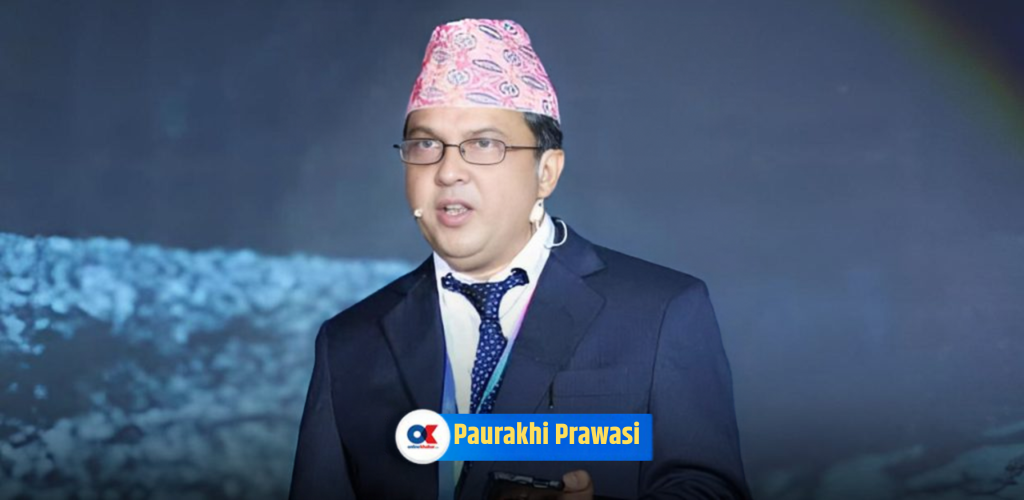
For Dr DB Kattel, those surroundings were more than a childhood landscape. They became the beginning of a lifelong curiosity about how the natural world worked.
“I used to wonder how it was possible,” Kattel recalls. “The river was flowing below, the mountain was above, and clouds were moving between them. Those questions eventually led me to become a scientist.”
Kattel grew up in an environment where education was valued, even if the infrastructure was limited. He passed his School Leaving Certificate from Arun Secondary School in 1990. Getting to school meant walking uphill and downhill for about an hour every day.
Across the river, Khandbari had already begun to glow with electricity. In Dingla, Kattel still remembers studying by the dim light of a traditional oil lamp.
The circumstances were not unusual for students growing up in rural Nepal at the time. But Kattel was drawn to learning from an early age, influenced by educated people around him and by his own curiosity.
That curiosity eventually took him far beyond the Arun Valley.
After completing his SLC, Kattel moved to Kathmandu for higher education. He studied science, completing his ISc at Patan Multiple Campus and his BSc at Tri-Chandra Campus before earning a master’s degree in hydrology and meteorology from Tribhuvan University.
But science was not the only path he explored.
For a period, Kattel worked in journalism, writing about science and technology for newspapers and presenting science programmes on television. He worked for Nepal Television on Environment World and later at Image Metro TV.
It was another way of pursuing the same curiosity.
“My goal since childhood was to become a scientist,” he says. “I changed tracks several times along the way, but academically, I never left the path towards becoming a scientist.”
Like many middle-class students trying to survive in Kathmandu, Kattel found different ways to support himself while studying. But the desire to conduct research remained.
Eventually, he left the media and joined the Nepal Academy of Science and Technology (NAST), where he secured a position as a technical officer.
He stayed for about three years.
The job gave him experience, but not the research environment he had hoped for. Kattel wanted to study, experiment and pursue scientific research. Gradually, he began looking beyond Nepal.
An opportunity came when he travelled to Beijing to participate in a programme at the Chinese Academy of Sciences. Then came an offer to pursue a PhD.
For DB Kattel, it felt like the opportunity his childhood dream had been waiting for.
He did not hesitate. He applied for study leave from NAST. But instead of receiving approval, he received a letter at his home address asking why disciplinary action should not be taken against him for being absent from work.
“I had applied for leave, but before the leave was approved, the administration sent a letter to my village asking why I should not be punished,” he says. “I had no choice but to send in my resignation.”
China became the place where his scientific career began to take shape.
The theoretical knowledge he had acquired at Tribhuvan University was complemented by the technical training and research experience he gained there. Before he had even completed his PhD, he received an offer for postdoctoral research in Germany.
He went.
He later spent time in Pakistan, teaching at universities in both Germany and Pakistan before returning to China in 2016.
“We studied at universities in Nepal and our theoretical knowledge is good,” Kattel says. “But I gained the technical knowledge here.”
That experience also shaped his view of what Nepal needs to do differently.
He believes Nepal must invest more heavily in technical and practical education, rather than relying primarily on theoretical learning.
There was one missed opportunity along the way.
Kattel had an opportunity to conduct climate-related research through the academy, but the work required a consent letter from Nepal’s then Ministry of Science and Technology. He applied, but the ministry secretary at the time did not provide the required approval.
The opportunity passed.
When he later received a fellowship, China opened its doors again. In 2016, Kattel returned.
“Initially, because I did not get consent from the science secretary, I could not come,” he recalls. “But after I received the fellowship award, I returned to China in 2016.”
He remembers the episode with some bitterness.
“I was told not to resign, that they would approve two years of leave and even provide a salary for a certain period,” he says. “But because I could not get a simple letter from my own country, I lost the opportunity.”
Since 2019, Kattel has been an associate professor at the Institute of Tibetan Plateau Research under the Chinese Academy of Sciences, the institution where he had studied.
His work focuses primarily on climate research.
The region he studies is known as the Third Pole, the high-altitude area encompassing the Tibetan Plateau and surrounding Himalayan region. It is considered a major source of water for much of Asia and plays an important role in the continent’s climate system.
His research has examined how climate change is altering the region.
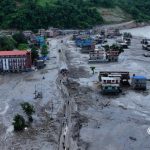
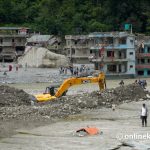
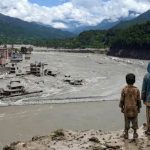
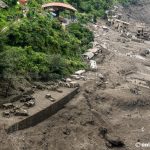
Temperatures are rising. Glaciers are melting faster. The risk of glacial lake outbursts is increasing.
“These areas are experiencing rising temperatures, causing glaciers to melt and increasing the frequency of glacial lake outbursts,” Kattel says. “This has a major impact on environmental balance.”
Nepal, he says, cannot separate itself from these changes.
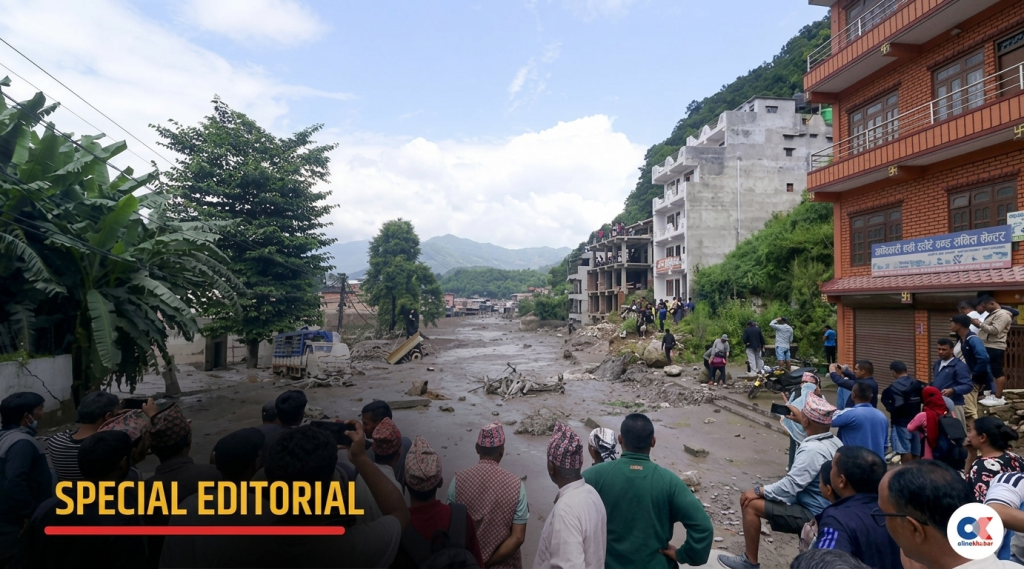
Heavy rainfall has always been part of the Himalayan environment. Floods and landslides are not new phenomena. Nor is snow melting in the mountains.
What is changing is the speed and scale.
“Snow melting in the mountains is not new,” he says. “But it is melting faster. Night-time temperatures are also increasing in our region. When rainfall becomes heavier, the possibility of glacial lakes bursting also increases.”
But Kattel is wary of attributing every environmental problem in Nepal to global warming.
In Kathmandu, for example, he believes human behaviour and poor urban planning are major contributors to rising heat.
“We say global warming is responsible whenever Kathmandu becomes hot,” he says. “But Kathmandu has no trees, no soil. We have made the impact even worse ourselves. We have to take this seriously.”
Research that could benefit Nepal
Between January 2023 and December 2024, DB Kattel received a research fellowship worth around Rs 13 million to study climate change in the Himalayan region and its consequences.
He won the fellowship after competing against scientists from across the Chinese Academy of Sciences.
The research brought together an integrated study of the Himalayan regions of Nepal, Pakistan, Bangladesh, India, Bhutan and Tibet.
One of his areas of focus has been the underlying causes of increasing pollution in the Himalayan region and its effects on the mountains.
His research has also contributed to a growing body of scientific work examining how pollution affects the rate at which Himalayan snow and ice melt.
“There are already high-level studies and research showing how pollution affects the melting of snow in the mountains,” he says. “There are more than 100 studies related specifically to Nepal.”
DB Kattel believes the scientific evidence is increasingly available. What is missing, he argues, is stronger policy action.
“Scientists provide research findings,” he says. “We have provided them.”
He is concerned that Nepal has largely confined its response to climate change to international conferences rather than translating scientific findings into concrete policy.
“Now it is the state’s responsibility to formulate policies and move towards action,” he says. “I do not think we have been serious enough. It is already late.”
For Kattel, the issue is also deeply personal.
He grew up in the Arun Valley, beneath Makalu, in a place whose landscape first made him curious about nature. He still carries a connection to that part of Nepal, even as his career has taken him thousands of kilometres away.
In 2020, he had an opportunity that few Nepali scientists get. He was among 17 scientists from countries including Nepal, India, the United States and Russia who met with then Chinese Premier Li Keqiang at Beijing’s Great Hall of the People.
He says he felt proud to have been there as a Nepali scientist.
But international recognition has not erased his desire to contribute to Nepal.
“No matter how much respect you receive abroad, it does not give you the same satisfaction as working for your own country,” he says.
Sometimes, he thinks about returning.
“I sometimes remember that I am from the Arun Valley, that I grew up in the lap of Makalu,” he says. “Who would not want to go back and work in a place like that?”
Then comes the harder question.
Where would he go?
Kattel wants to bring back the knowledge and research experience he has gained in Beijing. But he worries that Nepal’s academic institutions do not yet offer the environment needed to make that possible.
“I cannot make everything happen simply because I want it,” he says.
For now, he takes some comfort in the belief that his work abroad still carries a connection to home.
“I work here as a Nepali,” he says. “If I do well, it is ultimately for my country.”
His concern extends beyond his own career.
Young Nepalis, he notes, are increasingly leaving the country soon after completing school.
“Now young people do not even stay in Nepal after completing Grades 10 or 12,” he says. “Policies should be designed to help fulfil their dreams and support them in the future. Other countries support their people. We need that kind of environment here too.”
What troubles him most is the role of politics in Nepal’s academic institutions.
“I have not seen politics affecting creative fields in the same way elsewhere in the world,” he says. “In Nepal, when you go somewhere, people ask which political party you belong to.”
He still wants to return.
But after a career built around research, curiosity and scientific opportunity, one question remains unresolved.
“I want to return to Nepal,” he says. “But the question is, where do I go?”