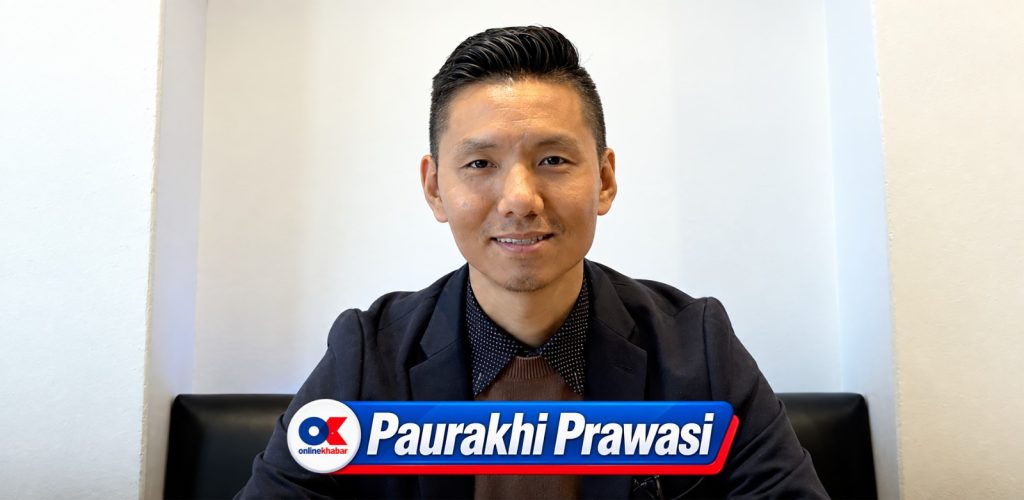
Sixteen thousand kilometres from the village where he grew up, Chhong Norbu Sherpa was watching one plan after another fall apart.
First came his failed attempt to join the British Gurkhas. Then he prepared for the IELTS exam, hoping Australia might offer another way out. He passed, began the process of applying, and then Australia changed its immigration rules. The consultancy returned his application.
One disappointment followed another.
For Sherpa, who grew up in Dolakha, confidence was beginning to give way to frustration. There were few opportunities at home, and now even the prospect of leaving Nepal seemed to be slipping away.
Then Britain relaxed its immigration rules and introduced the Tier 4 student visa route.
In July 2009, Sherpa finally got his visa.
“I was one of thousands of Nepali students who came to Britain in that wave,” he recalls. “But the beginning was extremely difficult.”
For eight months after arriving in Britain, he could not find a job. He survived by borrowing money from friends.
Sixteen years later, the contrast is striking.
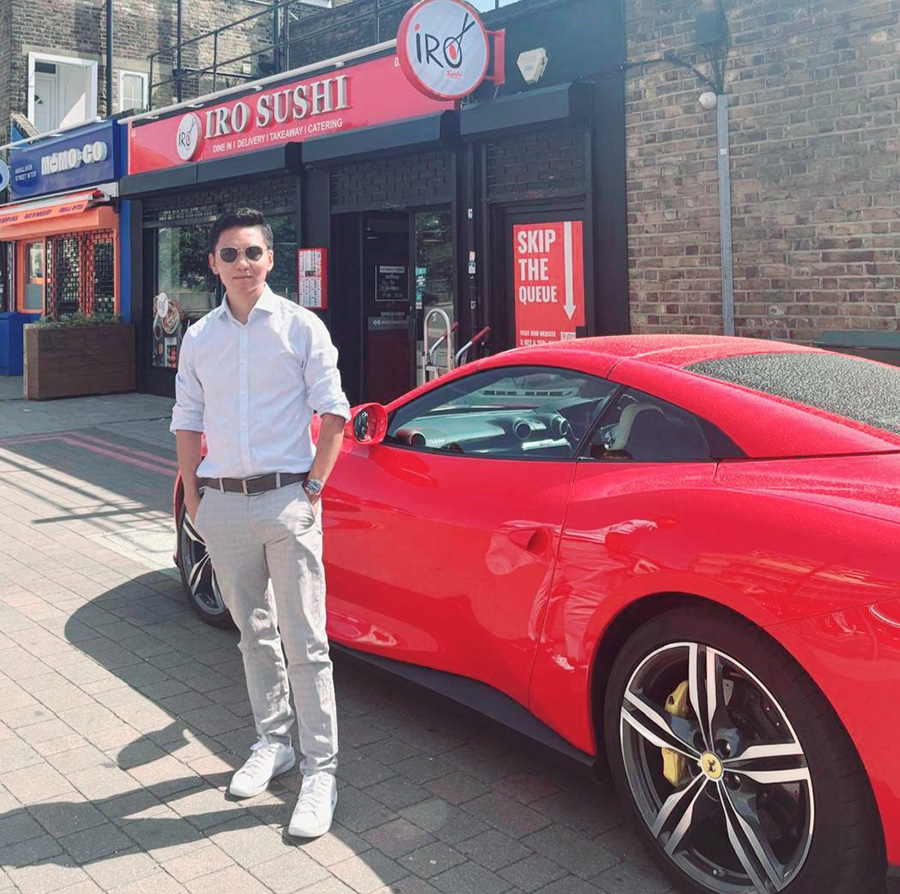
When we met him in Woolwich one weekend, the 38-year-old arrived in a Ferrari Portofino worth around £150,000.
The journey from a young man who once thought twice before taking a public bus to a businessman arriving in a Ferrari is dramatic. But Sherpa’s story is less about the car than what happened in between.
Today, the sushi business he started in 2014 has grown into IRO Sushi, with around 30 outlets across the UK. The business operates on a franchise model and employs around 200 Nepalis, according to Sherpa.
He says the business generates monthly revenue of around £1 million and annual turnover of about £20 million. The name IRO means “colourful” in Japanese. It is an apt description, at least of the life Sherpa has built for himself. But the business did not begin in a glossy restaurant.
It began with a £5,000 investment, a rented kitchen and a man who was working another job during the day.
From sushi chef to business owner
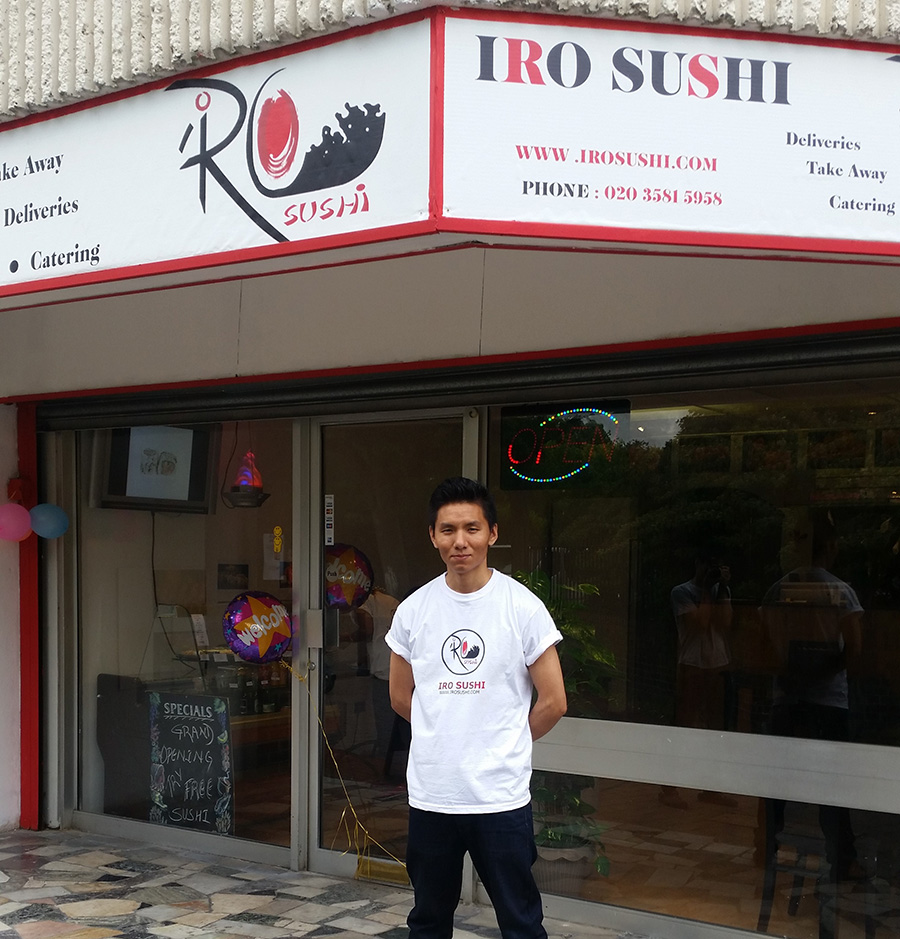
Sherpa arrived in Britain to study IT at Maritime Greenwich College, where the programme was run for Nepali students. When the college closed, he changed courses and moved into business management.
But studying was only one part of his life.
From April of the year after he arrived, he began working as a sushi chef with the help of a friend. He was working two jobs while studying, all while trying to repay the debts he had accumulated.
“There was a lot of pressure,” he recalls.
In 2014, he took the first real step towards building his own business.
He rented a kitchen near an industrial area that was already being used to supply sandwiches to hotels and airlines. He could use it from 5pm to 10pm.
During the day, he worked elsewhere. In the evening, he made sushi and sold it online. There were just two employees and a driver. That was IRO Sushi’s beginning.
The following year, as the business gained momentum, Sherpa opened his first shop on a high street.
In 2015, he completed a postgraduate degree in hospitality management at Westminster College. By then, his attention was increasingly turning towards business rather than employment.
He opened a second IRO Sushi outlet in Fulham in 2018, followed within months by a third in Greenwich and then another at Tower Bridge.
It was while working with a friend on the Greenwich outlet that Sherpa says he discovered the idea of franchising.
“I didn’t even know what a franchise concept was when I started,” he says.
The model would eventually become central to the company’s expansion.
The pandemic that changed the business
For many restaurant businesses, the Covid-19 pandemic was devastating.
For Sherpa, it became a period of expansion.
New IRO Sushi outlets opened in Highgate and South Norwood during the pandemic. The chain has since expanded into numerous locations across London and beyond, including Welling, Purley, Camden, West Hampstead, Stratford, Reading, Slough, Croydon, Dartford, Palmers Green, Bromley, Chingford, Orpington, Sidcup, Stockwell, Woolwich, Eltham, Penge, Tonbridge, Sevenoaks, Maidstone, Tunbridge Wells, Guildford and Newbury.
Sherpa says he plans to add more outlets and eventually take IRO Sushi to cities across the UK.
His ambition does not stop there. He says the company is also looking towards Europe and the United States.
“Once the system is in place, you mainly have to maintain it,” he says.
IRO Sushi currently operates through two models. In one, Sherpa partners with investors. In the other, the investor finances the entire outlet.
Opening a franchise, he says, requires an investment of roughly £120,000 to £150,000.
The company provides support with location, property setup, administration, legal work, accounting and marketing. Sherpa says experienced sushi chefs and restaurant operators can also become partners, while those who want to invest can participate through the franchise model.
For franchisees operating independently, he says there is a franchise fee and a 5% royalty on turnover.
Sherpa claims that franchise businesses have a 98% success rate, although that figure is his own claim rather than an independently verified industry statistic.
The expansion of IRO Sushi has also taken Sherpa beyond restaurants. Through IRO Property, he is involved in property, and he has recently started another fast-food venture, Momo & Company.
He says he is willing to share what he has learned with others without charging them. His philosophy is straightforward. Determination matters. Hard work matters. And, he says, a little luck helps.
The village he came from
For all the scale of his business today, Sherpa’s childhood was a long way from London’s high streets. He grew up in Chilankha, in Bigu rural municipality of Dolakha. Basic necessities were not readily available. To buy salt, oil and rice, his family sometimes had to walk for two days to either Khasa or Charikot.
Getting to school took two hours on foot. Luxury was not something he remembers thinking about. His family kept yaks and made churpi, and as a child he helped his parents with the work.
“My childhood was very difficult,” he says. “We never had the chance to think about luxury.”
Today, his parents, Tenzing Sherpa and Sangmo, live in Kapan, Kathmandu, along with his sister. One brother lives in Australia and another sister lives in Britain. Sherpa lives in Greenwich, London, with his wife, Dichenla Lama, and their two children.
The distance between Chilankha and Greenwich is measured not only in kilometres. It is also measured in the life Sherpa has built.
He says becoming a millionaire has not changed his preference for a relatively simple lifestyle.
Money, he believes, is ultimately a tool for solving problems.
“I don’t feel that money makes me something special,” he says. “But when other people tell me how far I have come, I feel proud of what I have achieved professionally.”
For Sherpa, that achievement is also tied to a lesson he believes many Nepalis in Britain overlook.
He says many migrants arrive with the immediate goal of finding a job, but are reluctant to take the risks involved in starting a business.
“Progress requires the willingness to take risks,” he says. “You also need ambition.”
For someone whose own path began with one failed plan after another, it is a lesson shaped less by theory than by experience.
The Gurkha attempt did not work. Australia did not work. Even Britain began with eight months without a job.
What eventually changed his life was not a single stroke of luck, but what he did after each setback.
The young man who arrived in Britain looking for a way forward ended up building a sushi business with dozens of outlets — and a life far removed from the one he had imagined as a boy walking two hours to school in Dolakha.