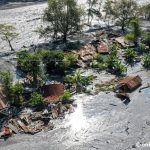

Prime Minister Balendra Shah’s participation in the 81st United Nations General Assembly is an important opportunity for Nepal. He is scheduled to address the General Debate on September 24. At a time when climate change is becoming crucial, Nepal is facing floods, landslides, droughts and other extreme weather events with growing frequency.
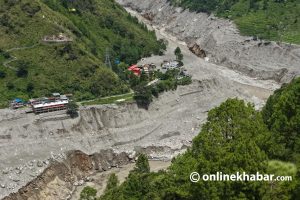
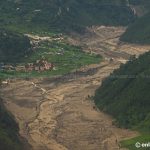
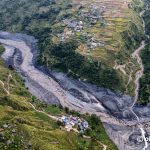
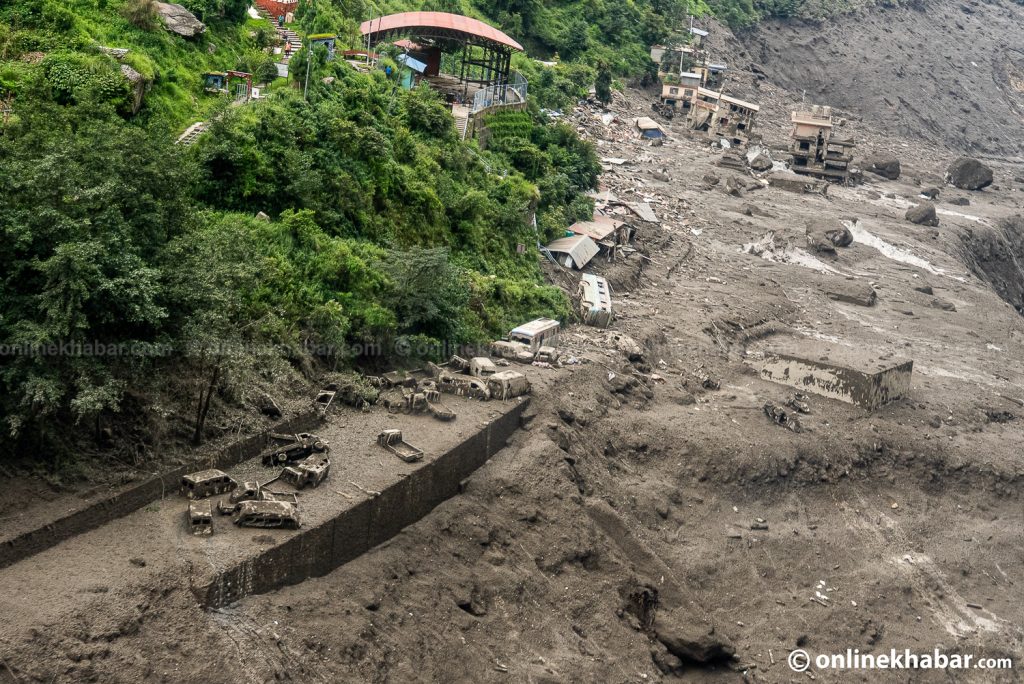
The recent floods and landslides in the Bhotekoshi area have once again shown Nepal’s vulnerability to climate-related disasters. According to Our World in Data, Nepal accounted for only about 0.05 percent of global CO₂ emissions in 2024. Yet the country is facing serious consequences from a crisis to which it has contributed very little.
Climate change is no longer only an environmental issue. Its impacts are being felt in agriculture, food and water security, energy, health, infrastructure, livelihoods and the economy. Nepal’s dependence on agriculture and natural resources makes many communities particularly vulnerable to changing rainfall, droughts, floods, landslides and rising temperatures.
The Himalayan climate challenge
The Hindu Kush Himalaya is vital to millions of people but highly vulnerable to climate change. Rising temperatures are rapidly reducing snow and ice, threatening water systems, ecosystems and mountain communities. The 2019 Hindu Kush Himalaya Assessment warned that even if global warming is limited to 1.5°C, the region could lose about one-third of its glacier volume by 2100.
The situation is becoming more serious. An ICIMOD assessment published in 2023 found that glaciers in the Hindu Kush Himalaya lost ice 65 percent faster during 2011–2020 than in the previous decade. Nepal has 3,808 glaciers, making it particularly exposed to these risks. If current warming and glacier-loss trends continue, the consequences for water, ecosystems, livelihoods and communities will be severe. A UNDP report also notes that Nepal spends around 1.5 to 2 percent of its GDP each year on climate adaptation and disaster management.
The consequences extend far beyond Nepal. Rivers originating in the Hindu Kush Himalaya provide water to hundreds of millions of people across Asia. Changes in glaciers, snow and rainfall can affect water supplies, agriculture, energy and livelihoods across the region. Protecting the Himalayas is therefore not only Nepal’s responsibility but a regional and global concern.
Climate justice for vulnerable countries
These realities make climate justice an important issue for Nepal’s international engagement. Countries that have contributed relatively little to global emissions should not have to bear a disproportionate share of climate-related losses and damage.
For Nepal, climate justice is not simply about receiving support after a disaster. It also means fair access to climate finance, appropriate technology, scientific knowledge and resources needed to adapt to climate change and build resilience.
The UN General Assembly provides Nepal with an important platform to highlight these concerns. Nepal can call on major emitting countries to strengthen climate action and fulfill their commitments under the Paris Agreement, including stronger climate plans, adaptation support, climate finance, technology transfer and capacity-building. Nepal can also work with other climate-vulnerable countries to ensure that their concerns receive greater attention and that global climate commitments lead to meaningful action.
Building climate partnerships
Nepal can strengthen partnerships with Least Developed Countries, Landlocked Developing Countries, Small Island Developing States and other mountain countries. Although their circumstances differ, many share a common challenge: high vulnerability to climate change despite relatively small contributions to global emissions. Cooperation can strengthen their collective voice on adaptation, loss and damage, climate finance and resilient development.
Climate diplomacy should therefore become an important part of Nepal’s foreign policy. Through bilateral meetings and multilateral dialogue, Nepal can seek stronger cooperation in renewable energy, disaster risk reduction, climate research, sustainable mountain development and climate-resilient infrastructure.
Nepal should also strengthen cooperation with research institutions, development partners, multilateral organizations and countries across the Himalayan region. Scientific information, early warning systems and regional cooperation are especially important because rivers, glaciers and ecosystems cross national boundaries.
Turning climate finance into climate action
Nepal’s National Adaptation Plan estimates that the country will need about Rs. 6.3 trillion for climate adaptation by 2050, or nearly Rs. 280 billion a year. For a country that collects around Rs. 1.2 trillion in annual revenue, meeting this need is a major financial challenge.
International mechanisms such as the Green Climate Fund, Least Developed Countries Fund, Adaptation Fund and Loss and Damage Fund can provide important support. However, there is still a wide gap between Nepal’s needs and the resources available. Nepal requires about US$2.1 billion annually for adaptation in agriculture, water resources, infrastructure and disaster management, while the funding secured so far remains much smaller.
Nepal therefore needs to strengthen its capacity to develop quality projects, access international finance and ensure effective implementation. Priority should be given to disaster preparedness, early warning systems, climate-resilient infrastructure, ecosystem protection and support for communities affected by climate-related disasters.
Climate finance should not be used only to rebuild roads, bridges, schools, hydropower projects and settlements after disasters. It should also help reduce future risks and build safer, stronger and more resilient communities and infrastructure.
A clear message from Nepal
The 81st UN General Assembly offers Nepal an important opportunity to present the realities faced by its people and the wider Himalayan region. Nepal’s message should be clear: the climate crisis is not only an environmental challenge. It is also a challenge to development, livelihoods, food and water security, infrastructure and human well-being.
Nepal should use this global platform to advocate for climate justice, improve access to climate finance and technology, strengthen international partnerships and highlight the global importance of the Himalayas. At the same time, Nepal can showcase its own contributions through hydropower, forest conservation, biodiversity protection and sustainable mountain management.
The General Assembly is therefore more than a diplomatic event. It is an opportunity for Nepal to make its climate concerns heard, build stronger international partnerships and call for collective action to protect vulnerable communities and mountain ecosystems.