
Pokhara, November 26
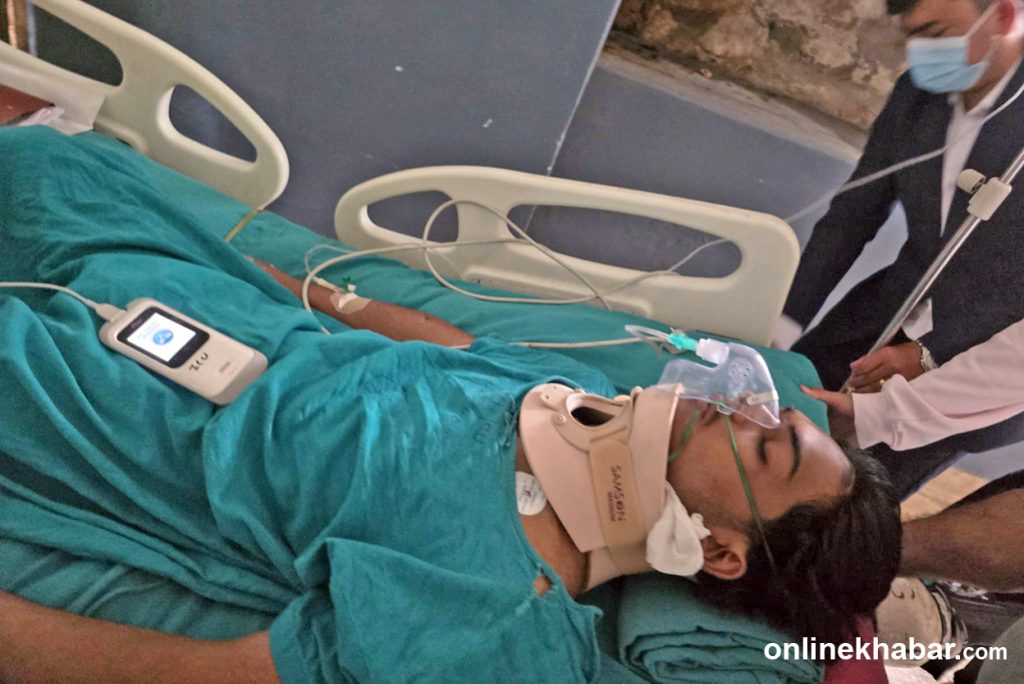
Nearly 15 months after he was shot during the Gen Z protests in Pokhara, 18-year-old Laxman Nepali remains on a ventilator at the Pokhara Academy of Health Sciences, with little prospect of significant recovery.
Nepali, also known as Dhak Bahadur, was shot in the neck on September 9, 2025, the second day of the Gen Z protests. The bullet lodged in his cervical spine, causing a spinal cord injury that left him unable to move any part of his body below the neck.
He was taken to hospital immediately and placed on a ventilator. Doctors removed the bullet from his neck on the night of September 14. Despite treatment, his condition showed little improvement.
He was later taken to Tribhuvan University Teaching Hospital in Kathmandu for further treatment. After spending around two months there without significant improvement, he was brought back to Pokhara. He has since been receiving treatment on a ventilator at the Pokhara Academy of Health Sciences.
Nepali, a resident of Pokhara-13 originally from Madi Rural Municipality, can occasionally speak and communicate his needs. However, he remains dependent on ventilator support, and his limbs and other body parts below the neck remain immobile.
Dr Bipin Karki, who has been involved in his treatment in both Pokhara and Kathmandu, said the possibility of a full recovery was extremely low.
The prolonged hospital stay has also taken a heavy toll on his family. His mother, elder sister and younger sister have been focused on his care, while his father is abroad. The family has been struggling with emotional distress, financial pressure and uncertainty about the future.
After nearly 15 months without a significant improvement in his condition, the family repeatedly appealed to the government for help.
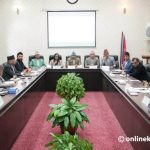
On Wednesday, a government team finally visited Nepali at the Pokhara Academy of Health Sciences to assess his condition and discuss arrangements for his long-term care. The visit followed instructions from Home Minister Sudan Gurung.
The team included representatives from the Home Ministry and the Department of Health, as well as representatives of families of those killed in the Gen Z protests, Kaski lawmaker Bina Gurung and Prakriti Dhakal, deputy coordinator of the Prime Minister’s Secretariat.
Dhakal said the team had come at the home minister’s direction to assess the injured youth’s condition, hear the family’s concerns and discuss what support the government could provide.
After meeting hospital officials, the chief district officer, the lawmaker and Nepali’s family, the team assured his mother and sister that the government would make necessary arrangements.
However, doctors cautioned that taking him to India or pursuing further hospital-based treatment was unlikely to bring significant improvement.
Dr Rajan Kumar Sharma, one of the surgeons involved in his treatment, said Nepali had already undergone the available treatment procedures, including care at the teaching hospital in Kathmandu.
“It has been nearly a year and a half. The possibility of improvement beyond this condition is extremely low. He was taken to Teaching Hospital after consultation. This is the treatment available. If there had been another treatment method that was not available here, we would have referred him elsewhere from the very first day,” Sharma said.
Doctors said that although he might be taken off the ventilator for short periods, a substantial recovery was unlikely. They also warned that prolonged stays in intensive care could expose him to hospital-acquired infections.
One alternative, they suggested, was to arrange ventilator support and nursing care at home or in a temporary residential facility.
Three-point agreement with the family
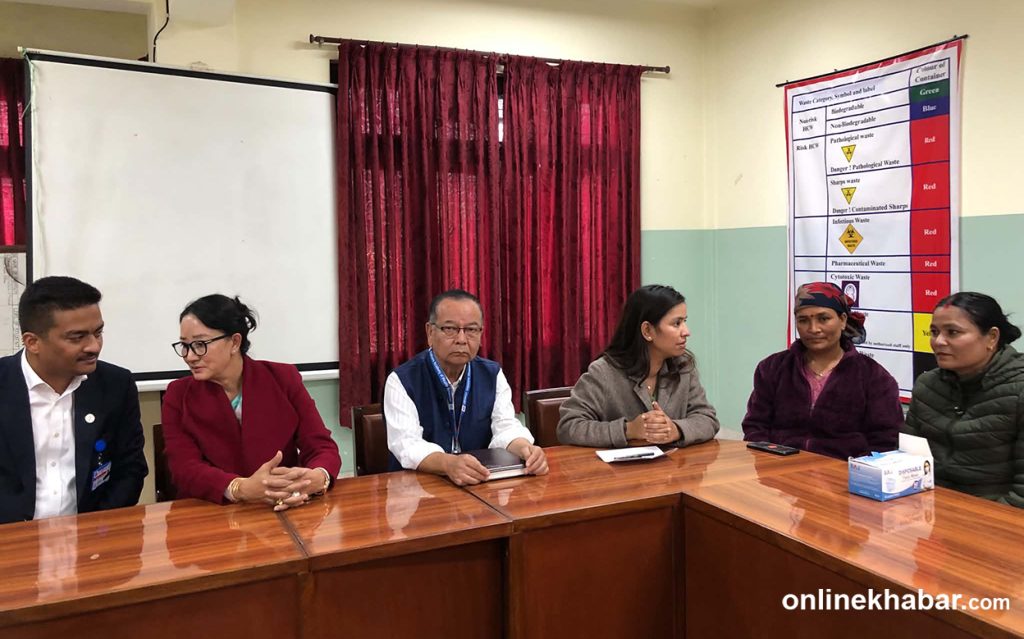
Following discussions involving government representatives, doctors and the family, the parties reached an agreement on three key points regarding Nepali’s care and the treatment of other injured Gen Z protesters.
Home Ministry Undersecretary Gokarna Raj Suyal outlined the agreement, which was put in writing and signed by Nepali’s mother, sister and other family members.
The first point expressed wishes for the recovery of Nepali and all other injured Gen Z protesters receiving treatment, including those who were not present at the meeting.
The second point stated that, based on the recommendations of specialist doctors involved in his treatment, further medical intervention was unlikely to bring significant improvement. It said that equipment and facilities required for therapies and other supportive treatment should therefore be arranged at home or in a temporary shelter, as appropriate.
Suyal said the family had agreed to the proposed arrangement, under which Nepali would receive care with the necessary equipment outside the hospital.
The third point committed the government to making treatment arrangements for injured Gen Z protesters more effective.
Nepali’s elder sister, Laxmi, said the family hoped the government’s involvement would make it easier to manage his treatment. However, she stressed that if he were to be moved home, the government would need to arrange nursing care and the required medical equipment.
The family is caught between the difficulty of keeping him in hospital indefinitely and the challenge of taking him home without adequate medical support.
Laxmi, who has completed a higher secondary qualification in hotel management, said her own future had become uncertain as she and her mother struggled to care for her brother. With her younger sister still young and her father abroad, much of the family’s responsibility had fallen on her.
She urged the government to do everything possible to help her brother, including taking him to India if necessary.
“If he is going to remain in this condition permanently, how are we supposed to manage? How will we support the family? How will we build our future?” she asked government representatives.
Kaski-3 lawmaker Bina Gurung said she had repeatedly met Nepali and his family and raised their situation with the government. She said the team had come from Kathmandu to coordinate further care after discussions with the family and doctors.
“We wanted to meet them in person and seek the advice of the doctors treating him. We came today to discuss how better treatment and care can be provided,” she said, adding that representatives from the Prime Minister’s Office and the Home and Health ministries had also joined the visit.
The government’s visit comes nearly 15 months after Nepali was shot outside the Kaski District Police Office during the protests. While government offices and businesses damaged during the Gen Z movement in Pokhara have largely resumed operations, Nepali remains dependent on a ventilator, and his family is still waiting for a sustainable arrangement for his care.