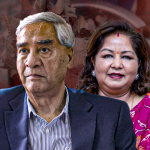

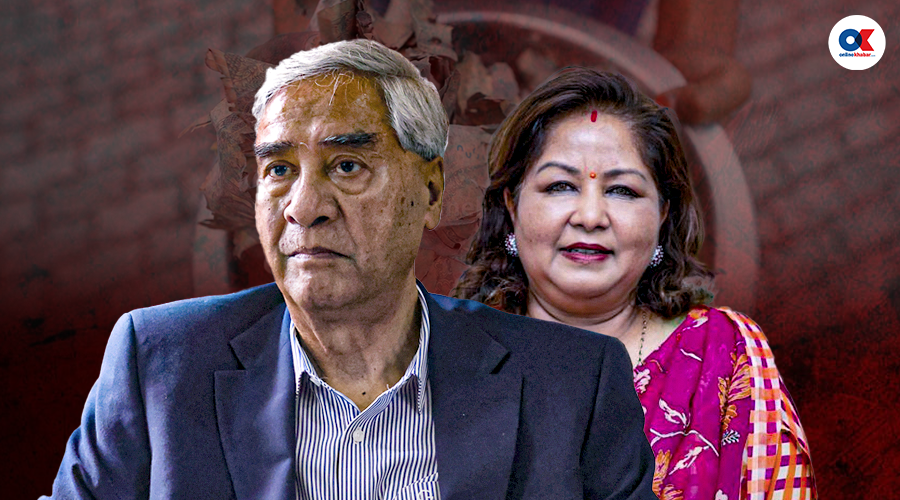
The government’s handling of investigations against former prime minister Sher Bahadur Deuba has raised questions about whether state institutions were initially used to target him or are now being used to protect him through political accommodation.
The same government that moved swiftly to pursue Deuba abroad, including initiating procedures to seek an Interpol red notice, has made little apparent progress in questioning him since his return to Nepal three and a half months ago.
Deuba’s shifting legal fortunes have fuelled speculation about a possible political understanding between his faction of the Nepali Congress and the Rastriya Swatantra Party (RSP)-led government, with some Nepali Congress leaders alleging that the government may be seeking to weaken the party’s newly elected leadership while keeping Deuba’s faction politically relevant.
Deuba left Nepal for Singapore on February 26, 2026, a week before the election held following the Gen-Z uprising, citing the need for medical treatment. His wife, Arzu Rana, also travelled to Singapore via India.
Following the formation of the government led by Balendra Shah, the Department of Money Laundering Investigation intensified its investigation into Deuba. On the 11th day of the government, the Kathmandu District Court issued an arrest warrant against him, while authorities also moved ahead with procedures to seek an Interpol red notice to bring him back to Nepal.
After police approached Interpol and the organisation sought additional documentation, authorities reportedly sent further documents in April. Deuba and Rana, meanwhile, moved from Singapore to Hong Kong amid fears of arrest.
Deuba subsequently wrote to the Department of Money Laundering Investigation, pledging to return to Nepal and cooperate with the investigation.
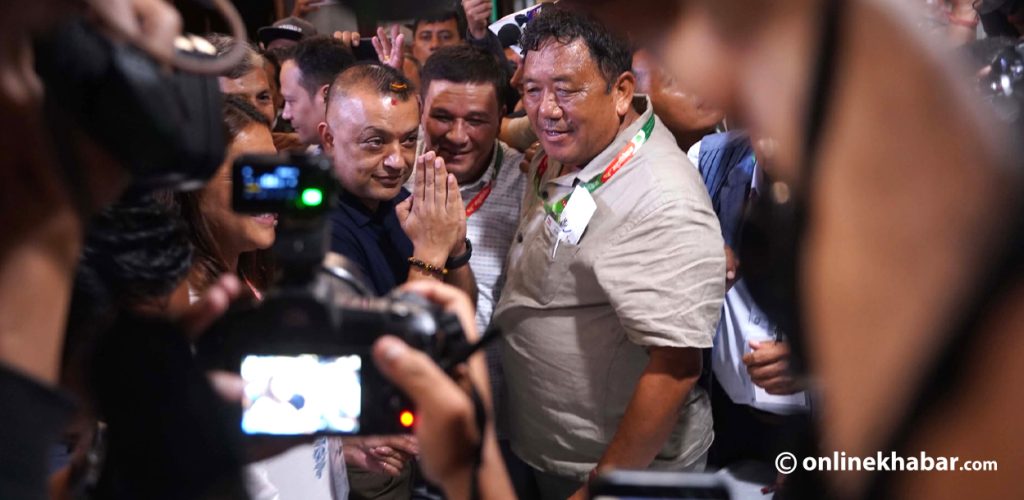
After spending around five months abroad, Deuba returned to Nepal on August 13. He was greeted by supporters at Tribhuvan International Airport, who escorted him with music and celebrations to his faction’s office in Chundevi.
His supporters had feared that he could be arrested upon arrival, particularly after former prime minister KP Sharma Oli and former home minister Ramesh Lekhak had been detained for 13 days in March.
But Deuba, waving from the sunroof of a vehicle on his way to Chundevi, struck a defiant tone, saying, “King Gyanendra could not do it. Who else can?”
The question, however, is whether the confidence surrounding his return was based solely on support from his political allies or whether the government had also offered assurances.
Sources cited in political circles claim that Deuba returned after receiving assurances that action against him would be suspended. Some Nepali Congress leaders believe there may have been a political bargain in which Deuba sought to strengthen his position while the government sought to weaken the Nepali Congress.
Nepali Congress vice-president Madhu Acharya has described the government’s strategy as unusual and suspicious, arguing that several developments suggest possible collusion between Deuba and the government.
According to Acharya, Deuba had been prepared to accelerate negotiations and reconciliation within the Nepali Congress while in Singapore and Hong Kong. The party’s establishment faction had reportedly been engaging leaders including Purna Bahadur Khadka and Shekhar Koirala in discussions aimed at bringing the factions together.
But the discussions abruptly stalled, and Deuba’s return to Nepal for a party gathering coincided with developments in the Supreme Court concerning the party’s legitimacy dispute.
Acharya argues that the timing of the court’s decision to allow a review of the ruling on the Nepali Congress leadership dispute, along with the circumstances surrounding Deuba’s return, has raised further suspicions.
Former chief justice Cholendra Shumsher Rana has reportedly claimed to have played a role in facilitating Deuba’s return and in helping secure a review of the court’s ruling on the party’s legitimacy. Deuba’s faction has also claimed that Rana had assured it of support in securing the party’s official status.
Rana reportedly told journalists before Deuba’s return that the former prime minister would pursue BP Koirala’s policy of national reconciliation and the Hindu state agenda.
Deuba’s subsequent public remarks appeared to reflect that prediction. In his written statement after returning to Nepal, he referred to BP Koirala’s national reconciliation policy, while in his verbal remarks he repeatedly declared, “I am a Hindu.”
Investigation against Deuba appears to have stalled
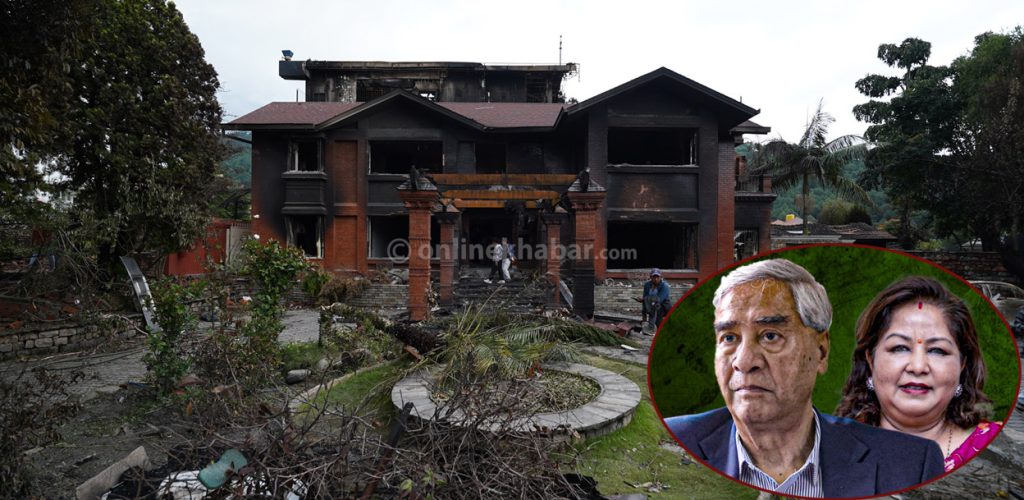
The investigation into Deuba also intensified following the Gen-Z uprising on September 9, 2025, when a mob attacked his residence in Budhanilkantha. Deuba and Rana were beaten, and their house was set on fire.
Videos showing banknotes burning during the fire went viral, prompting calls for an investigation into the source of the money. Deuba and then Nepali Congress president KP Sharma Oli had claimed that the videos were generated using artificial intelligence.
However, forensic testing conducted by the Department of Money Laundering Investigation reportedly established that the videos were genuine and not AI-generated. The forensic laboratory said further examination was required to determine whether the ashes contained remnants of banknotes.
Police had also approached Interpol seeking assistance in bringing Deuba back to Nepal after the district court issued the arrest warrant. When Interpol sought further evidence, authorities reportedly submitted additional documents in April.
Deuba challenged the arrest warrant at the Supreme Court. On May 25, the court ruled that the warrant issued by the Kathmandu District Court was invalid, reasoning that under the new ordinance, money laundering cases fell within the jurisdiction of the Special Court and that the warrant had been issued under the previous legal framework.
The ruling meant that Deuba could not be arrested on the basis of the warrant issued by the district court. However, the government appears to have halted the investigation itself rather than pursuing the case through the appropriate legal process.
Officials at the Department of Money Laundering Investigation declined to comment publicly on the matter. A senior official at the department, however, told sources that the efforts made to bring Deuba back and investigate him following the formation of the government have now been suspended.
“Deuba is no longer the government’s priority. Other issues have taken precedence,” the official reportedly said.
Investigations involving other members of the Deuba family have also seen little apparent progress. In June, the Commission for the Investigation of Abuse of Authority (CIAA) summoned former foreign minister Arzu Rana for questioning over suspected irregularities in a passport procurement contract. A notice was reportedly posted at the ruins of the Budhanilkantha residence after she could not be contacted in person.
Rana, who was abroad for treatment, had responded that she would cooperate with the investigation after returning to Nepal.
On July 22, the Department of Money Laundering Investigation also sent a notice to Deuba and Rana’s only son, Jaiveer Deuba, asking him to appear for questioning. Jaiveer, too, did not return to Nepal to face the inquiry.
Until June, the government appeared to be actively pursuing investigations against Deuba and his family. But developments in July, particularly the Supreme Court’s decision to allow a review of the ruling on the Nepali Congress leadership dispute, have fuelled suspicions that the government’s approach may have changed.
The Inam connection
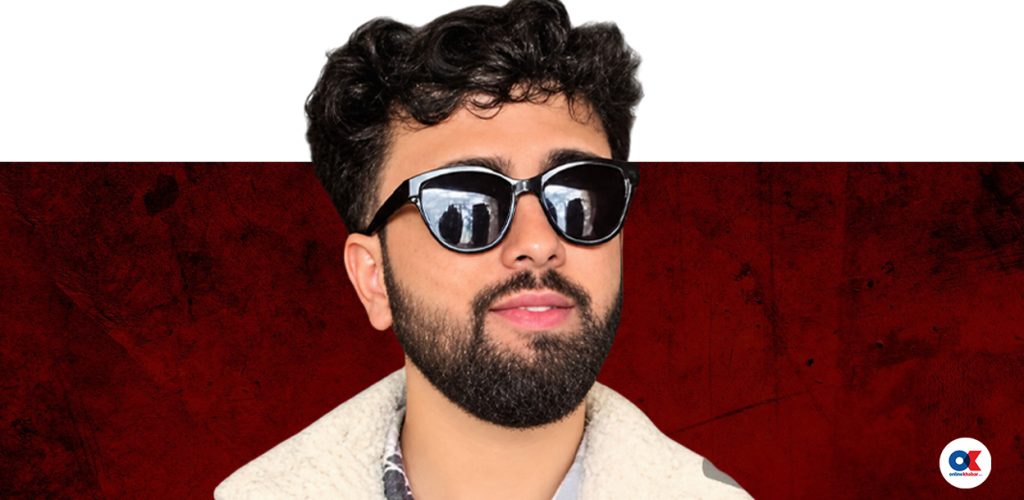
The political debate intensified after an audio recording of conversations among RSP lawmakers during a visit to China became public on November 20. The recording, inadvertently shared alongside a video posted on Facebook by RSP lawmaker Shriram Nyaupane, included a discussion about the Nepali Congress leadership.
“We should have Sher Bahadur Deuba at the helm of the Nepali Congress because that would benefit us,” the lawmakers reportedly said.
RSP lawmaker and chair of the Law Committee, Samiksha Baskota, also reportedly supported the argument, saying the court should rule in favour of Deuba’s faction.
The lawmakers reportedly argued that Deuba’s faction should retain the party’s official status until the local elections, while also suggesting that UML chairman KP Sharma Oli should remain at the helm of his party. They believed that a Congress led by Deuba and a UML led by Oli would benefit the RSP politically.
At first glance, the remarks could be dismissed as political discussion among lawmakers. But allegations that the government is influencing opposition party politics through state institutions and intermediaries have brought renewed scrutiny to the matter.
One figure at the centre of these allegations is Inam Sapkota, who has been arrested on allegations of establishing connections with senior government officials and judges to influence matters.
After details of WhatsApp conversations and meetings involving Sapkota surfaced, Supreme Court justice Hari Phuyal reportedly spoke to journalists at his chambers on October 29. Phuyal said Sapkota had shown unusual interest in the Nepali Congress leadership dispute and had attempted to influence the proceedings, advocating for the Election Commission’s decision to be overturned in favour of Deuba’s faction.
The Election Commission had recognised the faction led by Gagan Thapa, elected through the party’s special convention, on January 16. Deuba and Purna Bahadur Khadka challenged the decision in court.
On April 17, a joint bench of justices Sharanga Subedi and Nripadhwaj Niraula upheld the legitimacy of Thapa’s faction and dismissed Deuba’s petition. Khadka did not file a review petition against the ruling. Instead, Deepak Khadka, who was not a party to the original case, filed a petition seeking review.
On August 6, the Supreme Court, including Chief Justice Dr Manoj Sharma, ordered a review of the ruling.
The circumstances surrounding the review have also been linked to Sapkota’s alleged connections. An edited audio recording circulated on social media in recent weeks reportedly features Sapkota claiming that he knew Congress leader Sher Bahadur Deuba through party treasurer Umesh Shrestha and former home minister Bal Krishna Khand.
A Congress office-bearer, citing Sapkota’s statement to police, claimed that the special convention organised by the Gagan Thapa faction had been recognised because Deuba’s faction of the Congress and the UML led by Oli were at risk of boycotting the March 5 election.
The office-bearer also alleged that Sapkota had named Deepak Khadka, who remains associated with Deuba’s faction, and Shrestha, who was also aligned with the faction before the election.
Sapkota reportedly told investigators that he had also sought to arrange meetings with former chief justice Cholendra Shumsher Rana to influence judicial cases, with the meetings facilitated through the personal assistant of Congress leader Shashank Koirala. His statement reportedly mentioned Deepak Khadka, Bal Krishna Khand and Shashank Koirala.
These claims have not independently established wrongdoing by the individuals named.
Delayed registration of new Nepali Congress leadership raises suspicions
The RSP’s political calculations ahead of the upcoming local and provincial elections reportedly include keeping the Nepali Congress associated with Deuba’s faction, which it believes could increase public discontent with the party’s old leadership and benefit the RSP electorally.
The Congress’s 15th general convention, held from October 4 to 17, elected Gagan Thapa as party president and formed a new central committee. On November 2, general secretary Pradeep Paudel and other leaders submitted documents to the Election Commission seeking to update the party’s official records.
However, the commission has yet to update the records nearly three weeks later, raising concerns among the new leadership that the delay could be politically motivated.
Chief Election Commissioner Man Bahadur Karki, however, said the delay was due to the need to examine the documents submitted by the party, including numerous amendments to its statute, changes to the number of office-bearers and adjustments to representation clusters.
“The statute appears to have been amended in dozens of places during the convention, and the number of office-bearers and clusters has also changed. We have to verify whether all of that was done in accordance with the procedure,” Karki told Onlinekhabar recently.
Congress leaders remain suspicious, however, pointing to the commission’s decision to update the records of the party’s special convention held at Bhrikutimandap in late December within just two days, while the process for the latest convention has taken considerably longer.
Strategy to weaken the opposition?
The government’s handling of the UML has also been cited as evidence of a possible strategy to weaken opposition parties by influencing their internal politics.
On June 22, UML vice-president Bishnu Paudel was arrested in Surkhet. Although he had sought to travel to Kathmandu by air with security personnel, the government brought him to the capital in a microbus.
At the time, debate within the UML over replacing Oli as party chairman had intensified. Paudel and general secretary Shankar Pokhrel were reportedly working to challenge Oli’s leadership, with former president Bidya Devi Bhandari also supporting the effort.
Oli had accused the two leaders of attempting to split the party.
Paudel was subsequently arrested on money laundering allegations and brought to Kathmandu. The Special Court released him after 25 days, citing a lack of reliable evidence.
But within the weeks following his arrest, the campaign to replace Oli had weakened. Paudel subsequently began saying there was no alternative to Oli’s leadership, while Pokhrel was also compelled to state in September that they were not seeking to remove Oli.
RSP leaders reportedly believe that the UML under Oli’s leadership would pose less of a political challenge to them. The leaked conversations among RSP lawmakers during their China visit also appeared to reflect that calculation.
Congress president Gagan Thapa, however, has warned that his party will not remain silent if state institutions are used to weaken opposition parties.
Addressing the party’s central committee meeting on November 23, Thapa said the Congress would neither interfere in the internal affairs of the RSP nor refrain from holding the government accountable.
“We will not get involved in any of the problems within the Rastriya Swatantra Party, nor are we interested in doing so. We are clear about our role as the opposition. Where we need to work together with the government, we will. Where we need to hold it accountable, we will,” he said.
The allegations surrounding Deuba, the stalled investigations, the court’s review of the Congress leadership dispute and the delayed registration of the party’s new leadership have collectively raised questions about whether the government is seeking to manage the opposition’s internal divisions to its own political advantage.