
Kathmandu, November 24
The cancellation of a new tender process for the national pride Sunkoshi-Marin Multipurpose Diversion Project has come under scrutiny of the parliamentary Public Accounts Committee, which has begun a preliminary investigation and sought documents from the concerned government agencies.
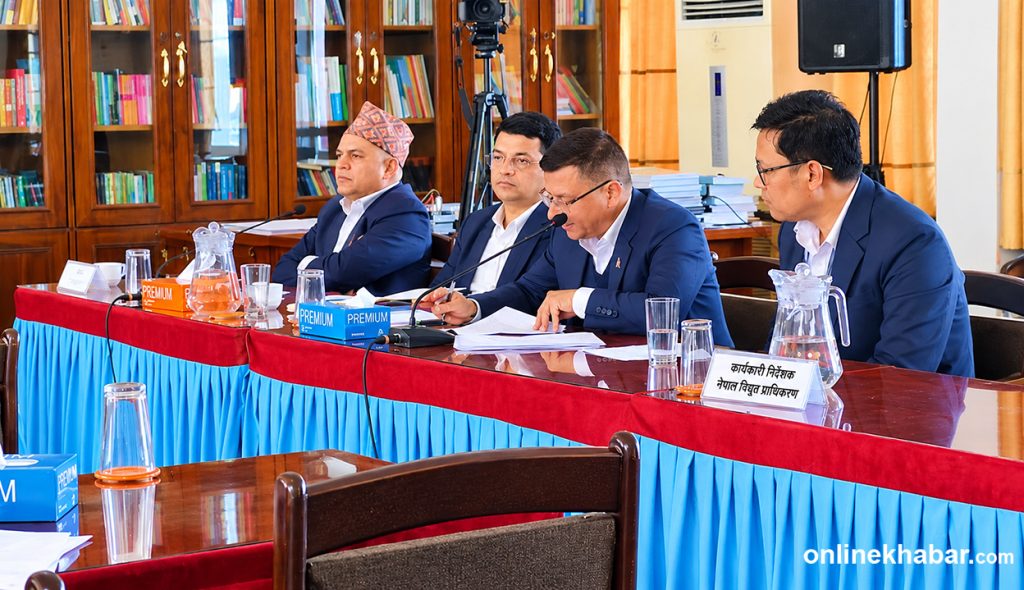
The committee decided to seek the relevant documents within seven days after holding discussions with Dinesh Rajouria, director general of the Department of Water Resources and Irrigation, and Sushil Acharya, joint secretary at the Ministry of Energy, Water Resources and Irrigation, among other officials.
“I direct the concerned authorities to provide the necessary documents within seven days. Once we receive them, we will study the matter further and reach a conclusion,” said committee chairperson Bharat Bahadur Khadka.
The committee held a nearly hour-long discussion before deciding to seek the documents. During the meeting, lawmakers raised questions about why the tender was cancelled after reaching its final stage, the circumstances surrounding the termination of the previous contract, potential financial losses to the state and the public, the retrospective application of amended procurement regulations, and possible interference by the Office of the Prime Minister and Council of Ministers.
The committee took up the issue following a complaint alleging that the new tender process had been cancelled after it had reached its final stage. Lawmakers raised eight major questions during the discussion.
Why was the tender cancelled at the final stage?
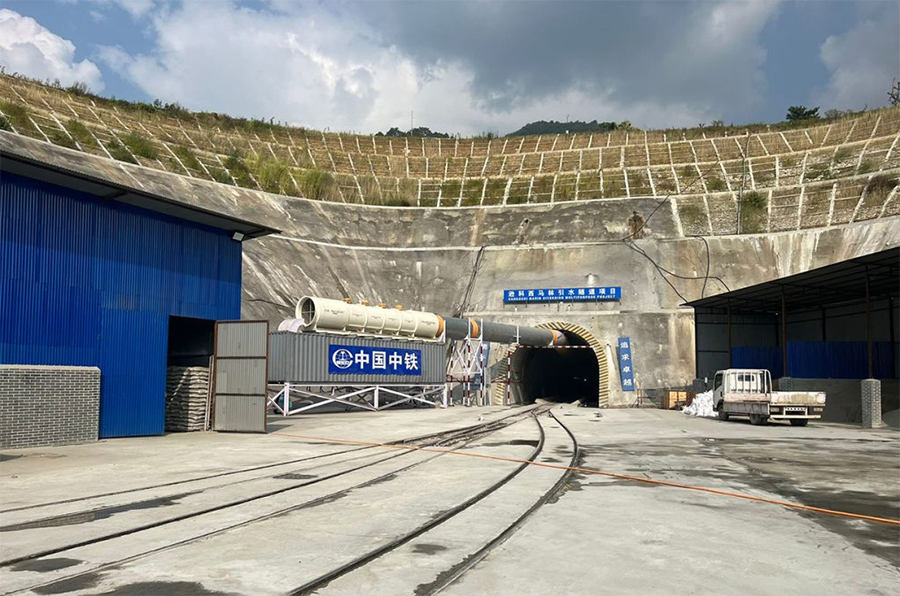
The project had invited international bids on June 8, for the construction of civil, hydromechanical and associated structures. Of the companies participating in the tender, three had passed the technical evaluation. The process was cancelled in the second week of November, just as preparations were being made to open their financial proposals.
The project office said the cancellation was made under Section 3(2) of the Public Procurement Act, 2007.
However, lawmakers questioned why the process had to be cancelled after the technical evaluation was complete and the tender had reached the stage of opening financial proposals.
“What responsibility will the concerned authorities bear for the impact on project costs and timelines, as well as losses to the public treasury, if the procurement process is cancelled at this stage?” asked Mahendra Bahadur Shahi, a lawmaker from the Nepali Communist Party.
Rastriya Swatantra Party (RSP) lawmaker Manish Jha also questioned the prolonged delay in the project.
“The 13.3-kilometre tunnel had already achieved a breakthrough in May 2024. Yet, even after more than two years, the work has not moved forward. Why has it stalled? What is the situation now, and what is the way forward?” he asked.
Nepali Congress lawmaker Janak Raj Giri questioned the impact of restarting the tender process on the timeline, cost and interests of the companies that had participated in the competition.
Can amended procurement rules be applied to an ongoing tender?
Another major issue raised during the meeting was whether amendments to the Public Procurement Regulations could be applied retrospectively to a tender process that had already begun.
Jha compared the situation to changing examination questions after students had completed and submitted their answer sheets.
“You have already submitted the bid, the project has moved forward, and the tunnel breakthrough has taken place. Then you change the law. How can that change be applied to the existing process?” he asked. “If I have already taken an examination, answered the questions and submitted my answer sheet, can you then change the questions? How can that be applied?”
RSP lawmaker Ganesh Dhimal also sought a clear legal basis for applying the amended regulations to a process in which bids had already been invited, technical proposals evaluated and financial proposals were about to be opened.
“One process had already begun, and then the 15th amendment was introduced. Later, the 16th amendment was used as the basis for cancelling it,” Dhimal said. “What complications could arise in the future from problems created by the retrospective application of regulations? This requires thorough discussion and careful examination.”
Shahi also questioned the legal justification for applying new provisions to an existing tender after the procurement process had already started.
He warned that repeatedly cancelling and restarting contracts for multi-year projects in the name of regulatory changes could disrupt implementation. He said the legal basis and facts behind the decision needed to be made clear.
Was the 16th amendment violated?
Appearing before the committee, Rajouria defended the cancellation, saying the decision was consistent with the law.
He said the 16th amendment to the Public Procurement Regulations requires the use of rated-point criteria for the procurement of complex structures costing more than Rs 1.5 billion. Under this system, contractors are assessed on the basis of their technical capacity, experience and past performance.
According to Rajouria, the rated-point system allows a more comprehensive assessment of contractors than the previous average-pricing method. He said the decision to cancel the tender and initiate a fresh competitive process was intended to avoid legal complications and ensure that a capable contractor was selected.
“Compared with the evaluation method based on average pricing, the rated-point criteria allow technical capacity, experience, performance and other prescribed standards to be assessed comprehensively. This is expected to provide a stronger basis for selecting a suitable and capable contractor for complex construction works,” he said.
Rajouria argued that the revised approach would help ensure the quality of the project, improve construction efficiency, increase the likelihood of timely completion and ensure the proper use of public funds.
He also rejected suggestions that the decision had been taken to benefit any particular individual or group.
“I would like to make it clear to the committee that the tender was cancelled not to serve the interests of any individual or particular party, but to comply with prevailing public procurement laws, ensure a competitive procurement system, maintain construction quality and protect the broader public interest,” he said.
However, lawmakers were not satisfied with his explanation.
“The explanation did not clarify the timing of the amendment, the stage the tender process had reached, or the legal basis for applying the amended regulations to this particular process,” said CPN-UML lawmaker Ganesh Singh Thagunna. “Therefore, his response has not been sufficient to satisfy us.”
What is the financial cost of cancelling the tender?
Lawmakers also sought an assessment of the financial losses the state may have incurred or could incur as a result of the cancellation.
Congress lawmaker Giri said the issue was directly linked to public financial discipline and warned against repeatedly halting national pride projects or cancelling contracts in the name of changes in policies, rules or laws.
“Such a practice can cause substantial financial losses to the state,” he said.
He asked how much construction costs could increase and how much longer the project could take if a fresh tender process had to be initiated. He also sought details of the financial liabilities arising from the termination of the previous contract.
Shahi similarly demanded an explanation of the financial losses, the cost of delays and the outstanding liabilities associated with the earlier contract.
Responding to the questions, joint secretary Acharya said it was not immediately possible to determine the exact financial loss caused by the cancellation.
“It is difficult to conclude at this stage that the cancellation of one bid and the move to a new bidding process have resulted in a major financial loss,” he said.
Acharya also informed the committee that some of the bonds furnished by the previous contractor had already been forfeited, while the process of forfeiting others was still underway.
How is the cancellation linked to the previous contract?
Lawmakers said the latest controversy could not be examined without looking into the termination of the project’s earlier contract.
The initial construction work was associated with Patel-Raman JV. After the previous contract was terminated, a new tender was initiated for the remaining works. However, the new process was also cancelled after reaching its final stage, prompting questions about the earlier termination and the financial liabilities arising from it.
Jha questioned the circumstances in which the earlier tender had been cancelled, particularly as the decision was taken during the period of the transitional government.
He said the circumstances surrounding the decision, the officials responsible and the reasons behind it also needed to be investigated.
Giri sought details of compensation claims against the previous contractor, the recovery of bank guarantees and the additional costs likely to arise from awarding the remaining works through a fresh contract.
He also asked how much money the state had recovered following the termination, how much had been forfeited and what financial liabilities remained outstanding.
Giri, along with Congress lawmaker Yogesh Gauchan Thakali, had submitted a written complaint to the Public Accounts Committee seeking an investigation into the matter. Their complaint had specifically raised concerns about compensation and the forfeiture of bank guarantees related to Patel-Raman JV, as well as the potential impact of cancelling the new tender on the recovery process.
During Tuesday’s meeting, Giri reiterated that the committee should examine whether the cancellation of the new tender could affect the recovery of outstanding compensation and other financial liabilities from the previous contractor.
Was there interference from the Prime Minister’s Office?
The role of the Office of the Prime Minister and Council of Ministers in the tender cancellation also came under scrutiny.
Rastriya Prajatantra Party lawmaker Khusbu Oli questioned Rajouria over reports that the director general of the Department of Water Resources and Irrigation and the project chief had been taken into police custody and kept at the Prime Minister’s Office, allegedly to pressure them into cancelling the tender.
“Reports have appeared in the media and on social media about the director general visiting the Prime Minister’s Office. Is this true? What are the facts?” she asked.
Oli said the Prime Minister’s Office had the authority to seek reports on national pride projects and that the issue was not whether it could intervene, but whether any such intervention followed the proper legal process.
“Was there any pressure on you? Please clarify whether that happened,” she asked.
Rajouria acknowledged that he had visited the Prime Minister’s Office, as had the project director, but denied experiencing any form of coercion or interference.
“Yes, I did visit the Prime Minister’s Office, and the director also went there. But I did not experience any kind of control or interference,” he said.
Joint secretary Acharya, meanwhile, said the procurement law and regulations delegated authority over procurement-related decisions, including design, cost estimates and approval, to the departmental level. He said there was no general requirement for every procurement decision to receive written approval from the ministry.
However, he did not directly address the allegations concerning the Prime Minister’s Office.
What about the losses suffered by farmers?
Beyond the legal and financial questions surrounding the tender, lawmakers also highlighted the impact of the project’s delay on agriculture and irrigation in Madhesh.
Jha argued that the discussion should not be limited to calculating the financial losses arising from the procurement process. It should also account for the opportunities farmers had lost because water had not reached their fields.
“Why are we only calculating how much was lost in the process? While this project has remained stalled, how many farmers in the Tarai have lost opportunities because their fields did not receive water? How many agricultural seasons have passed without irrigation? Shouldn’t we be looking at that as well?” he asked.
He questioned who would account for the losses suffered by farmers and the potential agricultural output that could have been generated if the project had been completed.
“If irrigation had reached 180,000 bighas of land, how much could have been cultivated? How much could have been produced? And for how many more seasons will farmers have to wait?” he said.
Jha called for a comprehensive investigation into the cancellation, the application of the amended regulations and the broader consequences of the project’s delay.
The Sunkoshi-Marin project aims to divert water from the Sunkoshi River through the Marin River to irrigate agricultural land in Madhesh. It is expected to provide irrigation to around 180,000 bighas of land and generate 28 megawatts of electricity.
RSP lawmaker Dhimal, who represents Madhesh, said the project’s delay had also affected the expectations he had raised among constituents.
“I have heard about the Sunkoshi-Marin Diversion Project as a national pride project for a long time. I represent Madhesh, and I have repeatedly told people that the project would soon bring irrigation to several districts and make it possible to cultivate their land. I am deeply disappointed to see this issue being discussed in this way today,” he said.
He said the project’s delay should be assessed in terms of lost agricultural seasons, production and income, adding that prolonged uncertainty could fuel public dissatisfaction in Madhesh.
Jha also warned that if the project were cancelled or stalled indefinitely, public frustration in the region could grow.
He said the project was particularly important at a time when parts of Madhesh were facing water shortages and increasing concerns over desertification.
“From an aircraft, you can see ponds across Janakpur, but there is no water in the wells,” he said, arguing that people had placed considerable expectations on the project to address the region’s water and irrigation problems.
What is the way forward?
While lawmakers questioned the legality and financial implications of the cancellation, they also stressed that the project should not remain stalled indefinitely.
Jha said the government needed to clarify the legal basis for its decision, account for the financial liabilities and present a concrete plan for completing the project.
He said lawmakers needed a clear timeline explaining when construction would resume and when irrigation water would reach the targeted areas.
“We want to hear what the plan is going forward. If there is a clear plan, we, as elected representatives, can raise the issue in the House and with the relevant authorities, press for action and help move the work forward,” he said.
Acharya said the ministry’s priority was to initiate a new procurement process and resume construction as soon as possible.
He said the existing cost estimate needed to be reviewed and updated, while the bidding documents and evaluation process had to be revised in line with the amended procurement regulations. The department and project office were working on these preparations, he added.
“The ministry’s priority is to complete the procurement process as soon as possible and begin the work,” Acharya said.
He acknowledged that while the tunnel construction had progressed faster than expected, work on other components, particularly the headworks, had been delayed.
The Public Accounts Committee is expected to examine the documents sought from the concerned authorities before deciding on further action.