Kathmandu, November 24
The Director General of the Department of Water Resources and Irrigation, Dinesh Rajouria, has claimed that the decision to cancel the tender for the Sunkoshi-Marin Diversion Multipurpose Project was legally justified.
He said the tender was cancelled to ensure that the procurement process complied with the amended provisions of the Public Procurement Regulations.
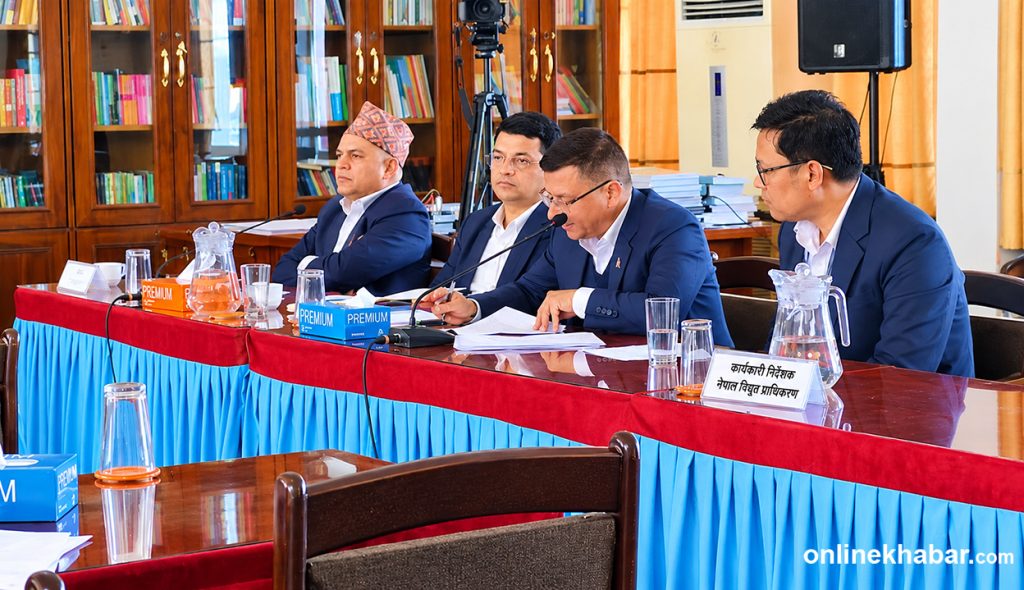
Responding to questions raised at the Public Accounts Committee of the House of Representatives, Rajouria said he made the decision prioritising his responsibility as the head of the department to ensure compliance with prevailing laws and public procurement regulations.
A complaint has been filed with the committee alleging that the tender for civil, hydromechanical and related infrastructure works was cancelled at the last stage despite all procurement procedures having been completed, and that the decision was flawed. The committee is discussing the complaint at its meeting on Tuesday.
According to Rajouria, the cancellation was intended to ensure a lawful, transparent and competitive procurement process rather than proceed with a procurement procedure that could potentially violate legal provisions.
He told the committee that the 16th amendment to the Public Procurement Regulations requires the adoption of rated point criteria for procurement involving complex structures costing more than Rs 1.5 billion.
Rajouria argued that rated point criteria allow a comprehensive assessment of technical capacity, experience, performance and other prescribed standards, unlike evaluation methods based on average pricing.
He said the method was expected to be more effective in selecting competent contractors for complex construction works.
According to him, the approach would help ensure the quality of the project, construction efficiency, the likelihood of timely completion and the proper utilisation of public funds.
He also claimed that preparing tender documents in line with the amended regulations and restarting the competitive bidding process would help minimise potential legal disputes and procedural complications in the future.
Rajouria told the committee that the decision was not taken in the interest of any particular individual or party but to ensure compliance with public procurement laws, competitive procurement, construction quality and public interest.
“Whenever a public procurement process is undertaken, it is the duty of responsible administrative officials to prioritise compliance with prevailing laws, the optimal utilisation of public resources and long-term national interest over immediate procedural convenience,” his clarification stated.
The international tender for the construction of the dam, power house and associated structures under the Sunkoshi-Marin Diversion Multipurpose Project had been cancelled. Of the six companies that participated in the bidding, three were found technically qualified. The cancellation came as the authorities were preparing to open their financial proposals, triggering controversy.
The decision to cancel the tender after it had reached the financial proposal stage raised questions over its justification, the procurement process and the basis for the decision.
Rajouria said the department had concluded that proceeding in accordance with the amended Public Procurement Regulations was the appropriate course of action.
He also said the department would give due importance to the concerns and queries raised by parliamentary committees regarding its activities and those of subordinate agencies, and pledged to appear before the committee with relevant documents and evidence if summoned for further clarification or consultation.