Kathmandu, November 24
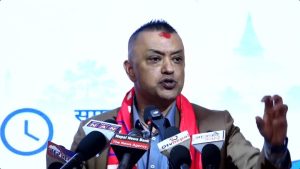
Nepali Congress President Gagan Kumar Thapa has said the Gen Z uprising in September last year was the result of the country’s politics becoming increasingly centred on the pursuit of power.
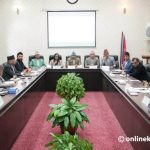
Addressing a meeting of the party’s Central Working Committee at the party’s central office, Thapa said politics had become entirely focused on power after 2015, contributing to the events of September 8 and 9, 2025.
He also said successive governments had failed to deliver the services expected by the public over the past decade. Referring to demographic changes, shifts in settlement patterns and the economy, and the emergence of new technologies and communication platforms globally, he said the state had failed to adapt and deliver accordingly.
“We have concluded through our general convention that the repression on September 8 and the criminal incidents on September 9 were wrong. We have also concluded that the events of September 8 and 9 should not be undermined and must be investigated,” Thapa said.
Thapa also said the Nepali Congress would not get involved in internal disputes within the ruling Rastriya Swatantra Party (RSP).
Addressing the Central Working Committee meeting, which began on Tuesday, he said the party had made its position clear in the documents adopted by its general convention.
“We will not get involved in any kind of problems within the Rastriya Swatantra Party. We are not interested in them, we will not engage in any disputes, and we will not take part in any disorder,” Thapa said.
He said opposition parties also had responsibilities in ensuring the political system functioned, just as the government had its own responsibilities. However, he said the Congress was not in favour of forming an alliance among opposition parties at this stage.
“We are clear that we are the main opposition party, and we understand our responsibilities,” he said. “Where we need to work with the government, we will cooperate. Where we need to hold it accountable, we will do so. Where we need to question it, we will ask questions.”
He added that the party would also resist the government when necessary and cooperate with other opposition parties on issues requiring dialogue and joint action.
Thapa also warned of disciplinary action against party members aligned with the faction led by former party president Sher Bahadur Deuba if they joined another political party or contested elections under another party’s symbol.
Addressing the same meeting, he said there could not be two separate general conventions within one political party and urged members to stop activities that suggested otherwise.
He appeared to be referring to Deuba-aligned leaders and representatives, including those elected to the National Assembly and local governments, who have sided with the faction. Thapa urged them to respect the party statute.
“If someone elected using the Nepali Congress election symbol joins another party, the party will take disciplinary action,” he said. “Regardless of whether you participated in the special general convention or the subsequent general convention, if you are a Nepali Congress member and contest an election for another party, it is my responsibility to enforce the party statute.”
Thapa said he was still working to bring disgruntled party members together, but that there were limits to reconciliation.
“What is happening now is not a Nepali Congress convention. There cannot be two conventions of the same party,” he said, referring to the activities of the Deuba faction. “I have listened to one colleague after another and worked to bring everyone together to reach this point. I will continue trying, but there is a limit. Until now, the Congress did not have this problem. But if someone leaves the Congress and becomes a member of another party, the statute is clear.”
He described the activities of the Deuba-aligned faction as actions being carried out by a separate political party.