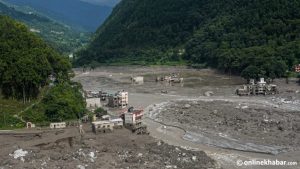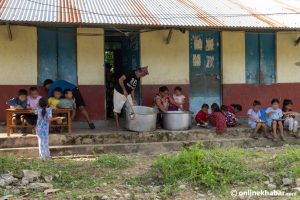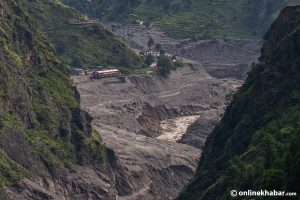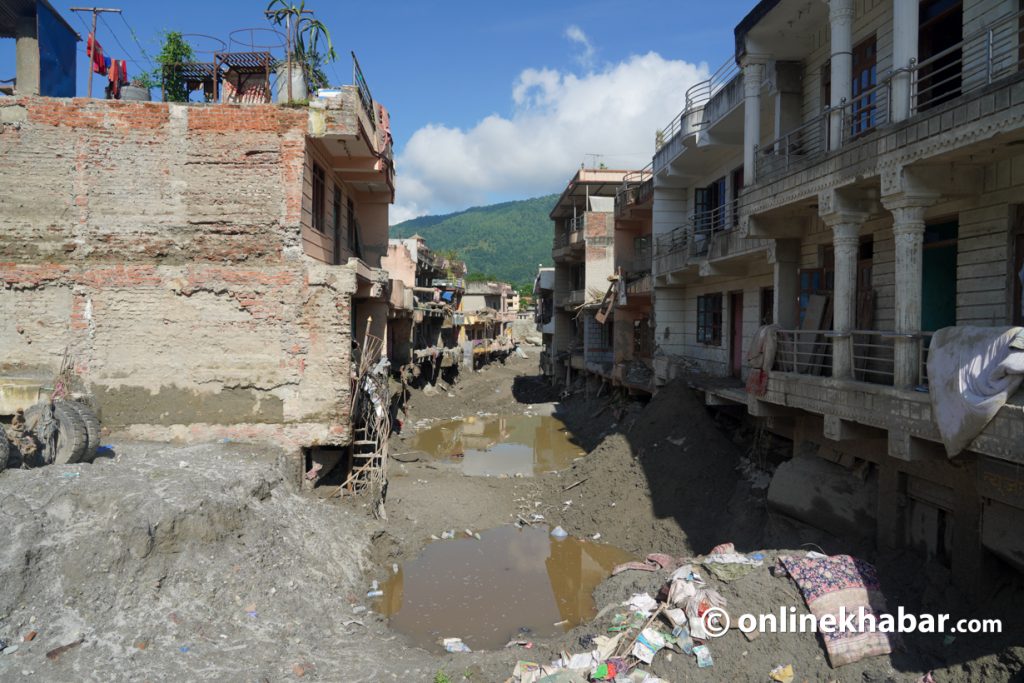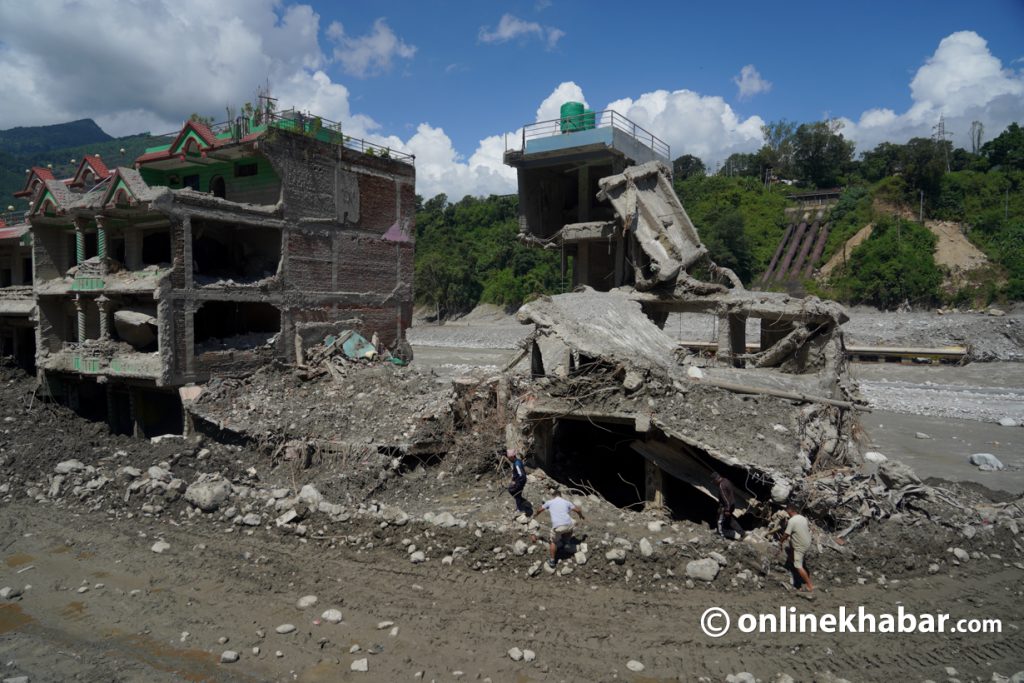
The government has estimated that Nepal will need between $4.7 billion and $4.75 billion for the rehabilitation and reconstruction of areas affected by the Rasuwa–Bhotekoshi disaster.
However, the government requires $57 million for immediate recovery efforts, according to Maheshwar Dhakal, joint secretary and spokesperson for the Ministry of Agriculture, Forests and Environment.
Speaking at a meeting of the parliamentary special committee studying and monitoring disasters along the Bhotekoshi and Kaligandaki corridors at Singha Durbar on Wednesday, Dhakal said the estimated cost could rise once non-economic losses and damages are assessed.
“The requirement of $4.7 billion to $4.75 billion is an initial estimate. Losses and damages of a non-economic nature could push the figure higher. We will publish a detailed official assessment later,” he said. “An immediate $57 million is required for initial recovery, but the government cannot mobilise the entire amount at once.”
Dhakal said securing the funds needed for immediate recovery would be a challenge, prompting the government to seek international assistance.
He said a meeting of the Loss and Damage Fund had proposed making $20 million available to Nepal for a funding proposal, with an additional $1.6 million allocated for administrative costs.
“The international community has given this issue high priority, and a special emergency meeting of the Loss and Damage Fund was held. The meeting decided to make $20 million available to Nepal for a proposal, while $1.6 million was allocated for management costs,” Dhakal said.
The government will prepare and submit its proposal after receiving an official letter from the fund’s secretariat, he added.
According to Dhakal, the proposal could be considered at the fund’s board meeting scheduled for December 15–17 in Manila, Philippines. If Nepal cannot complete the necessary data collection, verification and review in time, a decision could be expected at the board meeting scheduled for March 17–19 in Kathmandu.
He said submitting the proposal as early as possible would help accelerate its approval and implementation.
Dhakal also called for coordination between parliamentary committees in the National Assembly and the House of Representatives that are separately studying the disaster.
He said the committees’ findings and recommendations should complement each other and maintain consistency in their overall conclusions. If possible, their findings could be incorporated into a single report, he suggested.
“Both committees are studying this issue, so their recommendations and decisions need to be consistent and coordinated. If their reports can be combined into one, or at least prepared with the same underlying objectives, it will be easier for the government to implement the recommendations,” he said.