Salyan, October 29
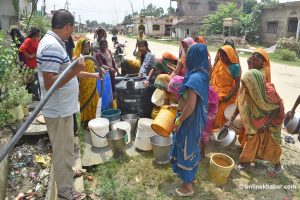
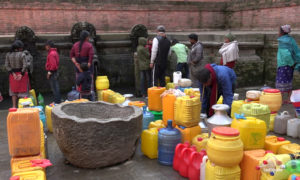
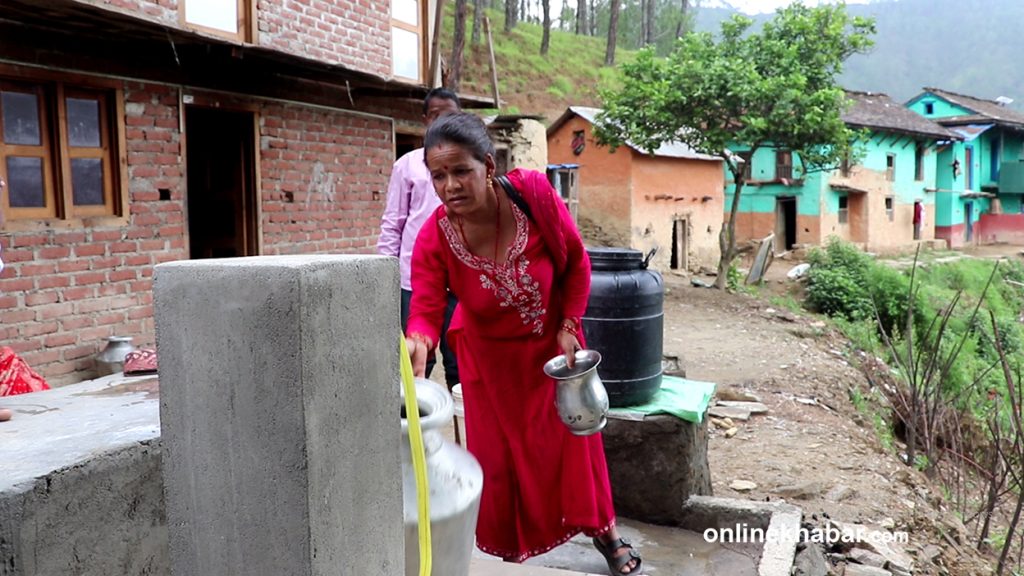
Residents of many settlements in Bagchaur and Siddha Kumakh in Salyan, who once spent hours walking to fetch water, waiting in queues at communal water sources and sometimes waking up at midnight to collect water, are experiencing a gradual transformation in their daily lives as drinking water taps reach their homes.
With improved access to drinking water, schools have also gained safe water supplies and user-friendly toilets. The time saved from fetching water is allowing residents to focus on household chores and other activities.
For decades, fetching water was a major responsibility for families, particularly women, who had to balance household work, childcare and livestock care with long journeys to water sources. In some settlements, collecting a single vessel of water required hours of walking, followed by lengthy waits at communal taps or springs.
Eighty-year-old Bimili Roka of Kharban in Siddha Kumakh Rural Municipality-4 still remembers those days.
“I used to walk for hours to fetch a single vessel of water, carrying a basket and a water pot to a stream or communal water source. Even after reaching there, I had to wait in line. Sometimes, I had to spend a long time waiting for my turn,” she said. “Now, we have a tap at home. At this age, I am very happy to see water coming directly to my house.”
For Roka, who has spent most of her life carrying water, having a tap at home represents a significant change after years of hardship.
Rewati Pariyar of Bagchaur Municipality-3 shares a similar experience. Previously, she had to prioritise fetching water over other household responsibilities. Crowds at water sources sometimes forced her to wake up at midnight to collect water, disrupting her daily routine.
“Earlier, I had to leave household chores to fetch water. Sometimes, I had to wake up at midnight and spend hours collecting it,” she said. “Now, there is a tap near my house. The time saved has made household work much easier.”
Improved access to water has reduced women’s workloads in Bagchaur and Siddha Kumakh. Time previously spent carrying water can now be devoted to household chores, farming, livestock rearing and other activities. Children also have more time to study, residents say.
Water shortages had affected schools as well. Inadequate water supplies and insufficient or poorly designed toilets created difficulties for students, affecting personal hygiene and the overall school environment.
The situation has improved with the construction of safe water facilities and user-friendly toilets at several schools in the two local governments.
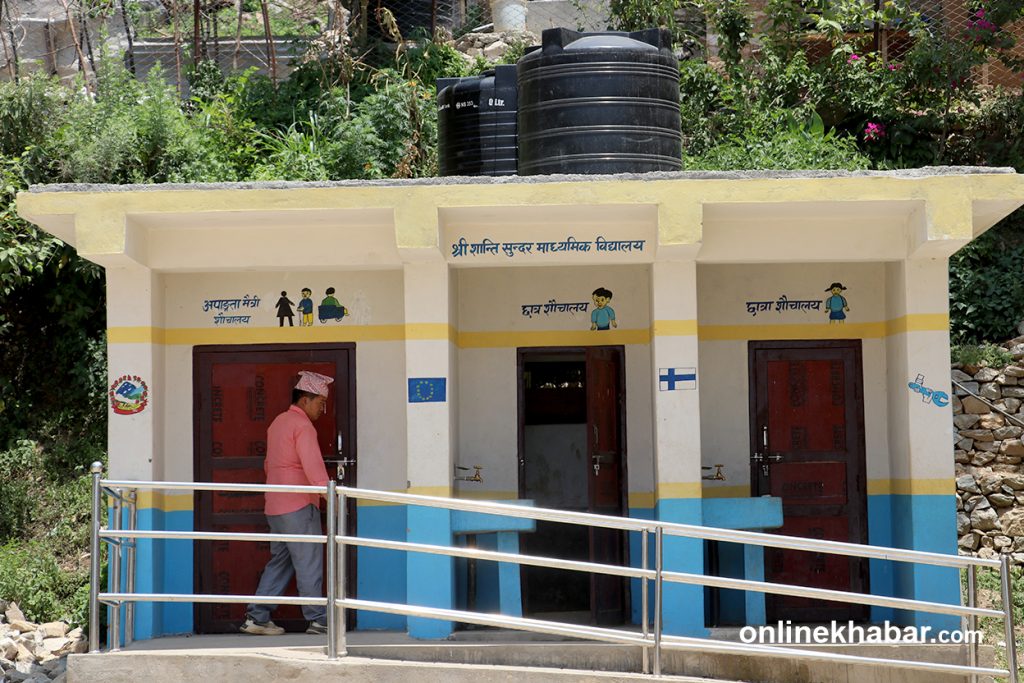
According to Rupalal Bhandari, headteacher of Shishujagaran Secondary School, students previously had to wait in queues to use toilets, while the existing facilities were inadequate and unsuitable for convenient use. Students also had to leave the school premises to fetch water, and boys and girls had to share the same toilets.
“Students previously had to wait their turn to use toilets, and the facilities were not suitable for use. They also had to go out to fetch water, and the school lacked an adequate supply of clean water,” he said. “The situation has now changed. The school has safe drinking water and user-friendly toilets, and students no longer face the same problems.”
The improvements have been made through the Sustainable Water Supply, Sanitation and Hygiene for All (SUSWA) project.
22 water and sanitation schemes completed in three years
Bagchaur Municipality has prioritised the expansion of safe and sustainable drinking water services despite geographical challenges. According to the municipality, modern water-lifting technology has been used to develop and extend water supply systems in settlements located at higher elevations and far from water sources.
Between fiscal years 2023/24 and 2025/26, the municipality completed 11 water supply and sanitation schemes. More than 7,417 people from over 1,322 households have benefited from these projects, according to the municipality.
Mayor Janak Raj Gautam said the municipality considers drinking water not only a basic necessity but also an important foundation for improving people’s living standards.
“Despite geographical difficulties, the municipality has prioritised expanding safe and sustainable drinking water services. We have constructed and expanded water supply schemes in different wards using modern technology,” Gautam said. “We are continuing efforts to extend access to drinking water in the remaining areas as well.”
Siddha Kumakh Rural Municipality has also been implementing infrastructure development and behaviour-change programmes in the water and sanitation sectors. In partnership with the local government, the SUSWA project has been conducting drinking water, sanitation and behaviour-change activities across all five wards.
In fiscal year 2024/25, five drinking water projects and four user-friendly toilets were constructed. In fiscal year 2025/26, another six drinking water projects were completed, user-friendly toilets were built at three schools, and one toilet was repaired.
Alongside infrastructure development, programmes on personal hygiene, menstrual hygiene, waste management, adolescent groups, traditional healer groups and rural maintenance have also been conducted.
As access to drinking water expands, changes are becoming increasingly visible across the communities. Families no longer need to walk for hours to collect water, students have access to safe water and clean toilets, and women have more time for other activities. Improved hygiene practices are also helping reduce health risks.
Siddha Kumakh Rural Municipality Chairperson Bharat Giri said the changes extend beyond the construction of taps and toilets, transforming people’s daily lives.
“Today, there are many stories of change in Siddha Kumakh. In some households, the need to walk for hours to fetch water has ended. In some schools, children are using safe water and clean toilets. Women’s workloads have decreased, children have more time to study, hygiene practices have improved and health risks are gradually declining,” he said. “These changes are not merely achievements in infrastructure development. They are the results of collective efforts by local governments, development partners and communities.”
For elderly residents who spent decades carrying water pots and baskets, having a tap at home has become a dream come true. Women have been relieved of hours of labour, while schoolchildren now have access to safe water and user-friendly toilets.
Across Bagchaur and Siddha Kumakh, improved water access is changing not only daily routines but also how people spend their time and energy. Time once devoted to searching for water is now available for household work, education and other activities, laying the foundation for healthier and more convenient lives.