Kathmandu, October 1
Stakeholders have called for making the proposed National Climate Change Policy 2083 more implementation-oriented.
They have drawn the government’s attention to the need for clear institutional structures, human resources, funding and inter-agency coordination, saying the policy cannot be effectively implemented unless these requirements are clearly addressed.
At a discussion organised by Prakriti Resources Centre with representatives of various organisations working in the climate and energy sectors, participants said the draft incorporates many positive provisions but needs clearer institutional, financial and legal foundations for implementation.
They also called for giving special priority to climate justice, loss and damage, the role of local governments and mobilisation of climate finance in the changing context. They expressed concern that climate justice has not been given adequate priority in the draft despite Nepal suffering significant losses from climate-induced disasters in recent years.
They suggested that climate justice should not be limited to issues Nepal raises at the international level but should be mainstreamed into every policy, strategy and action plan.
Climate justice and implementation aspects need to be strengthened: Sherchan
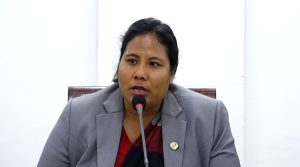
Pragya Sherchan, programme coordinator at Prakriti Resources Centre (PRC), said the draft addresses more issues than previous policies but its implementation aspects need to be further strengthened.
She said although the draft identifies issues including coordination among the three levels of government, the need for skilled human resources and the lack of climate finance, it needs to provide a clearer roadmap for mobilising the climate finance Nepal requires.
Noting that it is positive that gender diversity and sexual and gender minorities have been included in policy formulation, she stressed the need for clear provisions to ensure their participation.
“Many issues left out of the previous policy have been incorporated this time, and existing gaps in climate governance have also been identified. But having a good policy alone is not enough. It needs to be clearer on how to ensure the finance, skilled human resources, institutional coordination and legal structures required for effective implementation,” she said.
She added, “If the policy itself clearly states how representation, quotas or other institutional mechanisms will be ensured, the implementation gaps seen in the past can be reduced.”
Sherchan stressed that climate justice should be incorporated into every policy, strategy and action plan rather than being treated as a separate issue.
“Although climate justice has been mentioned in the draft, it does not appear to have been given adequate priority. Climate justice should not be limited to issues Nepal raises at the international level; it should be mainstreamed into every policy, strategy and action plan,” she said.
She also said the policy should include provisions to enforce the “polluter pays” principle at the national level, rather than applying it only at the international level.
Separate provision needed for loss and damage
Stakeholders have suggested that loss and damage, which has emerged as a major issue in international climate discussions alongside climate adaptation and mitigation, should be clearly addressed in the policy.
Kushal Gurung, a climate and energy expert, said the proposed National Climate Change Policy 2083 needs a separate provision to clearly address loss and damage caused by climate-induced disasters.
He said systematic accounting of loss and damage, evidence-based data and a responsible mechanism should be made important foundations for policy implementation.
“Compared with the previous policy, the draft is broader, but greater clarity is needed on implementation and the management of loss and damage,” he said.
He said the new draft also includes strategies and an action plan, making it necessary to clearly define responsibilities and monitoring mechanisms for implementation.
He particularly warned that it would be difficult for the Ministry of Agriculture, Forestry and Environment alone to implement and monitor the policy because it covers sectors including food security, forests, hydropower, energy, transport, physical infrastructure and health.
Although the draft states that the Climate and Environment Protection Council and the National Planning Commission will be responsible for monitoring, Gurung said their participation in the policy-making process and the provision of adequate human resources and other resources would be important.
“The draft is much broader and more inclusive than the previous policy. The roles of various stakeholders, including the private sector, have been clearly identified,” he said. “Gender equality and social inclusion have also been incorporated. But the main challenge now is implementation.”
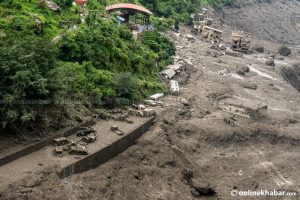
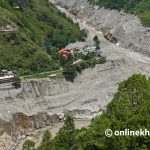
Experts said the issue of loss and damage arising from recent climate-induced disasters, particularly in Rasuwa and other areas, needs to be clearly addressed in a separate section of the policy.
Gurung said although the draft mentions climate finance, it should not be limited to international loans and grants but should be linked with the government’s own resources and financial mechanisms. He said international climate finance, the domestic financial system, green investment and carbon finance should be viewed in an integrated manner.
Gurung said systematic records of damage caused by disasters in areas including Melamchi, Kagbeni and Humla should be prepared to support claims for funding from international sources.
He said although the National Disaster Risk Reduction and Management Authority has been identified as the lead agency for disaster management, changes in institutional structures and coordination are also needed because separate recognition and mechanisms are required to access international climate finance.
“Policy should be clear on localisation and resource management”
Representatives of organisations working on climate action also suggested that the proposed National Climate Change Policy 2083 should clearly address the role of local governments, private-sector investment and climate finance mobilisation in reducing and adapting to the impacts of climate change.
Badri Baral, national director of Winrock International Nepal, said the draft is more comprehensive and broad than the previous policy, but some aspects need to be clarified for implementation.
He said that as Nepal has adopted a federal structure, the policy should place local governments, which directly face the impacts of climate change, at the centre of climate action. He said the policy should clearly provide for the resources, authority and human resources needed by local governments to address climate-related risks.
“Important issues such as climate justice, youth, local governments and loss and damage have now been incorporated, and the government should be appreciated for that. But the main requirement now is to make it implementation-oriented and localise it,” he said.
He added, “In line with the federal structure, the policy should provide clear guidance on strengthening local governments to address climate change issues, providing them with the necessary resources and human resources, and making their roles more effective.”
He also stressed the need to mobilise private-sector investment and introduce incentives for such investment alongside public resources and international climate finance. He said the green finance taxonomy introduced by Nepal Rastra Bank could be linked with the climate policy to create a clear basis for encouraging the private sector to invest in climate-resilient activities.
Stressing that climate change education should be incorporated scientifically and systematically from the school level, he said, “It is equally necessary to develop the human resources and capacity required to formulate and implement climate-related plans at the local level.”
“Regarding loss and damage, a separate procedure or regulation should be formulated to mobilise international resources. The measurement, verification and documentation of damage should be made reliable, while ensuring that disaster-affected communities themselves receive resources in a fair manner,” Baral said.
Baral also stressed the need for the policy to provide guidelines for integrated mobilisation of public resources from the federal, provincial and local levels, as well as private-sector investment, alongside international resources.
He said a system should be established not only to provide resources but also to monitor whether the available authority and resources are being used effectively, reward agencies that perform well and hold accountable those that fail to fulfil their responsibilities.
Baral argued that if the proposed policy provides clear guidance on financial resource mobilisation, effective use of authority and localisation of climate policy, it would facilitate the development of necessary procedures, regulations and other legal and institutional structures.
After the government published the draft of the National Climate Change Policy 2083 and sought suggestions from civil society and stakeholders, PRC organised the discussion among organisations working in climate change, renewable energy and rights-based advocacy to discuss the positive aspects of the draft and areas requiring improvement.
The draft of the climate change policy includes 15 thematic areas, 55 strategies and around 288 action plans. It incorporates many issues that were absent from the previous policy.
The suggestions received during the discussion will be submitted to the Ministry of Agriculture, Forestry and Environment. The government published the draft of the National Climate Change Policy 2083 on October 2 and requested suggestions within 10 days.
— News Agency Nepal