

Kathmandu, November 17
The issue of air routes and airspace access between Nepal and India has remained complicated for decades. It features on the agenda of almost every high-level visit between the two countries, yet concrete agreements and their implementation remain elusive.
As a result, Nepal, a landlocked country, is often described as being ‘airlocked’ by India. This is because Simara remains the only entry point for international aircraft entering Nepal through Indian airspace.
Air routes are determined through bilateral understanding and agreements. Nepal has repeatedly asked India to allow international flights to enter the country through points other than Simara.
During high-level visits, India has often expressed a positive attitude towards the proposal. Technical-level discussions have also brought the issue of additional air routes close to resolution. However, the absence of a formal political understanding has kept Nepal dependent on a single entry point.
According to the Civil Aviation Authority of Nepal (CAAN), international aircraft departing Nepal can currently exit through several points, including Mahendranagar, Bhairahawa, Janakpur and Biratnagar, apart from Simara. However, the lack of alternative entry routes means that Simara faces excessive air traffic.
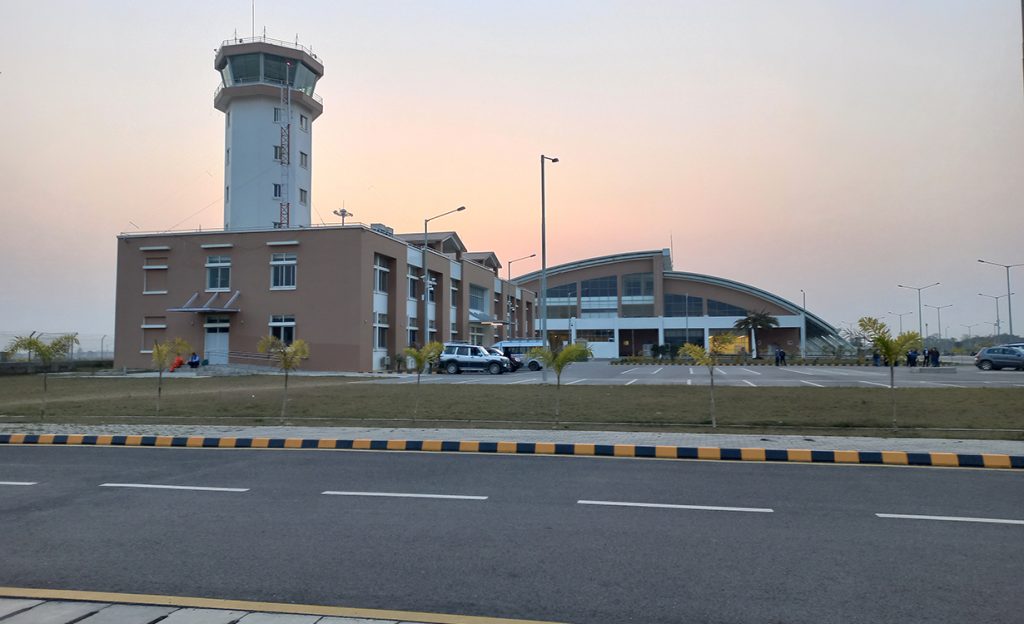
Meanwhile, Nepal’s two newer international airports in Bhairahawa and Pokhara have struggled to attract airlines and regular international flights.
A senior CAAN official said India was theoretically prepared to provide additional routes, including through Mahendranagar, but the understanding had yet to translate into an agreement.
“If this issue is raised firmly during a high-level visit, India can provide Nepal with the air routes it needs,” the official said.
The official recalled that several issues had made positive progress during Indian Prime Minister Narendra Modi’s visit to Nepal in the past. Technical discussions on making the Mahendranagar route two-way and providing Indian airspace access for flights to Bhairahawa International Airport had reached an advanced stage before stalling.
The official expressed hope that the current government could resolve the longstanding issue through political engagement.
A single entry point increases costs
Former CAAN deputy director general Devananda Upadhyaya said Nepal has suffered considerable economic losses because Simara remains its only international entry point.
Most international flights to Nepal approach from the western side. If these aircraft were allowed to enter through Mahendranagar or Dhangadhi, they would use Nepal’s airspace for a greater part of their journey, generating additional revenue for CAAN.
At present, aircraft heading to Kathmandu, Pokhara or Bhairahawa often have to fly through Indian airspace towards Simara before turning west again. This increases flight time and fuel consumption, costs that are ultimately reflected in passenger fares.
“We often describe Nepal as an expensive aviation destination. This is one of the reasons costs are high,” Upadhyaya said. “Aviation fuel prices are already rising, and when aircraft have to burn additional fuel while flying around in the sky, ticket prices inevitably go up. The government must give this issue high priority and resolve it.”
CAAN officials say proposals that had reached an advanced technical stage in the past were held up by the Indian side, which cited various reasons, including the presence of military bases. They argue that the issue now requires a political-level resolution and that the upcoming high-level engagement offers an opportunity.
Unlocking the potential of Bhairahawa and Pokhara airports
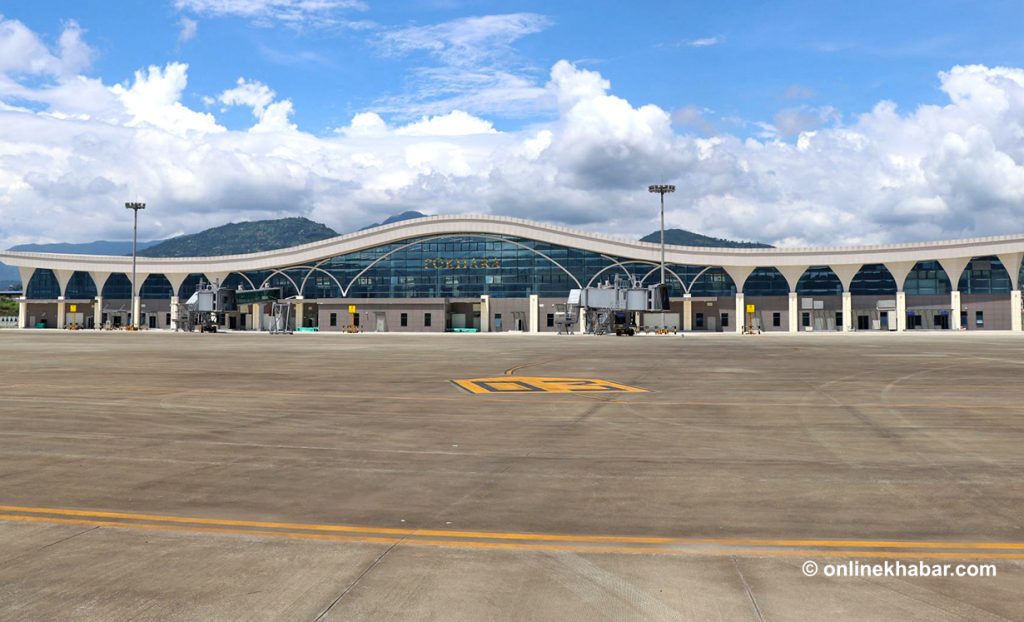
Nepal has invested heavily in airport infrastructure in recent years. However, the lack of additional air routes and access to Indian airspace has limited the ability of its international airports to attract airlines.
There is also considerable potential for direct flights between Indian cities and Nepal. Indian tourists travelling to Nepal do not yet have direct air connections from all major Indian cities, despite growing demand. Improved connectivity could open new destinations for Indian airlines as well.
“A good aviation relationship and mutual understanding between Nepal and India would be a win-win situation for both countries. This deserves serious attention,” Upadhyaya said.
If India allows two-way operations through the Mahendranagar route, Nepal could earn not only from aircraft flying to destinations within the country but also from international flights using Nepali airspace to travel elsewhere.
Such revenue could also help Nepal invest further in technology and infrastructure to improve the safety and management of its airspace.
Upadhyaya said the government should take a firm position and push for the opening of routes that face no significant technical barriers and would benefit both countries.
Apart from Tribhuvan International Airport, Nepal’s two other international airports are located in strategically important areas.
Gautam Buddha International Airport in Bhairahawa is just 15 kilometres from Lumbini. It can accommodate aircraft of a similar category to those operating at Kathmandu’s airport and has the potential to attract tourists from Buddhist-majority countries.
However, the lack of an agreement with India on airspace access has prevented airlines from independently scheduling regular flights to the airport.
Pokhara International Airport, meanwhile, is located in Nepal’s tourism capital. Flydubai currently operates regular flights there, but there are no direct flights from Indian cities, despite the potential to attract a significant number of passengers from India.
Aviation experts say resolving these issues could make Prime Minister Balendra Shah’s upcoming visit to India substantially more productive.
Air connectivity discussed with India’s new ambassador
The need to expand air connectivity was also discussed during a meeting last Friday between Minister for Culture, Tourism and Civil Aviation Khadkaraj Poudel ‘Ganesh’ and newly appointed Indian Ambassador to Nepal Sudhakar Dalela, according to the ministry.
Minister Poudel emphasised the need to operate regular commercial flights from major Indian cities to Pokhara International Airport and Gautam Buddha International Airport.
He also stressed the importance of providing additional air entry routes, expanding air connectivity and strengthening cooperation in aviation safety and technical capacity.