
Imagine filling a bucket with water while it is slowly leaking from the bottom. That is what can happen to your money when it sits in a regular savings account while inflation rises. The leak is called inflation.
You may have done everything right. You worked hard, spent carefully and put your money in a bank savings account because that is what you were taught to do. But there is an uncomfortable truth: while your money may be sitting safely in your account, its purchasing power can be declining over time.
Not because the money was stolen. Not because the bank failed. But because of something silent and largely invisible — inflation.
A typical savings account in Nepal may offer an interest rate of roughly 2.75 to 4 percent a year, while inflation can be higher. When that happens, the real value of your savings declines even though the number in your bank account increases.
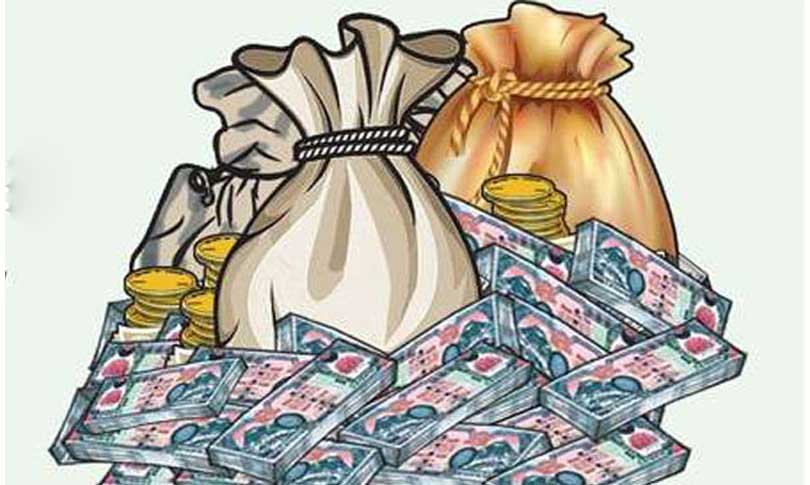
Consider a simple example. Suppose you deposit Rs 100,000 in a savings account. If the bank pays you 3.5 percent interest over a year, your balance will grow to about Rs 103,500. That sounds like good news — until you look at what happens to prices.
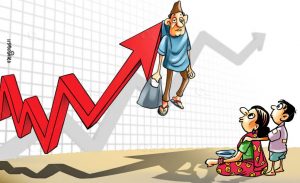
If prices rise by around 6 percent over the same period, goods that cost Rs 100,000 today could cost roughly Rs 106,000 a year from now. You therefore have more rupees in your account, but those rupees can buy less than they could before.
This is one of the psychological traps of inflation. Because the number in our bank account goes up, it feels like our money is growing. But the more important question is not how many rupees we have. It is what those rupees can actually buy.
Think about our mothers and grandmothers, many of whom spent years putting small amounts of money into a piggy bank, a cupboard or some corner of the house. When the savings became substantial, they moved the money into a bank account, believing that it would remain safe and gradually grow.
They saved for their children’s education, weddings, medical emergencies and other important needs. Putting those savings in a bank provided security and peace of mind. But if those savings earn less interest than the rate at which prices are rising, their purchasing power can gradually erode.
This affects more than one generation or one type of household. Government employees, small-business owners, homemakers, retirees and families trying to build a financial cushion can all face the same problem. Many of us are simply following financial habits passed down from our parents and grandparents without considering whether those habits still work in today’s economic environment.
The problem may seem small when viewed month by month. Over several years, however, the difference can become significant.
The good news is that you do not need to be a financial expert to start thinking about it differently.
Fixed deposits
A fixed deposit can be one of the simplest steps for people looking to earn more on money they do not need immediately. Depending on the bank, term and prevailing interest rates, fixed deposits can offer higher returns than ordinary savings accounts.
A fixed deposit, however, does not automatically protect your money from inflation. If the inflation rate is higher than the interest earned after considering taxes and other factors, your money may still lose purchasing power in real terms.
Its advantage is that it can provide a relatively predictable return while keeping the money within the banking system.
Gold
Gold is another asset that many Nepali households already understand and trust.
For generations, gold has been more than jewellery in Nepal. It has also been a way of storing wealth and passing assets from one generation to another. Even households with relatively modest incomes have often tried to accumulate small amounts of gold over time.
Gold is also widely viewed internationally as an asset that can provide some protection against inflation and economic uncertainty. However, that does not mean its price always rises with inflation or that it is guaranteed to outperform other investments. Gold prices can fluctuate significantly, and buying jewellery also involves costs that do not necessarily translate into investment returns.
For someone considering gold as part of their savings strategy, it is therefore important to distinguish between buying gold as jewellery and investing in gold as an asset.
Stocks and mutual funds
Shares listed on the Nepal Stock Exchange and mutual funds offer another potential avenue for long-term investors, but they also come with considerably more risk.
Stocks can generate higher returns over time, but their prices can also fall sharply. Economic conditions, company performance, investor sentiment and political developments can all influence the market.
Mutual funds may be an option for people who want exposure to the market without selecting individual stocks themselves. These funds are managed by professionals, although they still carry investment risk and charge fees.
Investors can also use licensed portfolio management or asset management services, where professionals manage investments on their behalf for a fee.
But there is one important principle worth remembering: do not invest money that you may need urgently, and avoid investing borrowed money simply in the hope of earning a higher return.
Diversification
For people who want to manage risk rather than place all their savings in one option, diversification can be useful.
Instead of keeping all your money in a savings account, you can consider dividing your savings across different assets according to your financial needs, risk tolerance and time horizon. For example, some money could remain readily accessible in a savings account, some could go into a fixed deposit, and a portion could be allocated to investments such as mutual funds, shares or gold.
There is no single formula that works for everyone. The right balance depends on factors such as income, expenses, emergency needs, investment horizon and willingness to accept losses.
The reason diversification can help is simple: different assets behave differently. If one performs poorly, another may perform better, reducing your dependence on a single investment.
That does not eliminate risk. Bank deposits can fail to keep pace with inflation. Fixed deposits lock money away for a specified period. Gold prices can fluctuate. Stock markets can fall sharply. Mutual funds are also subject to market risk.
Diversification is therefore not about finding a way to avoid losses altogether. It is about avoiding the risk of putting all your financial eggs in one basket.
Stop the leak
Coming back to the leaking bucket, you may not be able to stop every leak.
Inflation is influenced by forces far beyond the control of an individual household. But you can think more carefully about how you protect the purchasing power of your savings.
The goal is not to abandon bank accounts or chase the highest possible return. A savings account serves an important purpose, particularly for emergency funds and money you need to access quickly.
The goal is to understand the difference between saving money and preserving its purchasing power.
For years, many of us have been taught that putting money in a bank is the safest thing we can do. In terms of protecting the money from theft or keeping it accessible, that remains true in many circumstances. But safety from loss of principal is not the same as safety from inflation.
Even small changes in how we think about our savings can make a difference over time. You do not need a large amount of money or deep financial knowledge to start. You simply need to ask a different question:
Is my money only increasing in number, or is it also retaining its ability to buy the things I will need in the future?