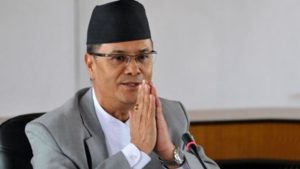


At the 81st Session of the United Nations General Assembly, Nepal’s Prime Minister Balendra Shah, popularly known as Balen, said what he needed to say.
At its core, his message was about the vulnerability of countries that have contributed relatively little to many of the crises confronting the world today, yet continue to bear their consequences.
Small island developing states, landlocked developing countries and least developed countries are increasingly exposed to shocks originating far beyond their borders and largely outside their historical responsibility. At the same time, they must contend with inflation, fuel and fertilizer shortages, food-price volatility and supply-chain disruptions resulting from conflicts over which they have little influence.
Nepal may appear geographically distant from the centres of global power, but what is happening in the Himalayas is not a distant problem.
Balen spoke not only for Nepal but, in many ways, for the wider Hindu Kush Himalaya region, which contributes a negligible share of global greenhouse gas emissions but sustains ecosystems, rivers and livelihoods for nearly two billion people.
The consequences of a rapidly destabilising Himalayan ecology will travel far beyond Nepal’s borders.
“I am told I am the youngest Head of Government to address this Assembly this year. I did not come here to make that the story.”
Instead, he made the story one that matters to humanity as a whole. Three years ago, standing in the shadow of Mount Everest in Nepal, UN Secretary-General António Guterres warned of “the madness of an impending climate disaster.”
But Balen was not there “to blame any country or continent.”
He argued that what vulnerable countries such as Nepal are looking for is “shared responsibility and solidarity.” Countries that carry a heavier historical burden for greenhouse gas emissions must take greater responsibility and “must do more”, in line with the principle of common but differentiated responsibilities and respective capabilities.
But his speech was not only about climate change.
It was about what it means to be a small state in today’s international order.
Alongside the climate impacts that claim lives and “erase years of development”, he spoke about the uncertainty of global supply chains, the impact of wars on people who have nothing to do with them, and the continuing relevance of multilateralism for small states such as Nepal.
“A world that can deliver a weapon anywhere in seventy-two hours has no excuse for leaving a farmer without means for a decent livelihood.”
Balen’s speech exposed one of the uncomfortable realities facing small states like Nepal: the structural inequalities built into the international system.
When catastrophic disasters strike, vulnerable countries are told to seek climate justice and turn to international climate-financing mechanisms for support.
Yet the very system designed to help them has become, in Balen’s words, a “bureaucratic maze”, forcing countries already grappling with devastation “to spend years proving that they need help.”
“When the house is burning, we do not ask the family to complete fifty forms. We act. That is what climate justice must mean.”
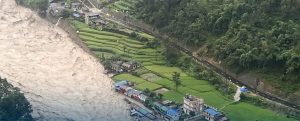
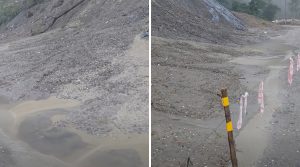
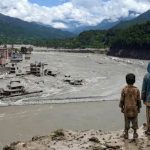
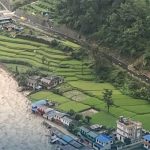
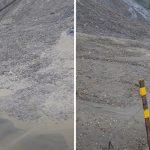
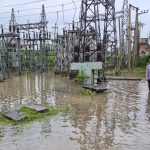
Nepal has sought around US$20 million from the UN Fund for Responding to Loss and Damage following the devastating “Himalayan tsunami” that left at least 1,400 people dead and more than 6,000 missing, while causing billions of dollars in infrastructure losses that are still being assessed. Balen said in his UN address that rapid assessments had put Nepal’s physical recovery needs at about 10 percent of GDP.
Claims from affected countries have already reached $2.8 billion, while only a fraction of that amount has been pledged by developed nations.
Countries most exposed to climate disasters are often those with limited institutional, financial and technical capacity to navigate complicated international financing mechanisms. For countries like Nepal that face these consequences repeatedly, climate finance that arrives years after a catastrophe cannot build resilience in time.
This leads to an important question.
How can a small state like Nepal access international financing mechanisms, influence decisions made within them, and develop the institutional confidence and capacity to claim what those mechanisms promise?
Scholars of international relations have long identified recurring characteristics in the behaviour of small states. They tend to possess limited political, economic and administrative capacity, depend more heavily on external actors for security and resources, and frequently find themselves on the weaker side of asymmetric relationships.
Their material limitations constrain their ability to independently shape the behaviour of larger powers. Indeed, one influential strand of small-state scholarship defines smallness not simply by territory or population, but by limited capacity to influence the security interests of great powers or defend against them.
Nepal fits many elements of this structural dilemma.
It cannot influence global emissions through economic power. It cannot independently develop every satellite, climate model or monitoring technology it needs. Its negotiating teams and technical institutions cannot match the resources available to major powers.
But smallness may limit certain forms of power without eliminating agency.
A country’s strategy is shaped not only by the constraints of its external environment, but also by the material and human resources it can mobilise within those constraints.
Research on Small Island Developing States, for example, shows that states conventionally regarded as structurally weak have nevertheless used international organisations to advance development interests and institutionalise their concerns. Scholars have even described how small states can act as “norm entrepreneurs”, transforming vulnerability from merely a weakness into a basis for collective diplomatic action.
For Nepal, that points towards a strategy built around agency rather than simply vulnerability.
The first element is coalition-building — pooling diplomatic resources, technical expertise and negotiating capacity. But coalitions will mean little without domestic capacity.
Institutional competence must be developed over time to conduct regional negotiations, undertake assessments, gather scientific evidence and negotiate continuously with multilateral institutions. For this, Nepal needs real-time satellite data, technology and technical expertise.
In climate negotiations, financing is justified through evidence and its links to climate change. Yet small states often depend on information produced elsewhere.
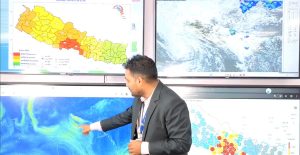
This is where Balen’s proposal for a “Himalayan Climate Resilience Mechanism” becomes significant. He proposed a mechanism involving Nepal, India and China that would facilitate scientific research, satellite-data exchange, joint monitoring and early-warning systems, real-time hydrological information, and coordinated cross-border disaster preparedness and response.
That may be what it means to turn the Himalayas into a “laboratory of international cooperation” — recognising that some threats transcend border disputes and are too interconnected to be managed within national borders.
Multilateral engagement is equally important.
Historically, small states have been among the strongest supporters of international institutions precisely because institutionalised multilateralism can substitute, to some extent, for the power resources they lack. Through multilateralism, they can find niche opportunities to exercise comparative advantages.
For Nepal, this means that vulnerability need not be the end point of its diplomacy. It can also be a basis for coalition-building, institutional innovation and agenda-setting.
That was perhaps the larger significance of Balen’s message from Nepal. A distant country in the Himalayas may indeed be carrying a very close warning for humanity.