Kathmandu, September 1
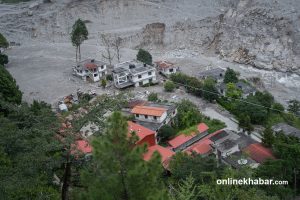
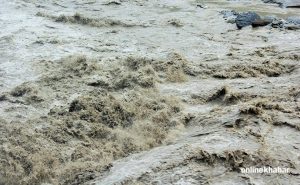
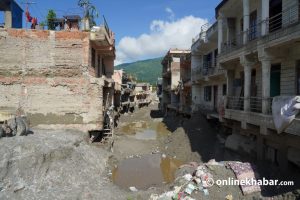
A total of 204 foreign workers employed at hydropower projects in Rasuwa and Nuwakot remain out of contact following the floods in the Bhotekoshi River, with Chinese nationals accounting for the largest number.
According to available data, 898 workers employed at 12 hydropower projects affected by the floods remain out of contact. Of them, 204 are foreign nationals working with labour permits issued by the Department of Labour and Occupational Safety.
Department spokesperson Maninath Gop said the figure covers only foreign workers with valid labour permits. The department does not yet have details of foreign nationals whose work permit renewals are in process or those working while paying penalties during the renewal process. “Our records show that 204 foreign nationals have work permits. However, we have not yet received records of those whose permits are under process or those working after paying penalties,” Gop said.
According to the department, the largest number of foreign workers who remain out of contact are Chinese nationals employed at the Upper Trishuli-1 Hydropower Project under the Power Construction Corporation of China.
The department had issued work permits to 121 Chinese nationals for the project, and none of them has been confirmed to be in contact since the floods, according to its records. Around 1,200 people, including Nepali workers, were employed at the project, of whom 557 remain out of contact.
Similarly, 26 foreign nationals working at Upper Trishuli-1 under Doosan Enerbility had obtained work permits. The department has received information that three of them were on leave, while the remaining 23 have not been contacted.
Among the foreign nationals working under Doosan, there is one South Korean, four Indian nationals, one American and one Canadian.
Likewise, 19 foreign nationals had obtained work permits to work on the construction of Nilkantha Model Secondary School in Rasuwa under China Jiangsu International Economic and Technical Cooperation. The department has not received information indicating that they have been contacted.
The department said it has also been unable to establish contact with 12 foreign workers employed at Salasungi Power Private Limited under China International Water and Energy Corporation.
Similarly, 11 Chinese nationals working at the Rasuwa Bhotekoshi Hydropower Project under Sinohydro Bureau 7 had valid work permits and remain out of contact.
Two foreign nationals—one Canadian and one American—working under a joint venture related to the Upper Trishuli-1 project and associated with Nepal Water and Energy Development Company are also on the department’s list of workers who remain out of contact.
The department said six foreign workers from another company, which has an office in Naxal, Kathmandu, and sends workers to field sites in the Trishuli area, are also out of contact. Gop said the company has not provided clear information on whether they had travelled to the field or are in a safe location.
Likewise, four foreign workers employed by HNAOC Shanghai JV are listed as being out of contact. According to the department, the figure of 204 announced so far includes only foreign workers with valid work permits recorded in the government system. Foreign nationals whose permits are being renewed or who are undergoing other administrative processes have not been included.
“Some foreign nationals are in Nepal while their paperwork is being processed. When the process is delayed, companies may continue employing them after paying penalties,” Gop said. “We have not yet received details of such individuals.” The actual number of foreign workers out of contact at flood-affected hydropower projects could therefore be higher than government records currently indicate.
According to the department’s records of valid work permits, Chinese nationals make up the largest number of foreign workers who remain out of contact. However, the exact status of all foreign nationals working at the affected projects remains unclear as updated information has yet to be collected.