

Kathmandu, September 1
The Rasuwagadhi customs point accounted for 2.18 percent of Nepal’s total imports last fiscal year, a relatively small share compared with its previous contribution to the country’s foreign trade.
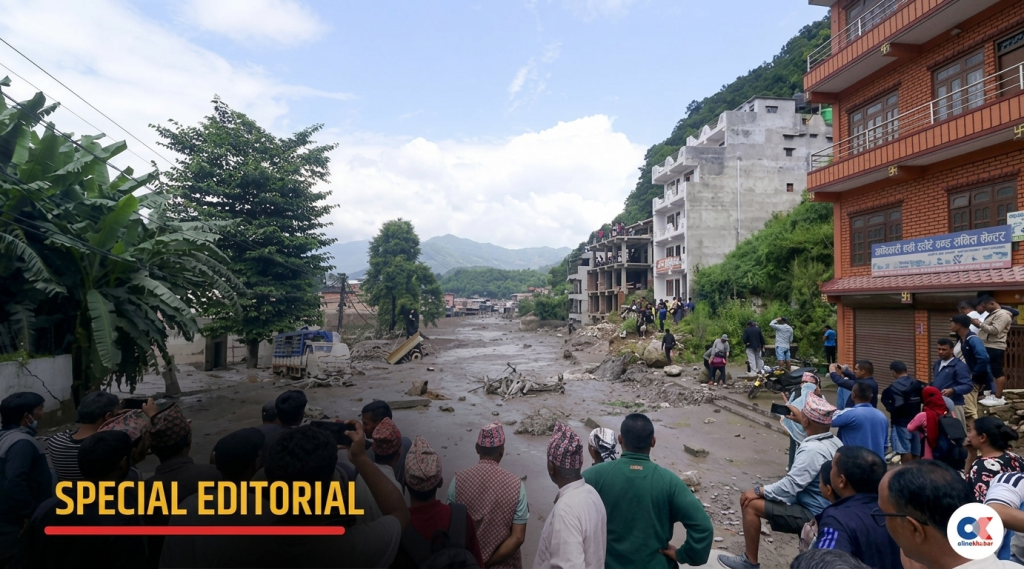
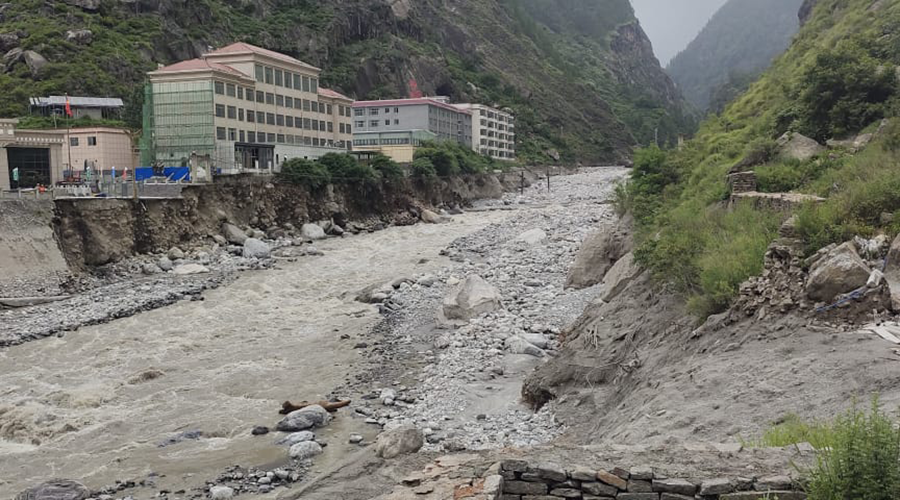
The decline came after the Bhotekoshi (Lhende) River, which flows along the Nepal-China border, flooded on July 8, 2025, forcing the Rasuwagadhi border point to remain closed for six months.
Trade through the border point resumed after China brought a Bailey bridge into operation on January 1, 2026. In the six months following the resumption, goods worth Rs 45.73 billion were imported through Rasuwagadhi, while exports stood at Rs 894.6 million.
Nepal currently has three border points operating for cross-border trade with China. Rasuwagadhi is considered the most convenient and closest of the three.
In the last fiscal year, imports through the Tatopani border point amounted to Rs 47.48 billion, while there were no exports through the point.
Meanwhile, the Korala border point in Mustang, which has increasingly emerged as an alternative to the two traditional crossings, recorded imports worth Rs 14.40 billion and exports worth Rs 205.5 million during the same period.
The increase in trade through Korala was largely attributed to the closure of Rasuwagadhi following last year’s flood.
In the previous fiscal year, 2024/25, Rasuwagadhi recorded imports worth Rs 85.23 billion and exports worth Rs 2.04 billion. The figures accounted for 4.72 percent of Nepal’s total merchandise imports and 0.74 percent of total exports.
According to Kishor Bartoula, director and information officer at the Department of Customs, Rasuwagadhi is Nepal’s most reliable trading point with China.
Before the 2015 earthquake, China had made Tatopani its main customs point. The border was then closed for an extended period. Although it has not remained completely shut since, the Chinese side has not shown interest in operating it at full capacity, citing various reasons.
As a result, Rasuwagadhi gradually became the main gateway for Nepal-China trade.
Floods have repeatedly exposed the border’s vulnerability

A sudden flood in the Bhotekoshi at around 3 am in 2025 left 18 people missing and damaged major infrastructure, including the Miteri Bridge.
Ashish Gajurel, chair of the House of Representatives’ Development Committee and former executive director of the Nepal Intermodal Transport Development Board, says the previous year’s flood had already sent a strong warning about the vulnerability of the customs point and surrounding settlements.
“Last year’s flood had already given a strong warning to the customs point and the surrounding settlements. Perhaps we failed to take it seriously,” he said.
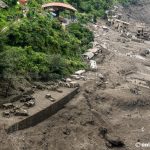
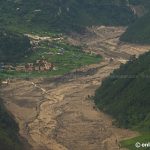
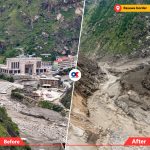
The disaster on August 26, however, has turned into a far more devastating episode. It has not only directly affected thousands of people but also washed away billions of rupees in state investment and potentially trillions of rupees in private investment.
Rasuwagadhi lies 132 kilometres from Kathmandu via Galchhi. Of that distance, an estimated 40 kilometres of road on the Rasuwa side has been completely washed away, according to a preliminary assessment by the Ministry of Physical Infrastructure and Transport.
The Department of Roads has begun assessing the condition of different sections of the road.
More than two dozen bridges between Miteri Bridge and Galchhi have also been washed away, raising uncertainty over the future operation of the Rasuwagadhi border point, customs office and immigration services.
Bartoula said decisions taken by the government would determine the future of the border point.
“This is a major cross-border trading point,” he said. “The government will study all aspects and make a decision. The department will work accordingly.”
According to the Department of Customs, 15 employees working at the customs point remain missing.
The department’s immediate priority is the search for and rescue of its missing employees. Teams have been deployed to the affected areas to determine their whereabouts.
A historic border point with seven decades of history
According to the Department of Customs, Rasuwagadhi has been known since ancient times as a major route for trade and cultural exchange between Nepal and Tibet.
The Rasuwagadhi Customs Office was established in 1956 with the aim of facilitating trade through the barter system between local residents of Rasuwa and people from Tibet’s Kerung area, while also generating government revenue.
China granted Rasuwagadhi international border status only in 2018, further increasing its significance in Nepal-China trade.
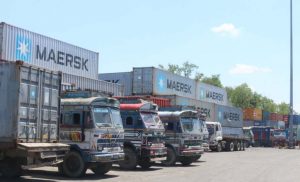
Nepal mainly imports electronic goods, ready-made garments, footwear, construction materials, agricultural products, telecommunications equipment, vehicles and industrial machinery through the border point.
Exports from Nepal to China have included carpets, handicrafts, woollen products, herbs, noodles, copper utensils and agricultural products.
The border point had also become a convenient route for Indian pilgrims travelling to Kailash Mansarovar.
Hundreds of tourists travelling for the pilgrimage this year have been left unaccounted for following the flood.
Rasuwagadhi has also been a major centre of employment and economic activity for local communities. Hotels, transport services, container loading and unloading, customs agents and other small businesses generated employment for thousands of people.
Dry port on which Rs 2 billion was spent washed away
The flood in 2025 had already caused billions of rupees in damage to infrastructure at the Rasuwagadhi customs point.
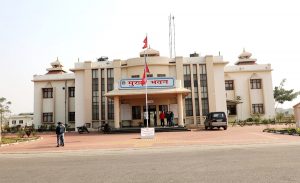
The newly constructed customs office building suffered damage worth Rs 8.159 million, while the dry port alone sustained damage estimated at Rs 912 million.
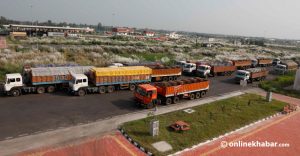
Goods and vehicles at the customs office and yard, along with containers, machinery and equipment, suffered an estimated Rs 705.1 million in damage.
This time, none of those structures have survived.
According to Gajurel, the Timure dry port was a Rs 3 billion project, of which Rs 2 billion had already been spent. Most of the structures had been completed and the project was preparing to begin finishing works.
No additional investment was made in the project after last year’s flood caused extensive damage.
Now, however, the state has lost billions of rupees in infrastructure that has been wiped out. Government employees are missing, while the extent of damage to private investment has yet to be assessed.
The historic border point and customs hub now face the daunting task of rebuilding from virtually nothing.