

Kathmandu, November 1
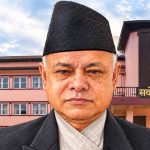
Janak Pandey, a Supreme Court judicial nominee is facing questions over a potential conflict of interest after it emerged that his wife and several members of her family are involved in corruption cases linked to the alleged illegal registration of public land in Jhapa.
Pandey, a judge at the Hetauda bench of the Patan High Court, is among four high court judges recommended for appointment to the Supreme Court by the Judicial Council in October. Ranked third among the nominees, he is scheduled to face a parliamentary hearing next week.
One of the cases that could raise questions during his confirmation hearing concerns the alleged misappropriation of public land in Damak, Jhapa, commonly referred to as the Baluwatar land scam.
The Commission for the Investigation of Abuse of Authority (CIAA) filed two corruption cases over the alleged illegal registration of around 800 ropanis of public land at the confluence of the Ratuwa and Dipini rivers. Among the defendants in one of the cases is Maya Puri (Pandey), Pandey’s wife.
Her mother, Devarupa Puri, brother Revataraj (Gagan) Puri, sister-in-law Keshawati Puri and other relatives are also facing proceedings linked to the land transactions. Appeals involving the case are pending before the Supreme Court.
Janak Pandey acknowledged that a corruption case had been filed against his wife but said the Special Court had acquitted her. The case is now before the Supreme Court on appeal, he said.
“She was prosecuted in a corruption case but has already been acquitted by the Special Court. The case has come to the Supreme Court on appeal,” Pandey told Onlinekhabar. “The land was registered in her name, and the CIAA raised questions over the survey office’s decision to expand the registered area.”
If his nomination is approved by the Parliamentary Hearing Committee and he is appointed to the Supreme Court, Pandey would not be able to hear the case involving his wife. But his appointment could also create an unusual ethical dilemma for other Supreme Court judges, who would have to hear appeals involving the family of a serving colleague.
Former Supreme Court justice Top Bahadur Singh said the situation could affect the perception of judicial independence, even if judges acted in good faith.
“If he is appointed to the Supreme Court, it could affect cases that are already pending there. The Supreme Court is the appellate court for the Special Court, and judges would have to hear a case involving a colleague’s wife,” Singh told Onlinekhabar. “Even if judges have good intentions, hearing such cases could have some influence or effect. We used to avoid hearing cases involving even neighbours we knew.”
Pandey, however, said his appointment would not prevent other judges from hearing the case.
“I cannot hear a case involving my own wife, but why should it be a problem for others?” he said. “There are many such examples. Other judges will have no difficulty hearing the case.”
The Baluwatar land case in Damak
The CIAA filed two corruption cases on February 26, 2024, over the alleged registration of public land along the Ratuwa and Dipini rivers in Damak in the names of private individuals.
The cases concern around 800 ropanis of land that the commission alleges was illegally registered through land-survey and registration processes. The first case involved 172 defendants, including 28 government employees, 36 alleged encroachers and 108 subsequent land purchasers. The second named 187 defendants, including nine government employees, 65 alleged encroachers and 113 land purchasers.
The CIAA alleged that 397 ropanis of public land had been registered in private names in the first case and 384 ropanis in the second. Many of the defendants appeared in both cases.
Among those accused of registering public land in their names were local Maoist leader Gagan Puri and members of his family. The CIAA alleged that Puri and his associates had taken control of land that emerged after the Ratuwa River changed its course during floods in 2038 BS, displacing a settlement of landless people.
The river later underwent embankment work, and land that emerged after the river was redirected was allegedly registered in the names of Puri and his relatives. The commission said public land was registered through the process of recognising it as swabasi land, or land occupied by individuals.
The CIAA accused government employees of abusing their authority to facilitate the registrations and Puri and his relatives of benefiting from the process. It sought recovery of Rs 346.65 million in damages.
The commission alleged that the land registration began in 2066 BS and that Puri’s group had taken control of around 200 ropanis by the beginning of the 2070s BS. Records show that Puri and members of his family subsequently transferred land through more than 100 transactions.
In 2019, the Central Investigation Bureau of Nepal Police investigated the alleged encroachment along the Ratuwa river. Based on the bureau’s report, the District Police Office in Jhapa filed a forgery case against Puri and others.
On February 18, 2024, the Special Court convicted Puri in a separate money-laundering case involving the alleged acquisition and sale of public land. It ordered him to pay Rs 40.3 million. That case, too, is pending before the Supreme Court.
Wife says land came from purchase and family gift
According to the CIAA’s decision records, a land survey in 1982 had subdivided land in wards 13 and 14 of Damak, north of the confluence of the Ratuwa and Dipini rivers, for distribution among 88 landless households displaced by the 1981 floods.
However, the Landless Commission was dissolved before ownership certificates could be distributed, and the land remained unoccupied.
The CIAA received a complaint in Shrawan 2017 alleging that the land had been surveyed more than once under the names of landless people and illegally registered in private ownership. The commission took nearly seven years to complete its investigation.
According to the charge sheet, Revataraj Puri transferred disputed land to family members and relatives by claiming that it had been inherited from their ancestors. The commission alleged that public land was incorporated into private holdings through various registration and record-correction procedures.
Maya Puri (Pandey) maintained that she had legally acquired the land, with some purchased from local residents in Damak and the rest received as a gift from her maternal family.
“Of the total one bigha and 19 katthas of land, some was purchased from local people in Damak, while some was gifted by my mother as a parental inheritance when property was divided among my brothers,” she said in her statement. “I have not committed corruption by including any government or public land in the survey. We obtained the land through the proper government offices, and there was no collusion or vested interest on our part.”
The Special Court acquitted Maya Puri and other landowners, ruling that it had not established malicious intent on their part. However, it ordered the confiscation of the disputed land registered in their names under Section 47 of the Prevention of Corruption Act, 2002.
Maya challenged the confiscation order at the Supreme Court, seeking the return of the land. The CIAA also appealed against the acquittals, arguing that the Special Court had erred in distinguishing between the principal accused and other defendants.
The commission argued that the other defendants were not merely beneficiaries but had actively participated in acquiring, using and transferring the disputed property. It said acquitting them while convicting only the principal accused was contrary to the principles of equality, justice and established legal standards.
The CIAA has asked the Supreme Court to overturn the acquittal, arguing that the public suffered financial losses when government land was illegally registered and transferred to private individuals.
The Supreme Court will ultimately have to determine the competing claims made by the CIAA and Maya Puri on the basis of evidence and law.
Questions over judicial ethics
The case could also raise questions about whether Pandey indirectly benefited from income generated by land that the government alleges was acquired through corruption.
Pandey said he was aware of the issue and pointed out that the Special Court had acquitted his wife.
“Cases were filed against around 300 people. The Special Court acquitted her, and that cannot simply be disregarded at this stage,” he said.
Former justice Singh said judicial ethics had traditionally required judges to avoid cases involving people with whom they had personal or family connections.
“In our time, there was greater concern about ethical conduct. There were examples of judges deciding inheritance disputes involving the mother or brothers of their colleagues,” he said. “Many such matters are connected to personal ethics. How will judges now be able to hear cases involving their colleagues’ family members?”
Former justice Ekaraj Acharya said judges had different personal standards about which cases they should recuse themselves from. He cited former justice Trilok Pratap Rana, who avoided hearing cases involving members of the Rana family. Singh, he said, also avoided cases involving neighbours, even if he did not personally know them.
“The main question is how far one should go in maintaining ethical discipline,” Acharya said. “People may ask who will hear the cases if everyone recuses themselves. But hearing a case involving a family member of a fellow judge is certainly not easy. It is quite difficult.”
Pandey’s parliamentary hearing is therefore likely to face questions not only about the corruption case involving his wife and her family, but also about the ethical challenges his appointment could create for the Supreme Court.