
As the Nepal Astronomical Society (NASO) marks its 19th Foundation Day on August 25, there is good reason to reflect on how far Nepal’s relationship with the global astronomy community has come—and how much further it still has to go.
This year also marks two decades since Nepal first appeared at an International Astronomical Union (IAU) General Assembly in 2006, marking 20 years of steadily growing international presence. For a country whose relationship with the sky has always run deep—from the astronomical calculations of ancient calendars to the folklore built around eclipses and constellations—Nepal’s formal entry into the global astronomy community has been a long time coming.
Nepali astronomers first took part in an IAU General Assembly in 2006, marking the country’s first contact with the global astronomical community. It was also the year when Pluto was announced as a dwarf planet during IAU GA 2096.
NASO’s own story began a year later, in 2007, when a small group of enthusiasts began organizing stargazing sessions, school outreach programmes and public lectures with almost no formal support. Over the years, that grassroots effort grew into a nationwide network engaged in astronomy education, research and public outreach, reaching students, teachers and communities far beyond the Kathmandu Valley.
At the same time, Nepal continued participating in every IAU General Assembly since that first appearance in 2006. Along the way, the country built quiet but steady connections with the IAU itself.
In 2018, I was appointed as the IAU’s National Outreach Coordinator (NOC) for Nepal, a role later expanded to include Manisha Dwa as Co-NOC. Together, we coordinated public engagement activities in line with the IAU Office for Astronomy Outreach’s global network.
Outreach was only one half of the bridge NASO built toward the IAU. The other was education.
In 2020, the IAU’s Office of Astronomy for Education (OAE) launched a global network of National Astronomy Education Coordinators (NAECs)—volunteer teams tasked with documenting how astronomy is taught in their countries, organizing teacher-training workshops, and developing classroom-ready materials suited to local needs.
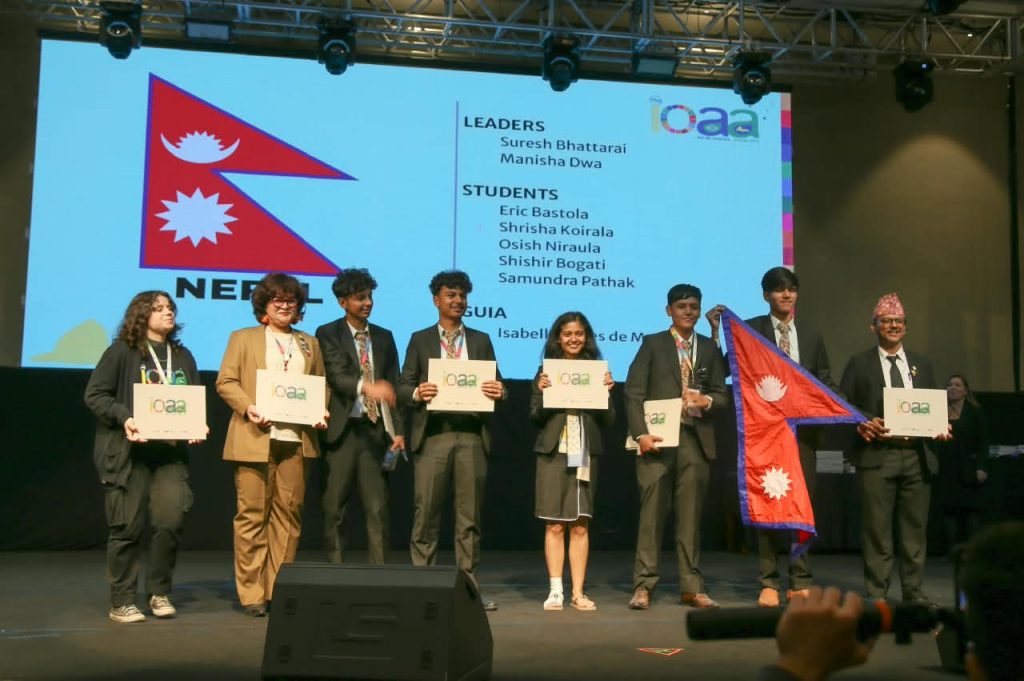
Nepal was among the earliest countries to join this network, with a NAEC team hosted at NASO. I am serving as Team Chair of the NAEC team for Nepal, currently appointed through August 2027, working alongside Manisha Dwa, who serves as the team’s contact person, as well as other education specialists drawn from across the country’s teaching and science communities.
That work fed directly into the establishment of the OAE Node Nepal, the first such Node in the OAE’s global network. It was formalized through a memorandum of understanding I signed in Kathmandu on July 8, 2021, as NASO’s Chairman, alongside then IAU General Secretary Teresa Lago and OAE Director Markus Pössel.
The Node, hosted by NASO, focused on citizen-science projects in low-resource settings, teacher training and preparation for astronomy Olympiads, while also building collaborative ties across the SAARC region.
The real inflection point came in 2024, at the IAU’s 32nd General Assembly in Cape Town, South Africa. There, NASO’s project coordinator, Manisha Dwa, presented our work, which we have been carrying out since 2009 through different NASO members, many of whom are now spread across the globe.
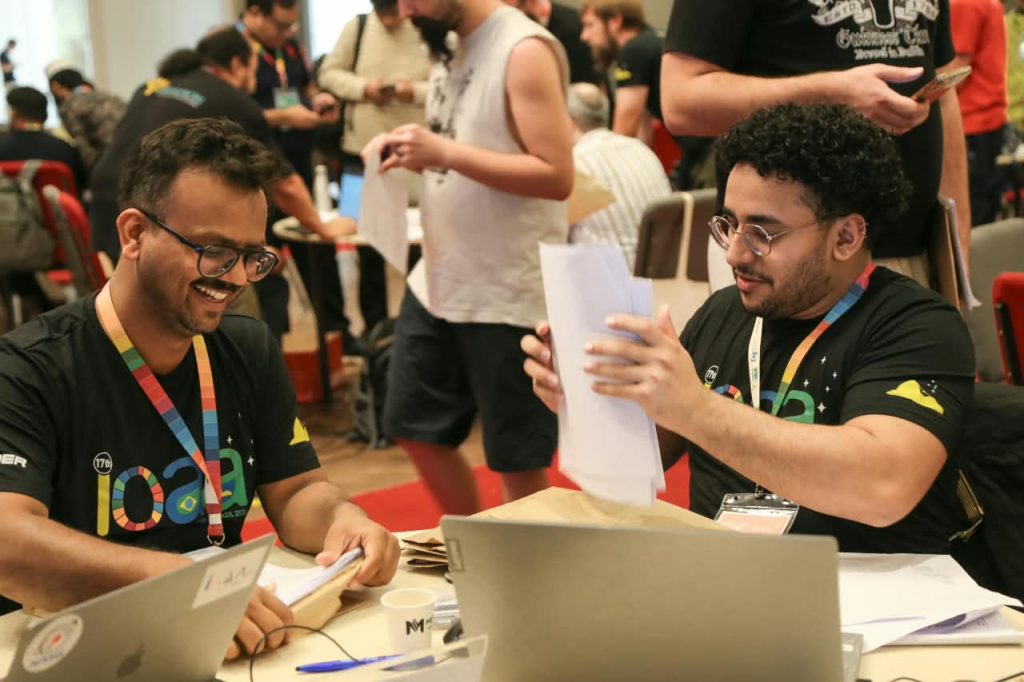
With the approval of Nepal’s membership status under the Observer category, we gained a formal foothold within the Union’s structure—a position Nepal continues to hold today. It was also a signal that years of outreach and education work had been noticed.
Nepal has held National Member status with the IAU since 2024, in the Observer category. The Observer category is not the end of the road. Within the IAU’s structure, it is understood as a stepping stone toward eventual Full Membership, a status that requires sustained institutional capacity, a growing base of professional astronomers and continued demonstration of Nepal’s contribution to the field.
Two years in, that remains the chapter NASO is still working to write. We are not there yet.
Alongside National Member status, the IAU has formally recognized Nepal’s National Committee for Astronomy (NCA), with myself serving as NCA Chair and Manisha Dwa as NCA Secretary.
The NCA now sits at the center of Nepal’s ongoing relationship with the Union, coordinating everything from individual membership applications to the country’s participation in IAU General Assemblies going forward.
The most tangible proof of what that status means arrived this year, when NASO completed its first cycle of a membership call inviting Nepali astronomers and researchers to apply for IAU Individual and Junior Membership.
Seven new members were admitted—five as Individual Members and two as Junior Members—bringing Nepal’s total to nine active members in the IAU’s official count. The other two are Manisha Dwa and myself, who hold IAU Associate Membership.
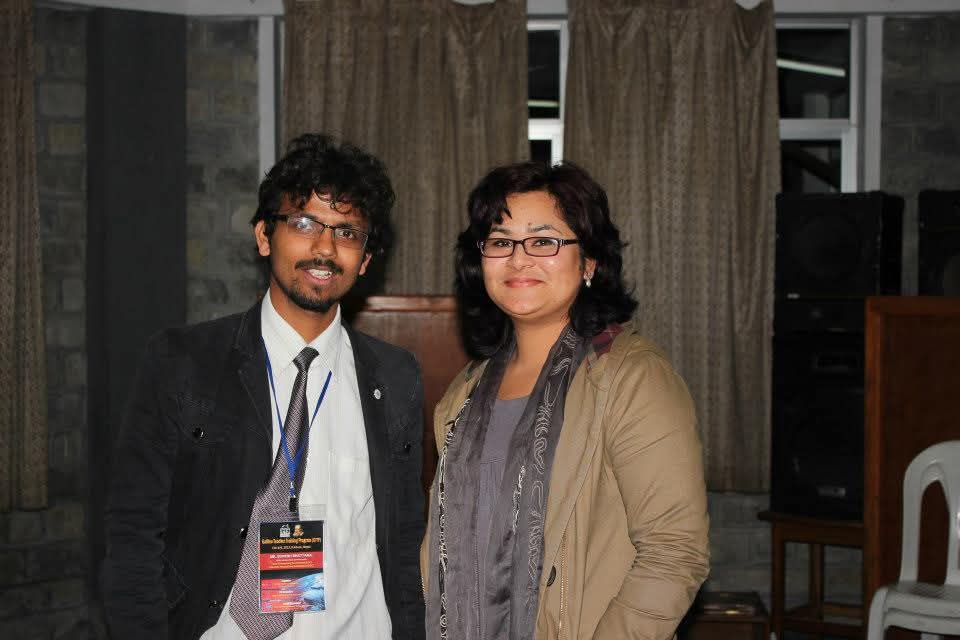
I became Nepal’s first IAU Associate Member in 2020, and Manisha became the country’s second in 2021, well before National Member status existed for Nepal.
Before Nepal held its own National Member status, there was no real way to reflect that on paper. Nepali members of the IAU were filed under “AA — Country Unknown” in the Union’s own system, with no option to select Nepal at all.
That has now changed.
Nepal has its own identity within the IAU, and every application that follows will be counted as what it actually is: Nepali.
This year’s seven new members—Sitaram Byahut, Daya Nidhi Chhatkuli, Sudarshan Karki, Min Prasad Khanal, Udayaraj Khanal, Janak Raj Malla and Sanjaya Paudel—were admitted as Individual or Junior Members, with several based in Nepal and others contributing from the diaspora in the United States and South Korea.
It is a small number today, but it is the beginning of exactly the pipeline sustained National Membership was meant to create. NASO intends to run further membership calls to keep growing it.
We continue to call on eligible Nepali citizens, both at home and abroad, to apply for individual IAU membership, recognizing that national recognition is only as strong as the individual talent it represents.
Practically, this opens doors that were previously closed.
Nepali students, academicians and researchers gain a clearer path to individual IAU membership, provided they meet the Union’s academic and professional criteria. Nepal’s participation in international scientific collaboration, conferences and joint research initiatives becomes easier to formalize.
And, crucially, the country’s young astronomers—many of whom have represented Nepal at International Astronomy Olympiads—now have an institutional bridge connecting their ambitions to a global professional community.
It would be easy to treat sustained National Member status as a finish line. It is not.
We are not a Full Member yet, and reaching that status will take a larger base of professional astronomers, deeper institutional capacity and years more of the same patient work that brought us this far.
That is the next chapter NASO intends to write.
For a country better known internationally for the peaks that touch its sky than for what lies beyond it, holding this standing reframes the conversation. Nepal is no longer only a place to look up at the stars from. It is now, formally, part of the global effort to understand them, even as it works toward a fuller seat at the table.
The most recent reaffirmation of that standing came through a certificate issued by the IAU Secretariat on July 8, 2026. Signed by Maria Rosaria D’Antonio, the Secretariat’s Head of Administration and Director, the certificate confirms that the Nepal Astronomical Society has been Nepal’s National Member, in the Observer category, since 2024.
For those of us who have spent years building astronomy from the ground up in Nepal—often with little infrastructure, minimal funding and even less institutional recognition—even a reaffirmation like this carries real weight. It is proof that our work has been noticed and sustained, not a one-time announcement forgotten the year after.
The work of 19 years—night-sky outreach in remote schools, Olympiad training for teenagers and patient correspondence with an international body many assumed was out of reach—has finally found its institutional home.
As NASO marks this Foundation Day, that work stands as the clearest answer to why we began: not for recognition alone, but because a country with Nepal’s scientific curiosity deserved a seat among the nations that study the universe together.
What comes next depends on whether we can turn this foothold into full standing.