

Walk through any Nepali town and you will find women at work: stitching, cooking, selling, farming and running small shops from the front rooms of their homes. Women’s entrepreneurship is flourishing. Yet most of these businesses remain small, and few grow into sustainable firms that create jobs. Why?
Part of the answer lies in what Nepal chooses to measure. We have counted how many women have entered business. We have barely asked how many have grown. Nepal has helped women start businesses, but it has not yet created the conditions for them to grow.
The two stages require very different things. Starting a business takes modest capital, some skills and an opportunity. Expanding one requires time, assets, markets, technology, management expertise, professional networks and the capacity to bear risk. A policy that supports only the first stage will increase the number of entrepreneurs without significantly expanding their economic impact.
Counting entry, not growth
The question can no longer be simply how many women have started businesses. We need to know how many have survived, increased their turnover, created jobs, reached new markets or closed—and why. Without those answers, “women’s entrepreneurship” remains a headcount rather than an economic force.
Even business ownership is not always measured precisely. Nepal’s 2018 National Economic Census recorded 923,356 establishments. Among those for which ownership was recorded, 29.8 per cent belonged to women. Yet The Asia Foundation estimated in 2021 that only about 13 per cent of the country’s small and medium enterprises were wholly or partly women-owned. The figures differ because their bases are different: the census counted all establishments, about half of which were unregistered, while the second estimate covered only small and medium enterprises.
The discrepancy raises a deeper question. Is a business that is women-owned on paper the same as one that women genuinely control? Registering a firm in a woman’s name does not necessarily mean she makes its strategic decisions. A 2020 World Bank report noted that many businesses in Nepal are registered in women’s names specifically to obtain subsidies available to them. Our statistics should therefore capture who makes decisions and who manages the business, alongside turnover, employment and size. Ownership indicates entry; growth reveals economic power.
A small business is not a small ambition
The usual explanations for why women’s businesses remain small include limited capital, weak market access, inadequate skills and risk aversion. These explain part of the story, but not all of it.
Staying small can be a sensible choice in a context of limited time, scarce capital, family obligations, restricted access to property and a lower capacity to bear risk. Food production, tailoring, beauty services, small shops and agro-processing can all be operated from home, which helps explain why they are common among Nepali women. Such enterprises raise incomes and foster self-reliance.
Smallness is not the problem. The problem is that the path from small to medium-sized businesses, and from medium-sized to large firms, remains weak. More capital brings the need for staff, and more staff require stronger management. Higher output requires access to markets, which in turn demand quality, packaging, branding and reliable supply chains. For women, navigating this transition can be particularly difficult.
The aim, then, is not to push every woman towards expansion. It is to ensure that those who want to grow can do so.
The first invisible capital: time
Discussions of women’s enterprises often dwell on money while neglecting time. Yet time is capital, too. According to the International Labour Organization, women in Nepal perform 85 per cent of daily unpaid care work, amounting to roughly 29 million hours a day, compared with about five million hours for men.
This means Nepali women often juggle paid or income-generating work with unpaid care responsibilities. A few hours a day may be enough to start a small business. Expanding one, however, requires an entrepreneur to seek new markets, meet more customers, visit banks and government offices, learn new technologies and sometimes travel long distances.
Childcare and eldercare are therefore not merely “women’s welfare” concerns. They are part of the infrastructure needed for businesses to grow. If the state wants women’s enterprises to expand, it must treat women’s time as an economic resource.
The second invisible barrier: property
Nepal’s banking system still relies heavily on collateral. Yet houses and land—the assets banks commonly prefer—remain beyond the reach of many women. According to the 2021 national census, only 23.8 per cent of households had a house and land registered in a woman’s name.
The consequence is straightforward. When one entrepreneur has collateral, and another has only a business, the latter has far fewer opportunities to expand, regardless of how good her business idea may be. Women’s property ownership is therefore not only a matter of social justice; it is also part of the economic foundation for access to capital.
Credit for entry, capital for growth

Nepal’s laws provide for concessional loans for women entrepreneurs, intended to connect them to the formal financial system. In practice, however, women continue to face difficulties securing credit to expand their businesses.
The International Finance Corporation reports that 52 per cent of women-owned small businesses in Nepal struggle to access finance. The World Bank has likewise observed that inadequate collateral and limited credit histories have long constrained small firms’ access to affordable financing.
Microfinance can make it possible to start a business. But increasing productive capacity, adopting new technology, reaching larger markets or opening new branches requires larger amounts of capital at affordable interest rates. Nepal’s financial system must recognise the difference between credit for entry and capital for growth, and build a separate pathway for the latter.
In February 2026, the World Bank’s Board approved a $95 million Sustainable and Inclusive Finance Project, which could prove an important step. The project aims to expand financial access for more than 100,000 small and medium enterprises, strengthen the Deposit and Credit Guarantee Fund, and introduce new guarantee products for underserved groups, including women-led businesses. The test will be whether these guarantees reach women who want to grow their businesses, not just those who want to start them.
Borrowers, or investment partners too?
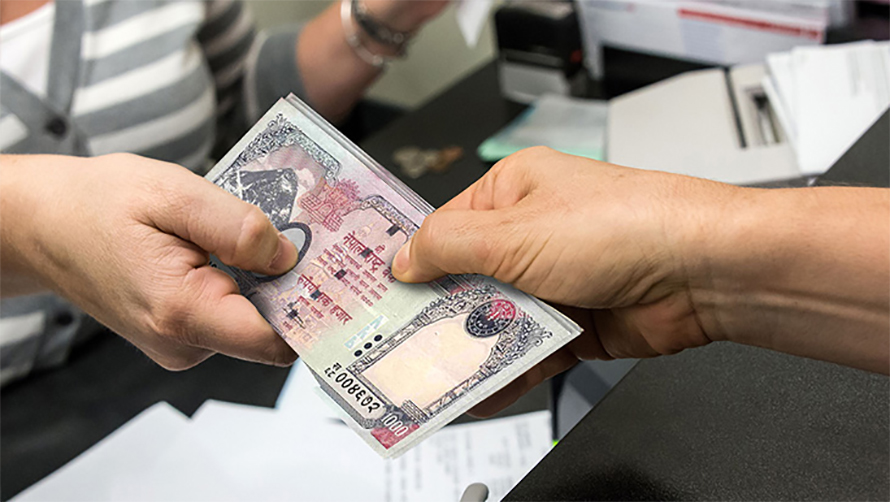
Microcredit is necessary, but it is not enough to build a large business. As a firm grows, it may need working capital, equipment financing, equity, angel investment or venture capital.
Some data exist on women’s access to bank credit. However, systematic data on women founders’ access to start-up, angel or venture capital funding remain scarce. What cannot be measured cannot be adequately addressed.
Nepal should track borrowing, investment received, turnover and employment among women-led businesses, as well as the proportion that grow into medium-sized or large firms. We need a vision that sees women not merely as borrowers, but also as investment partners.
From livelihood to growth
Most of Nepal’s programmes for women entrepreneurs focus on generating modest incomes. That remains necessary. But a second generation of policies is now needed to help turn income-generating enterprises into growth-oriented businesses.
Training alone may not be enough. Greater emphasis must be placed on business planning, accounting, digital markets, branding, pricing, staff management, engagement with investors and entry into new markets. When one woman entrepreneur gains access to another’s markets, suppliers or investors, risks can fall, and opportunities can widen.
A programme’s success should be judged not by how many women were trained, but by how many saw their businesses grow.
What the government can do
Beyond distributing loans and providing training, the government can take several additional steps.
Alongside collateral-based lending, it can expand cash-flow-based lending, using regular transactions, digital payments, tax records and sales histories to assess creditworthiness. Local governments can invest in childcare, eldercare and community care services as economic infrastructure, freeing up women’s time for productive activities.
When informal businesses are brought into the formal economy, registration and tax compliance should offer tangible benefits in return, including access to markets, finance, insurance, training and public procurement. For entrepreneurs who want to expand, mentorship, professional networks and links to investors should also be developed.
Small and safe?
A study of businesses registered in California and Massachusetts between 1995 and 2011 found that women-led ventures were markedly less likely to obtain venture capital. Much of this gap was associated with the characteristics of the start-ups themselves. Women were less likely to establish ventures that signalled strong growth potential to investors, while the remaining gap may have reflected investors’ own preferences. Studies based on the Kauffman Firm Survey likewise show that women start businesses with less capital and rely more heavily on personal rather than external sources of funding.
These findings come from the United States and cannot be applied wholesale to Nepal. But they raise a question that is just as relevant here: do the structures and expectations that confine women to “small and safe” businesses from the outset also limit how far those businesses can grow?
Beyond the headcount
Policies that help women start businesses are necessary. If we stop there, however, women’s entrepreneurship may remain confined to self-reliance programmes. To make it a vehicle for economic transformation, policymakers must put growth, productivity, employment, market access and investment at the centre.
Women entrepreneurs should not be seen merely as a “group needing assistance”, but as an economic force capable of creating jobs, increasing output and expanding investment.
The question is no longer simply, “How many women entrepreneurs are there in Nepal?” It is this: of the businesses women have started, how many have we truly allowed to grow?
Nepal has opened the door for women to become entrepreneurs. Now it must open the door to growth.