Kathmandu, August 20
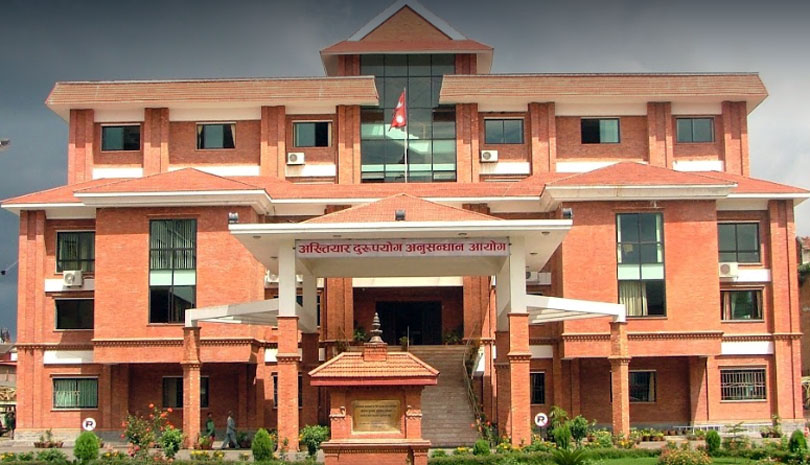
The Commission for Investigation of Abuse of Authority (CIAA) has recommended that the government introduce a legal provision requiring investors to verify the source of funds for share investments above a specified threshold.
The anti-graft body made the recommendation through its annual report for the fiscal year 2024/25, warning that investments in shares could potentially be used for money laundering.
“Since there is a possibility of money laundering through investments in shares, arrangements should be made to verify the source of assets for amounts above a certain threshold,” the CIAA said in its report.
The commission said the recommendation is new and was not included in its suggestions made in the previous fiscal year.
The CIAA has also called for measures to prevent conflicts of interest among companies issuing shares, credit rating agencies, underwriters and officials responsible for approving public offerings.
It has further urged authorities to control collusion and unauthorized access to systems operated by the Nepal Stock Exchange (NEPSE) that could be used to manipulate the share market.
The CIAA’s 35th annual report for fiscal year 2024/25 was presented to the House of Representatives on July 9. Law, Justice and Parliamentary Affairs Minister Sobita Gautam presented the report on behalf of Prime Minister Balen Shah.
Meanwhile, the House Committee on State Affairs and Good Governance is scheduled to discuss the CIAA’s activities and issues raised in its annual report with the commission’s officials. The meeting is scheduled for 11 am today at the committee hall in Singha Durbar.
Other recommendations to Finance Ministry
The CIAA has made several other recommendations to the Ministry of Finance, including expanding the coverage of the Central Billing Monitoring System (CBMS) so that the Inland Revenue Department can directly monitor taxpayers’ transactions.
It has also recommended signing memorandums of understanding with countries that have Double Taxation Avoidance Agreements (DTAAs) with Nepal to facilitate the use of e-invoicing data.
To curb the use of fake invoices, the commission has suggested developing and implementing a central billing software system.
The CIAA has also recommended developing an Integrated Non-Tax System (INTS) software to automate records of non-tax revenue.
It has further called for strict implementation of a system requiring all payments received by civil servants through government systems to be mandatorily entered into the tax system.