

Kathmandu, August 18
A year after proudly embracing the label ‘jhole’—a term used by critics to describe blind followers—CPN-UML chair KP Sharma Oli is now calling some of his former loyalists ‘awara’, or aimless and irresponsible people.
The change in language reflects a deeper shift inside Nepal’s largest communist party.
Several leaders who once stood firmly behind Oli are now questioning his leadership and calling for organisational reform. Some of those who participated in last year’s ‘I am a jhole’ campaign are now among those demanding a change in the way the party is led.
Oli, meanwhile, has responded by questioning the credibility and intentions of those challenging him.
The latest confrontation has brought an old question back to the centre of the UML debate: Can a party built on dissent and internal debate accommodate criticism of its own chair?
From ‘jhole’ to ‘awara’
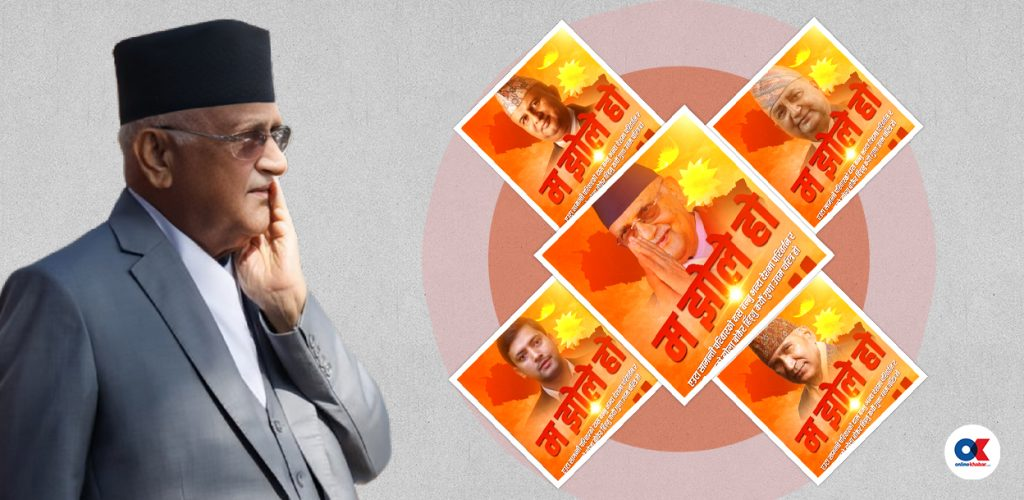
The irony in Oli’s latest remarks becomes clearer when viewed against what happened a year ago.
On May 29 last year, the UML organised a separate Republic Day celebration in Kathmandu while the party was leading the government.
The event attracted considerable attention on social media, where critics repeatedly described UML supporters as ‘jholes’.
Oli, who was then serving as prime minister as well as party chair, soon turned the insult into a political slogan.
At the 11th general convention of the UML Nepal Intellectual Council in Tokha on June 2, 2025, he said he had no problem being called a ‘jhole’.
“I am a jhole who carries the bag of the people’s interests, the bag of their welfare and the flag of change,” Oli said.
His remarks quickly became a social media campaign.
An ‘I am a jhole’ campaign was launched from Oli’s own social media page, with senior leaders and hundreds of party cadres posting photographs carrying the slogan.
Vice Chair Bishnu Paudel, General Secretary Shankar Pokhrel, then Deputy General Secretary Prithvi Subba Gurung and Bishnu Rimal were among those who joined the campaign. So did younger leaders including Samik Badal and Kshitij Thebe.
But a year later, the political equation inside the UML has changed dramatically.
Some of the same leaders who once defended Oli are now discussing whether the party needs a change in leadership.
And Oli has responded by calling some of those questioning him ‘awara’.
At a meeting of the party-affiliated Democratic Indigenous Nationalities Federation in Ilam on Saturday, Oli criticised those discussing his removal as party chair.
“Drinking tea at a canteen, these awaras are talking about removing the chair,” he said.
The remarks triggered a backlash, with some UML leaders and cadres launching an ‘I am awara’ campaign on social media.
Those who once defended Oli are now questioning him
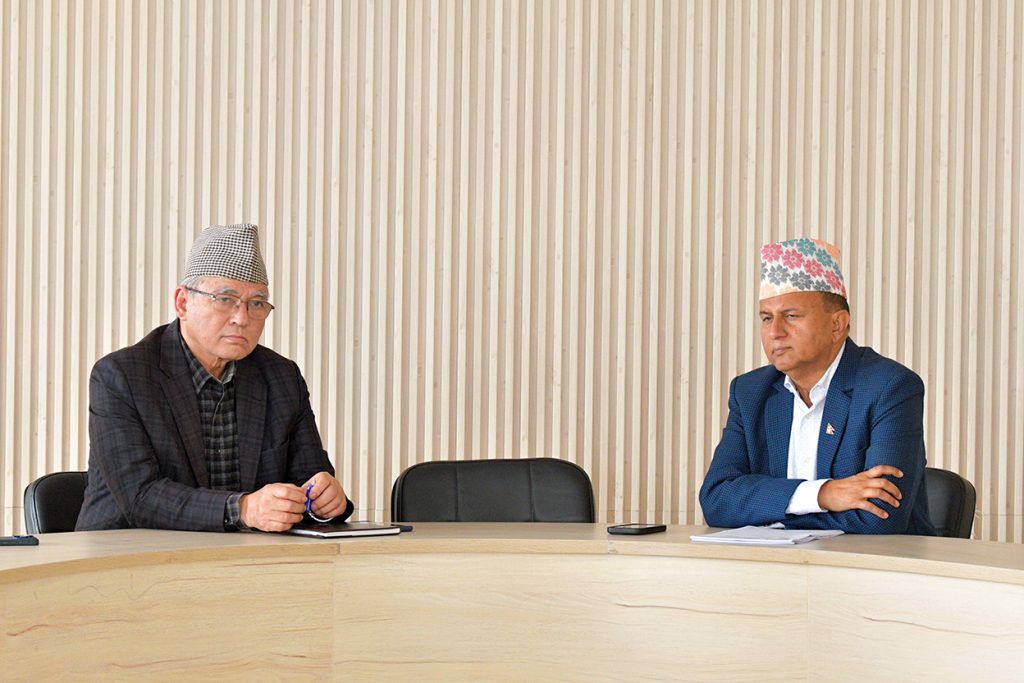
The leadership-reform debate is significant not simply because it challenges Oli, but because many of those involved were once considered his political allies.
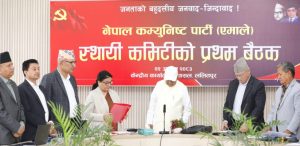
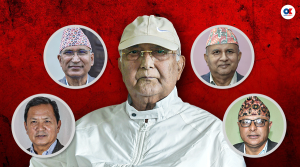
Vice Chair Bishnu Paudel, General Secretary Shankar Pokhrel and Secretary Hikmat Karki are among the senior leaders involved in discussions about reorganising the party leadership.
Leaders including Ishwar Pokhrel, Surendra Pandey, Gokarna Bista, Yogesh Bhattarai, Binda Pandey, Gokul Baskota and Karna Bahadur Thapa have also been raising questions about the party’s direction.
The debate intensified after Paudel and Pokhrel began arguing that the party cannot move forward in its current form. To explore future path, Vice Chair Ram Bahadur Thapa has been given responsibility for preparing a proposal on leadership reorganisation.
For Oli, the challenge is particularly significant because much of the pressure is coming from within his own political camp.
Young UML leader Samik Badal, who participated in the earlier ‘jhole’ campaign, says the circumstances have changed.
“We risked our lives to defend the leadership. What we did at that time was right. But now we have to stand up to protect the party,” Badal said.
He says criticism should not be equated with disloyalty.
“We have the right to criticise in order to protect the party’s soul. We have the right to demand answers,” he said. “The leadership should also behave appropriately.”
The leadership dispute is spreading to the provinces
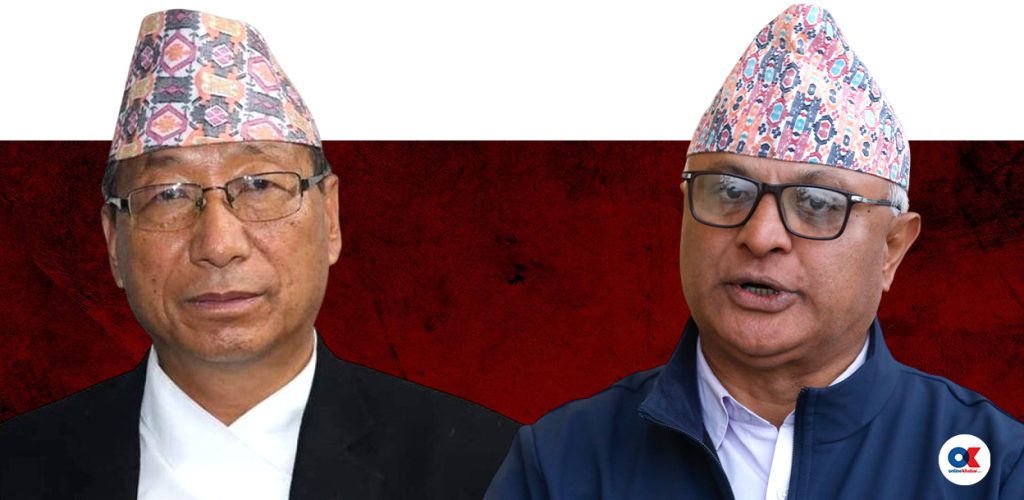
The struggle over Oli’s leadership is not confined to the UML’s central organisation. It is also playing out in provincial governments.
In Koshi Province, Oli had previously sought to replace Chief Minister Hikmat Karki with Til Kumar Menyangbo following a power-sharing agreement with the Nepali Communist Party.
Karki, who is also a UML secretary, is now among those calling for leadership reform.
Oli had reportedly mobilised another party secretary, Sher Dhan Rai, to work on replacing Karki. Karki, however, insisted that any decision to remove him should be made through the party’s formal process and challenged the move.
Oli eventually had to continue with Karki as chief minister.
A similar dispute has emerged in Bagmati Province, where Oli reportedly wants to replace parliamentary party leader Jagannath Thapaliya with Kiran Thapa Magar.
But there too, party leaders have not simply followed his wishes.
These disputes point to a broader change inside the UML: leaders who once readily followed Oli’s decisions are increasingly prepared to challenge them.
‘Harsh language’ becoming a problem for the left
Oli’s ‘awara’ remarks came under scrutiny just a day after General Secretary Shankar Pokhrel spoke about the language used by leaders in Nepal’s left-wing politics.
Speaking at a discussion on the future of Nepal’s leftist movement on Sunday, Pokhrel said hostile language used during political disputes was contributing to growing distrust in the left.
“Harsh language itself has become a factor that is driving away the left-wing electorate,” Pokhrel said. “When they agree, they speak in extremely friendly language, but when disputes arise, they use extremely hostile language.”
His remarks are particularly notable because Pokhrel himself is now involved in the debate over UML leadership.
The language of internal communist disputes has historically included terms such as opportunist, revisionist, reactionary, traitor, broker and anti-revolutionary.
‘Awara’ is now the latest addition to that vocabulary.
A party whose history was built on dissent
The dispute has also revived questions about the political culture that has developed inside the UML.
The party’s history was built around debate, dissent and criticism.
At the fifth general convention, leaders with differing views were allowed to present their own political documents. At the sixth general convention, Oli himself presented a separate political proposal challenging the prevailing leadership line.
In other words, dissent was once a normal part of UML politics.
Oli’s own political rise was also partly built on questioning the leadership and political practices of his time.
Critics now argue that this culture has changed, with loyalty to the chair increasingly being treated as the ultimate measure of commitment to the party.
Left-wing analyst Jhalak Subedi says the change represents a departure from Oli’s own political history.
“Oli himself became a leader by questioning established values and practices. Until he reached power, he talked about democratisation. After reaching power, he abandoned it,” Subedi said. “Now he is calling his own leaders and cadres awara.”
Election defeat has intensified the leadership debate
The demand for leadership reform gained further momentum following the 2025 general election.
Oli had secured a strong mandate at the UML’s general convention. But the party subsequently suffered a major electoral setback.
Oli himself lost from Jhapa-5, while the UML was reduced to 25 seats in the House of Representatives.
For leaders demanding a review of the party’s leadership, the election result, declining public support and growing dissatisfaction within the organisation are reasons to reassess its direction.
The question now confronting the UML is whether such a review should be treated as a normal exercise in internal democracy—or as an attempt to undermine the party chair.
Much of that debate is taking place informally over tea at the UML’s Chyasal headquarters, as well as inside formal party committees.
According to Subedi, the problem is not that questions are being raised, but that the leadership is increasingly unable to listen to and absorb them.
From an individual’s brand to a party’s future
Critics argue that the UML has spent much of the past decade strengthening the political brand of an individual rather than its ideology.
The party, they say, prioritised power management over organisational development, placed personal loyalty above criticism and often attributed electoral setbacks to external factors instead of conducting a deeper internal review.
The result is now visible in the growing demand for leadership reform.
The debate is no longer simply about whether KP Sharma Oli should remain party chair.
It is increasingly about what kind of political culture the UML wants to have—and whether disagreement with its chair can once again be treated as part of the party’s democratic life rather than as disloyalty.
A year ago, many UML leaders proudly called themselves ‘jholes’ in defence of Oli.
Today, some of them are being called ‘awaras’ by the same leader.
The words have changed. The underlying question has not: what does loyalty to a political party really mean?