
Kathmandu, August 20
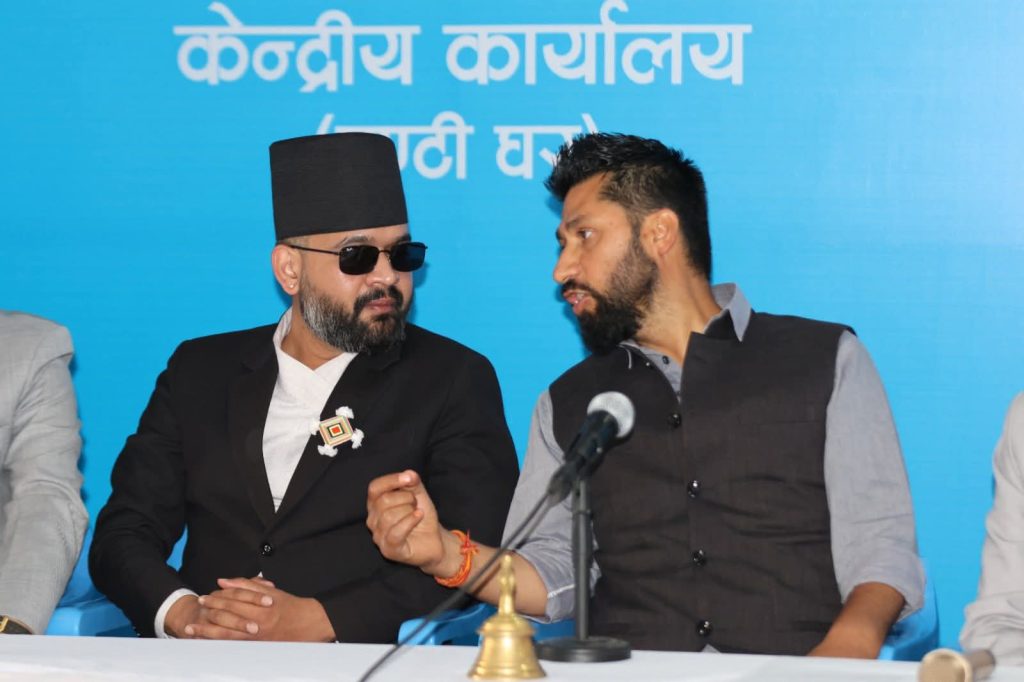
Rastriya Swatantra Party (RSP), which has long advocated for non-partisan local governments, has begun seeking party members to contest upcoming local elections, raising questions over whether the party’s practice is consistent with its stated policy.
There is currently no legal barrier to independent candidates contesting local elections in Nepal. However, local elections have traditionally been dominated by candidates backed by political parties.
The RSP has been among the strongest advocates for making local governments non-partisan, an agenda it has promoted since the party’s establishment.
The party’s policy documents call for local governments to be elected without party affiliation. Its election manifesto released before the March 5 House of Representatives election also pledged to prepare a constitutional amendment discussion paper aimed at establishing non-partisan local governments.
The manifesto stated that the party would prepare a discussion paper on constitutional amendments within three months of forming the government, with proposals including directly elected executives, a fully proportional parliament, a provision barring lawmakers from becoming ministers, non-partisan local governments and a reformed provincial structure.
The position was reiterated in documents endorsed by the party’s first general convention in June. In the economic and political report presented by RSP Vice Chair Swarnim Wagle, the party supported the concept of “partyless local governments.”
However, the party has now opened applications for prospective local-level candidates through its Candidate Club, requiring applicants to be RSP members.
Applications for positions including rural municipality chairperson, vice-chairperson, ward chairperson and ward members opened on August 17.
Party membership mandatory
RSP General Secretary Bipin Acharya said non-partisan local elections are currently not practically possible, despite the party supporting the concept.
“Competition among non-partisan candidates at the local level is not possible under the current circumstances. It is a subject for debate, but practically it is not possible at present,” Acharya told Onlinekhabar.
He said party membership is currently a mandatory requirement for anyone seeking an RSP ticket.
Under the party’s rules, individuals who have never belonged to another political party can apply to the Candidate Club after completing 45 days of RSP membership.
Those leaving another political party must complete a three-month cooling-off period before applying.
The party has made an exception to the membership-duration requirement for individuals considered prominent, experts or people with a clean public image. However, Acharya said even such candidates must become RSP members.
“We have a system of granting membership after a cooling-off period. There is no provision to nominate someone who is not a party member,” he said.
RSP accused of contradicting its own manifesto
The move has drawn criticism from Rastriya Prajatantra Party Chair Rajendra Lingden, who questioned the apparent contradiction between the RSP’s election pledge and its current candidate-selection process.
In a social media post in April, Lingden had questioned the party’s position, saying that a party which sought votes by advocating non-partisan local governments was now looking for party candidates for local elections.
The RSP’s own statute describes its election manifesto as a “sacred agreement between the party and citizens.” Critics therefore argue that seeking party candidates for local elections does not align with the commitment made in the manifesto.
The RSP, however, says its Candidate Club has been established to identify qualified, honest and capable candidates for local elections under the current legal framework.
Debate over non-partisan local governments
The debate over whether local governments should be party-based or non-partisan has continued in Nepal for years.
Supporters of non-partisan local elections argue that such a system could reduce political power-sharing, limit party influence over development projects, allow capable candidates outside political parties to compete and reduce interference from party headquarters.
Those opposing the idea argue that party-based competition is integral to a multiparty democratic system. They also warn that removing party structures could weaken federalism and make elected local leaders less accountable.
Some argue that elected representatives backed by political parties are more accountable because they are answerable to their parties and voters, while non-partisan local leaders could become less accountable or even authoritarian.
The government has also been considering the issue as part of a broader constitutional amendment debate.
A task force led by Prime Minister Balen Shah’s political adviser Asim Shah prepared a constitutional amendment discussion paper after consulting various stakeholders. The task force reportedly received suggestions to make local governments non-partisan, although the document has not yet been made public.
The Election Commission also recommended considering non-partisan local governments during discussions on constitutional amendments.
‘No constitutional amendment needed’
Janamat Party Chair CK Raut argues that Nepal does not necessarily need a constitutional amendment to hold local elections without party symbols.
“There is no need to amend the Constitution to hold local elections without party election symbols. In fact, the Constitution does not mention ‘political parties’ in the formation of local governments,” Raut said.
He added that while political parties should not necessarily be barred from participating given Nepal’s multiparty democratic system, local elections could still be conducted without party symbols.
The debate now leaves the RSP facing a political question of its own: if the party wants local governments to be non-partisan, why does it require local election candidates to first become party members?