
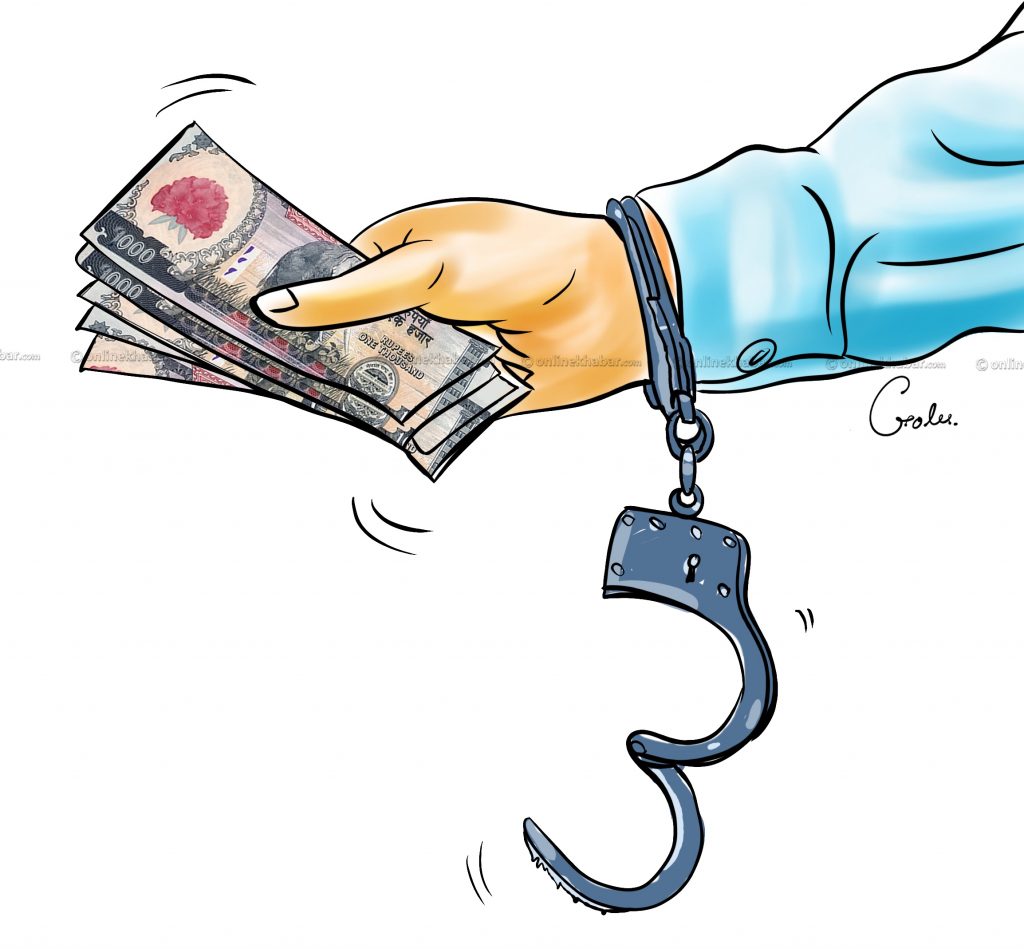
Whistle-blowing is the act of raising a voice against unethical activities by responsible authorities, typically by an insider. With an aim to meet the needs and satisfaction of its citizens, every country has developed its system.
Various laws, policies and procedures regulate the system. The system established is not inherently flawed; however, there could be loopholes and lacunae in the laws, policies and procedures driving the system in the wrong direction. The act of whistle-blowing alerts the authorities to focus on those loopholes.
Media stunts
In the case of Nepal, whistle-blowing is often equated with media stunts. This has distorted the very purpose of whistle-blowing. There is a general misunderstanding that to blow a whistle one needs a supportive group, access to media and a leader who can speak out loud. However, anyone can blow the whistle.
The concept of whistle-blowing by a stunt is incorrect. There is also no need for media and a group of supporters. What is required is proof of unethical behaviour.
How to blow the whistle?
The government of Nepal has established different mechanisms to raise the concerns of the public. Some of these include the laws on rights to information, installing complaint boxes, registering online complaints, etc. The Right to Information Act guarantees availability of information within 15 days from the date of registration for the request.
There is also a provision to appoint an information officer to provide information to the public. If anyone feels uncomfortable raising the issue directly, then the written complaints can be placed in the complaint box. Many organisations have also established online mechanisms for handling public complaints and providing suggestions. Similarly, emails can also be used for lodging complaints and suggestions.
There are other mechanisms to blow the whistle. The complaints can be lodged with various government institutions like the National Information Commission, the National Vigilance Centre, the Commission for the Investigation of Abuse of Authority and Hello Sarkar established within the Office of the Prime Minister and Council of Ministers.
What hinders whistle-blowing?
So far, one major factor hindering whistle-blowing is the lack of laws related to whistle-blowing. In view of an individual whistle-blower, whistle-blowing is a high-risk, low-return activity. In the absence of adequate protection and security, no one will dare to take the risk of blowing the whistle against a Goliath-like state apparatus. The confidentiality of data and information supplied is another issue of concern. Information leakage needs to be balanced with security concerns.
Citizens’ fear of breaking the system is another hindering block in the promotion of the whistle-blowing system. Citizens generally feel uncomfortable with the labyrinthine procedures to make public service available; instead, they are adapted to using brokers and middlemen. Similarly, general apathy and complacency on the part of the public also hinder whistle-blowing practices.
Looking forward
First, we need to keep in place a law on whistle-blowing that guarantees confidentiality and security of the whistle-blower. In terms of public connotations of whistle-blowing, we have not moved beyond suraki and suchanadata. In fact, there is no Nepali equivalent word for whistle-blowing. Suraki is used for passing clandestine information related to smuggling and counterfeit trade, while suchanadata stands for an informant.
Both of these concepts fail to capture the true meaning of whistle-blowing. Second, we need to carry out an effective awareness-generating program on whistle-blowing that encourages and empowers every individual to exercise their rights. The awareness program should focus on the processes and procedures that need to be followed in lodging complaints and redressing grievances.
Third, the information should be protected and kept confidential to protect the whistle-blower.
Fourth, we also need to install a reward system. The existing reward system is unclear and confusing. Take the case of suraki kharcha. The system of awarding 10 per cent to an informant for illegal activities like gold smuggling and counterfeit trade has become a butt of criticism as well as the source of corruption.
Fifth, the online system of complaint handling needs modification as it requires mandatory national identity cards.
Finally, various civil society members, youth groups, women’s groups and student unions can be mobilised to encourage individuals to act, react and report even for a small misdemeanour in the public service. We, as a public or a responsible authority, have a duty to stop unethical behaviour and practices. Instead of blaming the system, let us blow the whistle, alert the public and protect the system.