
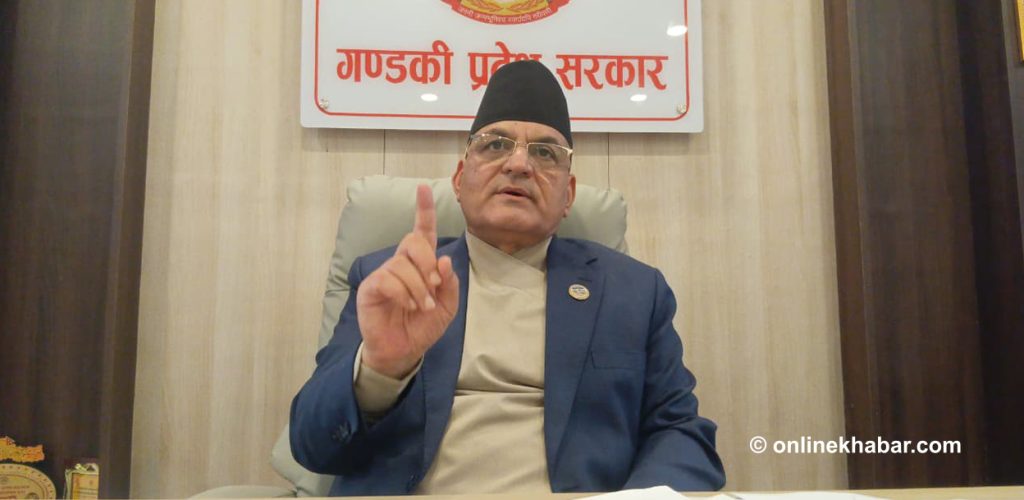
Gandaki Province Chief Minister Surendra Raj Pandey met Prime Minister Balen Shah on Monday, urging the federal government to facilitate the implementation of provincial laws and support development initiatives.
Pandey particularly raised the issue of implementing Gandaki’s laws on domestic alcohol and cannabis cultivation. The provincial government has already drafted regulations governing domestic alcohol and has formally asked the federal government to delegate the authority needed to establish related industries and determine excise duty rates.
Since taking charge of the Gandaki government, Pandey has consistently advocated legalising domestic alcohol and cannabis. His plan is to regulate locally produced alcohol and turn it into a source of economic opportunity. The province has also enacted legislation allowing cannabis cultivation for medicinal and industrial purposes, with the aim of boosting revenue and livelihoods.
But why has Pandey made the legalisation of domestic alcohol and cannabis a priority? How will the government ensure safety and prevent misuse? How will ordinary citizens benefit financially? And with the federal government yet to enact corresponding laws, is Gandaki moving ahead of itself—or deliberately putting pressure on Kathmandu? Could the laws simply be an attempt to generate political attention?
Onlinekhabar’s Amrit Subedi sat down with Gandaki Chief Minister Surendraraj Pandey to discuss these questions and more. Here is an edited excerpt from the conversation:
You have been raising the issue of cannabis since becoming chief minister. Now, in your fourth year in office, a law has finally been enacted. Why did you feel the need to introduce a cannabis law?
There are organisations campaigning for the legalisation of cannabis. Nepal itself had legal cannabis cultivation in the past, but it was later banned for various reasons, particularly because of international conventions.
Even though cannabis continued to be cultivated in different parts of the country, it remained illegal. At the same time, there was growing interest in legalising it. Whenever I travelled to different places or attended programmes in rural areas, the issue of cannabis would come up. I would hear about its potential benefits and how legalisation could help strengthen the rural economy.
It became clear that cannabis could be brought within a legal framework through a regulatory body and used not as a narcotic, but for medicinal and industrial purposes. I have personally seen examples of this. People have come to present me with cannabis-based clothing, cosmetics and medicinal oils. At hotels, I have even been told that curtains or bedsheets were made from cannabis.
Meanwhile, Nepal is facing a serious problem of people moving from villages to cities and then from cities abroad. We have been trying to address this from the beginning. We provided subsidies for vegetables, fruits and other forms of agriculture so that abandoned land could be brought back into use and young people could stay in the country. But we did not find young people becoming as interested in agriculture as we had hoped.
That led us to consider whether cannabis could be used to utilise barren land and generate income. I looked at examples of countries that had previously banned cannabis cultivation but later reopened it. There are several European and American countries, and India also allows cannabis cultivation for certain purposes. More recently, Thailand has done the same.
So I felt cannabis could benefit us as well while helping put our abandoned land to productive use.
For a year or two, I raised the issue of cannabis at almost every forum. I wanted to see the response—how the public viewed it, whether it was genuinely something we should pursue and what the business community thought. I would regularly raise the issue at programmes organised by business organisations, and the response was overwhelmingly positive.
Now the cannabis law has been enacted. But implementation will not happen overnight. We still need to formulate regulations and procedures, and establish a dedicated office or regulatory mechanism.
There is also a concern about misuse. Once we open it up, could it be abused? After taking such a risk and passing the law, if misuse occurs and cannabis addiction increases, history will condemn me. I am very conscious of that. That is why we have built the law around a system of regulation and oversight.
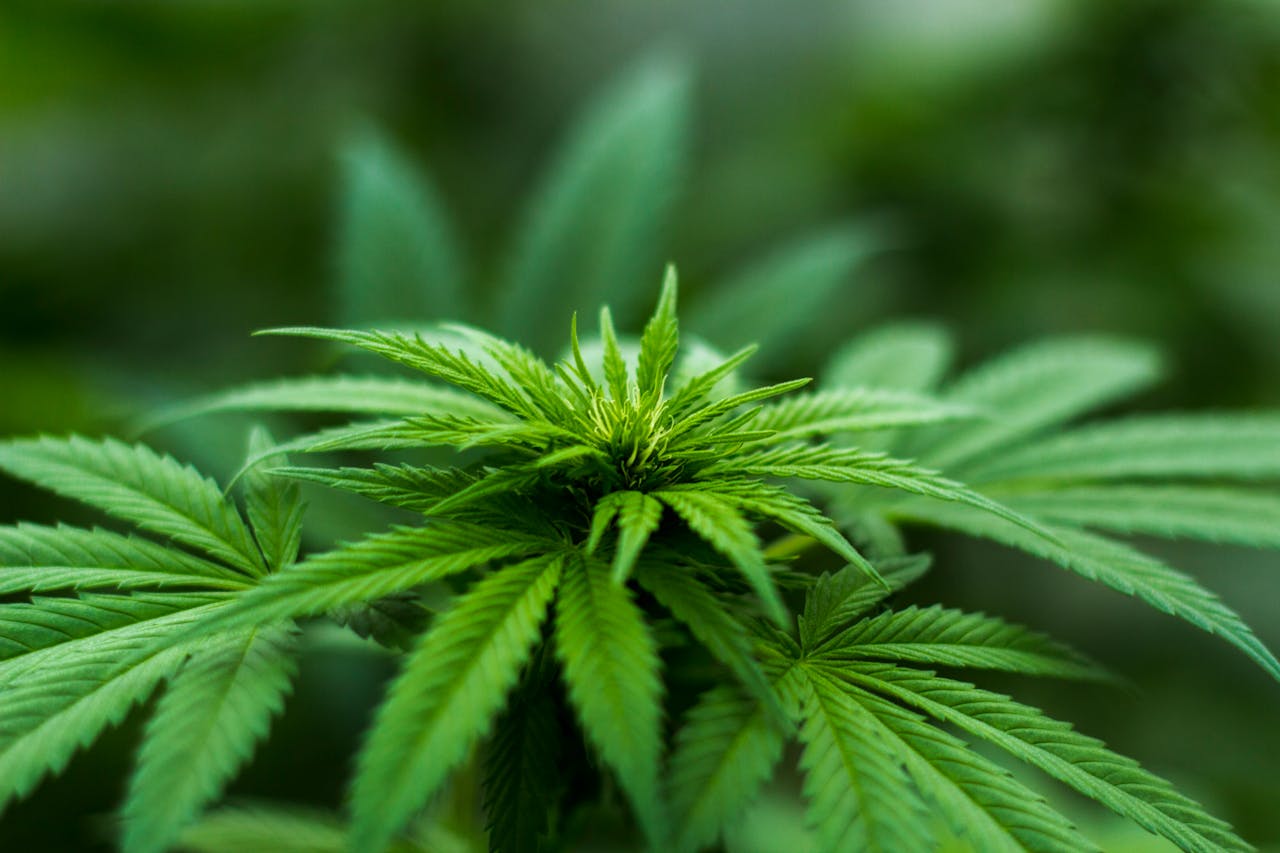
The biggest concern after the province enacted the law appears to be regulation and management. Federal law still treats cannabis as a narcotic and prohibits it. How can you guarantee effective regulation and management?
First of all, I would urge everyone to read the law. Regulations and procedures will be formulated based on it, and regulatory structures will also be established.
Many people have been asking how we plan to move forward after the law was passed. Some seem to think that they can simply cultivate cannabis on a few ropanis of land and sell it immediately.
That is not how it will work.
Before receiving a licence to cultivate cannabis, you must have an agreement specifying where your production will be used. We have opened cannabis cultivation for two purposes: medicinal and industrial use.
It could be used by textile industries, cosmetics manufacturers or other industries. Cannabis, in particular, appears to have considerable applications in Ayurvedic medicine.
We need to know who will purchase the cannabis produced. Will it go to a pharmaceutical company? Will it be used to produce medicine? Will an industry use it as raw material?
There must be an agreement between the producer and the industry. Only after such an agreement is in place will we issue a cultivation licence.
We have even proposed that every single plant be accounted for.
Suppose someone receives permission to grow 200 cannabis plants. If we later find only 199, the person cannot simply say that one plant died. If a plant dies, it must be reported immediately. There will also be a committee at the local level. In their presence, a record must be prepared confirming how many plants died or failed to produce.
So this is not a situation where people can simply plant cannabis and sell it.
Several lawmakers are now saying on social media, “The police will no longer come to destroy your cannabis plants.” Is that actually the case?
No, it is not.
The police will not stop destroying cannabis simply because the law has been enacted. If someone cultivates cannabis without a licence or outside the legal framework, the plants will be destroyed.
So it is not correct to say, “The law has been passed, so cannabis plants can no longer be destroyed.”
Former federal lawmaker Sher Bahadur Tamang had introduced a cannabis-related bill in Parliament, but it was later stalled. Given federal laws and international treaties and conventions, legalisation is considered difficult. How complicated do you think implementation will be?
Implementation will not be easy.
A bill was introduced at the federal level as well. There are two things involved here. If there is political will and people analyse the issue in depth, progress can be made.
The federal bill did not move forward largely because many lawmakers did not pay enough attention to it. Some lawmakers saw the potential of cannabis, recognised its benefits and introduced the bill. But there was not enough interest in actually getting it implemented, so the bill was left stranded.
A law cannot be passed through the efforts of just one person. Our Parliament has different political parties. In our provincial assembly, there are 60 lawmakers, and everyone had to be convinced.
When it comes to making laws, there should not be a simple government-versus-opposition approach. Everyone agreed that this was the right thing to do.
The provincial head initially returned the bill, saying it conflicted with federal law. But our provincial Parliament unanimously maintained that it did not conflict with federal law and should move forward. It was then authenticated on the second attempt.
The provincial head initially returned the bill, but it was authenticated the second time. Federal law still considers cannabis cultivation illegal. On what basis do you argue that your law does not conflict with federal law?
Our provincial Parliament passed the bill and sent it forward. Under our constitutional system, the provincial head has now authenticated it.
The federal bill failed to pass earlier because of a lack of political will. Our provincial Parliament, however, passed ours.
There are still concerns about whether certain federal laws create a conflict.
But Nepal has three levels of government, and all three have constitutional authority to make laws. The Constitution sets out both exclusive and shared powers.
Schedule 6 of the Constitution lists the exclusive powers of the provinces. Item 20 specifically mentions agriculture and livestock development. That falls within our exclusive jurisdiction.
In other words, we have the authority to make laws relating to agriculture.
We could even impose taxes on agriculture, although we have not done so. Given the current state of agriculture, and the fact that even the remaining farmers are struggling, imagine what would happen if we started taxing them.
The framework we have created for cannabis is connected to agriculture. Our argument is: why should we not have the authority to legislate on this?
Where exactly does the Narcotic Drugs (Control) Act prevent it? Many provisions of the 1976 Narcotic Drugs (Control) Act do not strictly prohibit cannabis for medicinal or industrial purposes.
If it does create a conflict, then the federal government should amend the federal law.
The province cannot simply remain silent by citing federal law. We cannot do that.
A number of laws were enacted before federalism existed. We cannot accept the argument that a law from 2033 BS prevents the provincial government from exercising its constitutional powers.
If we say a Police Act prevents us, or a Forest Act prevents us, then how can this government function? How are we supposed to exercise our lawmaking authority?
If our law conflicts with legislation enacted after the 2015 Constitution, we will accept that it cannot prevail. But you cannot simply point to an older law and say, “Your law conflicts with this.”
If the federal government can demonstrate that cannabis cultivation will cause specific harm to the country, then let them make that argument. If they can show that it will lead to such-and-such consequences, we can rethink our position.
But they should not simply say that the laws conflict without providing a substantive basis.

Nepal’s heritage sites, protected areas and lakes are covered by various international listings. We have also signed international treaties and conventions. Wouldn’t international law also apply here?
Would that difficulty apply only to Nepal, or would it also apply to the United States? Would it not apply to Europe? Would it not apply to India or Thailand?
They have also signed international conventions.
It cannot be that these countries face no difficulty while Nepal alone does.
Under the United Nations’ international framework, cannabis has also been opened up for medicinal and industrial purposes. It was previously subject to stricter restrictions, but countries have since allowed it, at least partially, for medicinal and industrial use.
We can also build our case on that.
So the idea that international conventions automatically prohibit everything depends partly on political will. If there is no political will, we will keep finding reasons to stop.
Otherwise, we need to identify where restrictions can be relaxed and move forward.
Nepal has a huge amount of unused agricultural land. We have not been able to attract people to farming. If cannabis can attract farmers, why not allow its use while ensuring it cannot be misused?
Its use as a narcotic must be completely prevented. But we should allow it for other purposes.
As for taking it abroad or importing and exporting it, that does not fall within the province’s jurisdiction.
Will the cannabis law be implemented during your tenure?
I believe it will take four to six months to implement the cannabis law.
It was only authenticated yesterday. We now have to formulate the regulations. After that, we need to prepare procedures and establish the necessary mechanisms.
We are also discussing whether to establish a separate security mechanism.
At present, the same police officers are expected to maintain law and order, arrest thieves, seize cannabis and respond to disasters. We are concerned that the police may not have the capacity to handle all of this.
We will need to discuss this with the federal government as well.
When I raised the issue with the prime minister, he took it seriously. I believe that if we explain everything clearly, he will help facilitate the process if there are obstacles.
When Ramesh Risal was industry minister, the chief ministers of all seven provinces attended a meeting with him. He told us that the federal government would formulate the law rather than having the provinces do it themselves.
He also said that if the federal law later conflicted with provincial laws, we could amend them.
But if the federal government does not make the law at all, how long are we supposed to sit with our hands tied?
After Gandaki enacted the law, it has sparked debate across the country, and other provinces also appear to be preparing similar legislation. Do you see this as putting pressure on the federal government?
That is natural.
Everyone should help facilitate the implementation of cannabis-related legislation. The federal government should also use this law as a basis to move its own legal process forward.
Once the federal government moves ahead, we should start a broader discussion on implementing it across all seven provinces.
I am working hard to ensure that cannabis is legalised and brought into implementation during my tenure.