
In Chaitra 2057 BS, Chanira Bajracharya was just five years old when she was selected as the Kumari, the living goddess. Shortly after becoming Kumari, she met then-King Birendra during the Bhoto Jatra festival of Rato Machhindranath.
It was nine days before the Narayanhiti Palace massacre. Yet, four days before the massacre, tears began to flow continuously from Chanira’s eyes.
“My family tried to comfort me, thinking I was crying because I had just become Kumari and had to stay at home after leaving school,” Chanira recalls. But nothing they did could stop her tears. Seeing this, priests and elders took the Kumari’s crying as a bad omen.
Four days later, news of the Narayanhiti Palace massacre spread. “The news came just as my family was preparing to perform a ritual of forgiveness, thinking that perhaps the goddess had been defiled in some way,” Chanira says. In another strange coincidence, she had stopped crying only a short while before the news arrived.
In Nepali tradition, the living goddess crying or becoming angry is associated with the belief that something unfortunate is about to happen in the country. After spending 10 years at the centre of such mysterious traditions and beliefs, Chanira is now living her “second life” as an ordinary, independent young woman.
The struggle of coming down from the throne
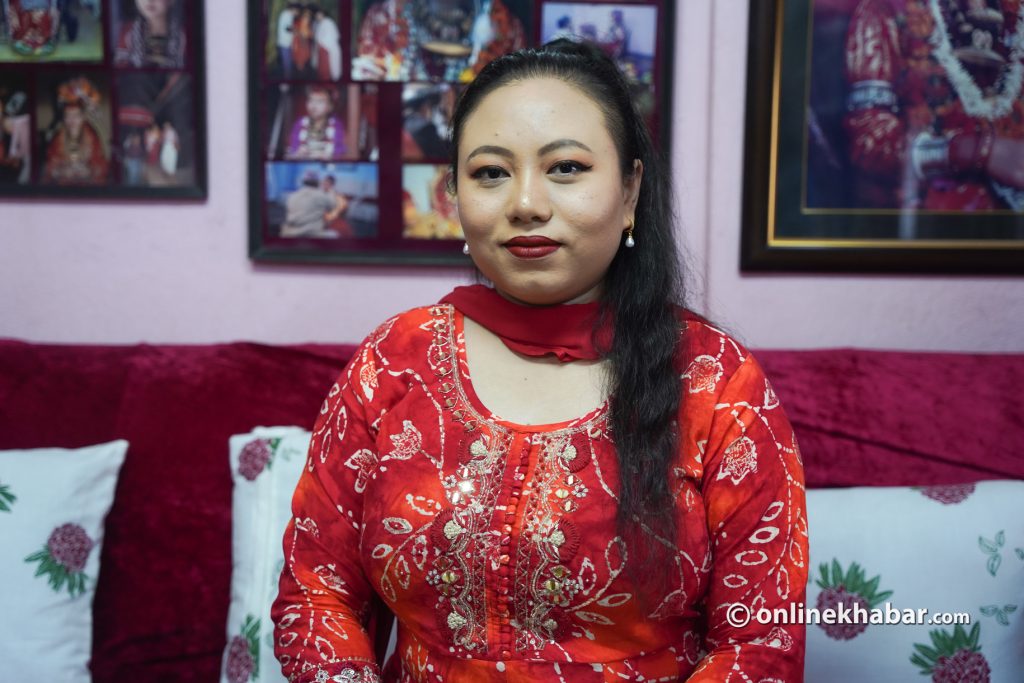
When introducing herself, Chanira never gives only her name. “I am a former Kumari, and that is the biggest part of my identity,” she says.
She does not consider her 10 years as a living goddess a burden. She still vividly remembers thousands of people bowing in reverence as she was carried around the city in a palanquin during festivals. But when she returned from the Kumari throne to ordinary life, her real struggle began.
What was the most difficult thing about becoming a former Kumari? Her answer is unexpected: “Learning to walk.”
After spending 10 years being carried by others at public events, walking on the streets on her own feet was an entirely new experience. “At first, I even wondered why they weren’t carrying me anymore,” she says with a laugh.
Then came the struggle of adjusting to school, friends, classrooms and social interaction. Because her contact with the outside world had been limited while she was Kumari, she was extremely shy in the beginning. Once, when she stood up to give a presentation in class, she could not utter a word for two minutes. “I just stood there silently and then sat down again,” she recalls.
Even wearing ordinary clothes felt strange. Having been accustomed to red attire for years, clothes of other colours did not feel like her own. Some habits from her Kumari days remain even today. She has never worn leather shoes and does not use leather products. She is still not accustomed to sharing food that someone else has already eaten from. These are no longer imposed rules but have become part of her personality.
A dream of space and an educational gap
As a child, Chanira dreamed of studying space science. Planets, stars and the universe fascinated her from an early age. But studying science required access to laboratories, an opportunity that was not readily available to her because of her life as a Kumari.
Teachers used to come to her home to teach her while she was a Kumari. But there was no laboratory or extracurricular activities. The lack of classmates also had a significant impact on her social development. “It was very difficult for me to adjust to the outside educational environment at first,” she says.
This experience has now compelled her to speak up for the next generation of Kumaris. She believes the government should ensure the same standard of education for Kumaris, whether they are from Kathmandu, Patan or Bhaktapur. She says Kumari houses should have facilities for computer education, music, art and sports.
A love for numbers and a corporate journey

When the path to studying science became difficult, she turned to another interest—numbers and accounting. Her life as a Kumari, which was governed by routine, discipline and precision, had taught her to think in an organised manner.
After her time as Kumari ended, the school where she had studied invited her to work as a volunteer teacher. The aim was to help her gradually adjust to the social environment. Initially, she stayed outside the classrooms, checking homework and handling administrative tasks.
Impressed by her organised and meticulous approach to work, the school moved her into administration and accounting. She worked in the school’s accounts department for around eight years while completing her undergraduate and postgraduate studies.
While looking for new challenges, she applied to several companies. On her first attempt, she received an opportunity from an international company. Today, she works as a Senior Credit Analyst at an Australian company, where she analyses financial risks and assesses the financial condition of clients.
Interestingly, when applying for jobs, she did not mention anywhere on her CV that she was a former Kumari. “I wanted my work to speak for me first,” she says. Her colleagues learned only later that she had once been Nepal’s living goddess.
Breaking misconceptions, preserving culture
After she started college, people often asked her the same question: “You must know the Kumari dance, right?”
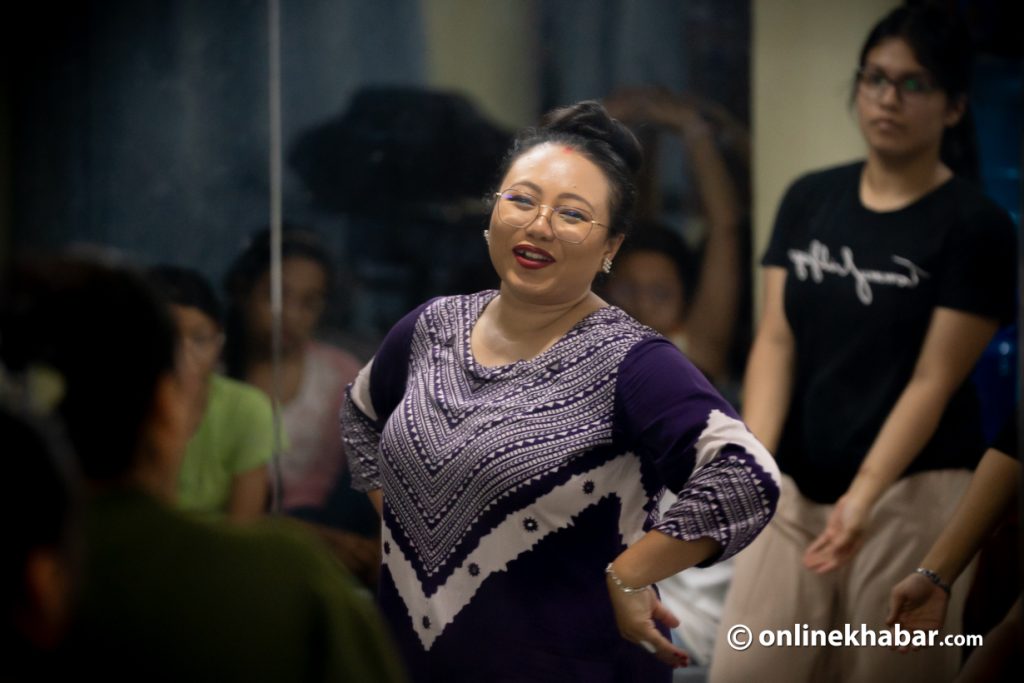
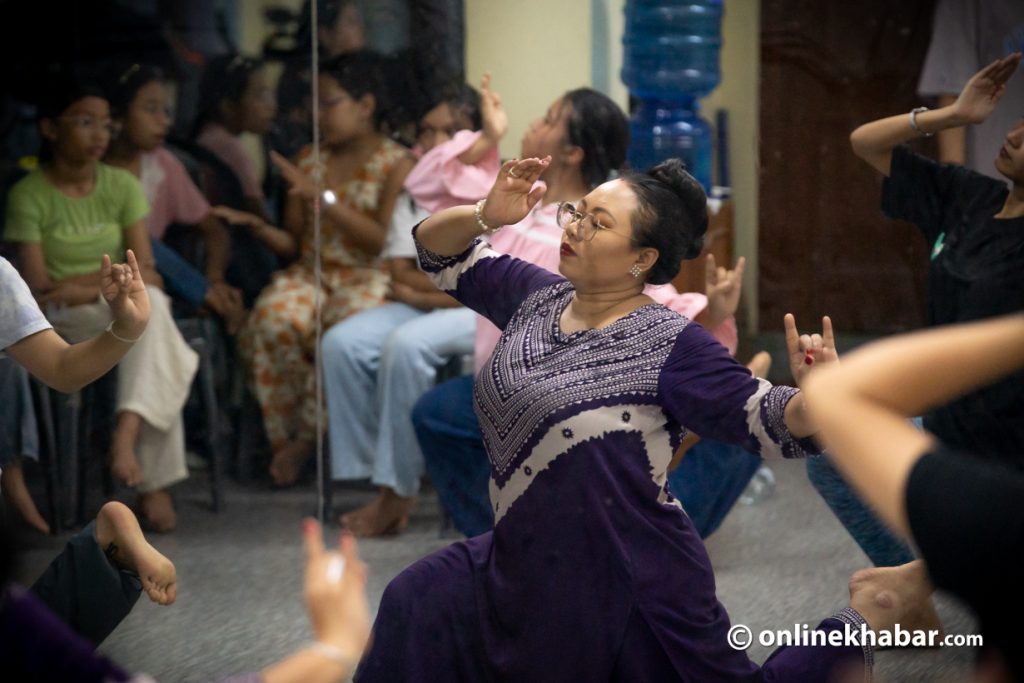
There is no separate dance form called “Kumari dance.” But the question eventually led her to Charya dance. She has been studying Charya dance for nearly a decade and is now also an instructor. “When I dance dressed as a Kumari or Tara, I feel as if I am reconnecting with my past,” she says.
Negative comments and references to “child exploitation” that she encountered about the Kumari tradition on the internet always disturbed her. To challenge such misconceptions, she engages directly with foreign tourists, journalists and researchers.
In collaboration with various travel agencies, she has shared her experiences with thousands of foreign tourists. “If the tradition needs reform, it should be based on facts. Reform should be based on facts, not misconceptions,” she says firmly.
Through the Vajra Dance Mandal, she teaches Charya dance to children. As secretary of Ratnakar Dha Baja Khalah, she is also actively involved in preserving traditional Newa musical instruments.
For Chanira, women’s empowerment is not merely an ideal to talk about. “Women must be financially independent. Only when you have your own income do you gain the confidence to make your own decisions,” she says.
A girl who once stood silently in front of her classmates for two minutes, unable to utter a single word, is now an analyst at an international company and teaches culture to hundreds of people.
Life gave her two identities—a goddess and an ordinary citizen. Today, she has transformed the honour she once received from the Kumari throne into a commitment to society and culture, while standing firmly on her own feet.