
Kathmandu, August 13
In Nepal, some people traditionally refrain from eating fish, meat and eggs during the month of Shrawan. With demand generally lower during this period, meat and egg prices would normally be expected to fall. But the market has shown exactly the opposite trend this year. Since the beginning of Shrawan, egg and chicken prices have risen. Consumers complain that their household expenses have increased due to repeated price hikes within a short period.
With egg and meat prices seemingly out of reach, one might assume that farmers are making good profits. But the rising price graph has brought neither happiness to farmers nor relief to consumers.
Stakeholders allege that middlemen and traders operating between farmers and consumers are making excessive profits by controlling the market. This raises a fundamental question: What kind of market mechanism is this, where farmers fail to receive even their production costs while consumers cannot buy the products at reasonable prices?
Egg prices rise four times in Shrawan
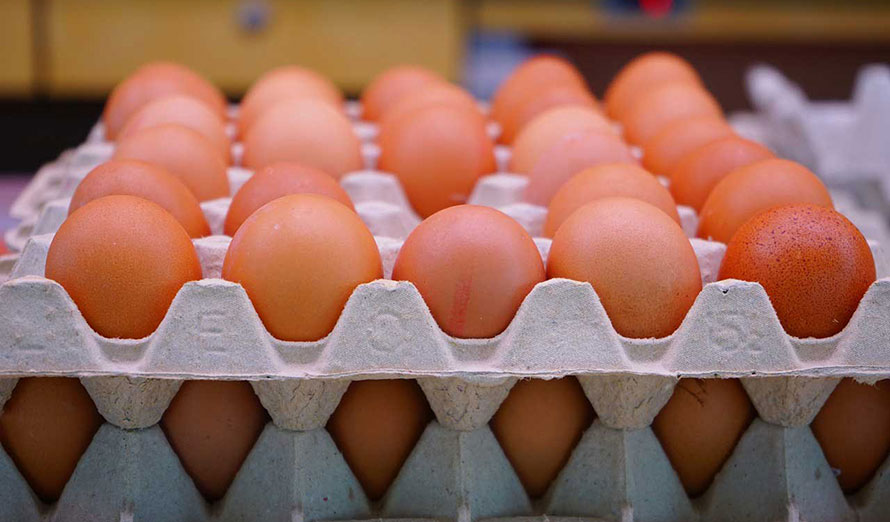
The Nepal Layers Poultry Farmers Association, which has been setting the farm-gate support price for eggs, has issued four notices announcing price increases in Shrawan alone. According to the figures, on August 2, the farm-gate price per crate of the largest, or XL, eggs was Rs 465, while large eggs cost Rs 450 and medium eggs Rs 420.
By August 11, however, the prices had surged to Rs 560 for XL eggs, Rs 545 for large eggs and Rs 500 for medium eggs. Prices had also been increased on August 6 and 13. Thus, within less than a month, the farm-gate price of eggs had increased by as much as Rs 95 per crate.
But this is where a clear picture of consumers being overcharged emerges. Whether the farm price was Rs 465 or had risen to Rs 560, every notice issued by the association continued to set the consumer price at Rs 25 per egg. Yet consumers are currently paying as much as Rs 30 per egg at retail shops.
Although egg prices vary according to size, once they reach the retail market, eggs of different sizes are often placed in the same basket and sold at Rs 30 each. Traders and dealers also do not necessarily pay farmers according to egg size when purchasing directly from farms. Instead, they buy the eggs in bulk.
Consumers and stakeholders have long accused middlemen and retailers of buying eggs from farmers at low prices, sorting them by size and selling them to consumers at higher prices, thereby pocketing substantial margins.
Consumers face similar pressure over chicken prices
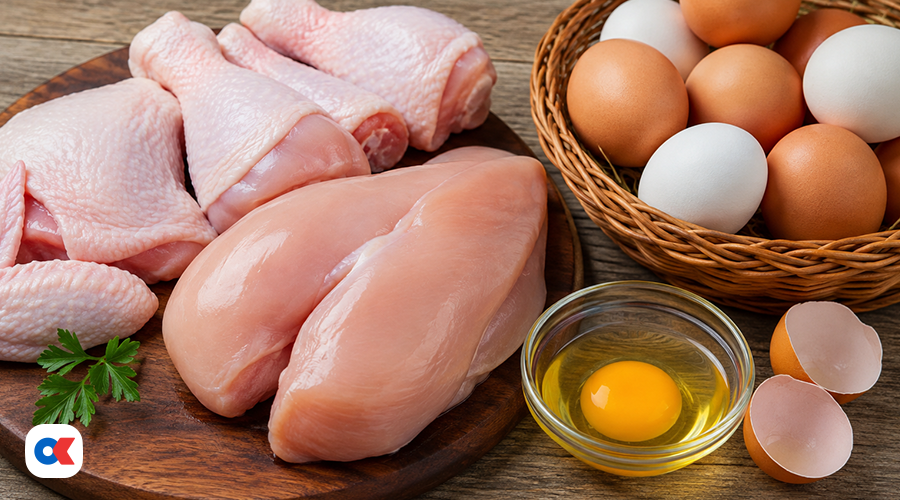
The problem is not limited to eggs. A similar form of market control can be seen in chicken prices. The National Chicken Sales Business Association increased the prices of live chickens and meat on August 7. Just four days later, on August 11, another price increase came into effect.
The price of live chickens, which previously stood at Rs 240 per kilogram, has been raised to Rs 250. Similarly, the association says the wholesale price of processed chicken has increased from Rs 330 to Rs 345 per kilogram. However, the wholesale price loses its meaning by the time the product reaches consumers. In Kathmandu’s retail shops, consumers are currently paying between Rs 380 and Rs 410 per kilogram of chicken. So, why are prices rising?
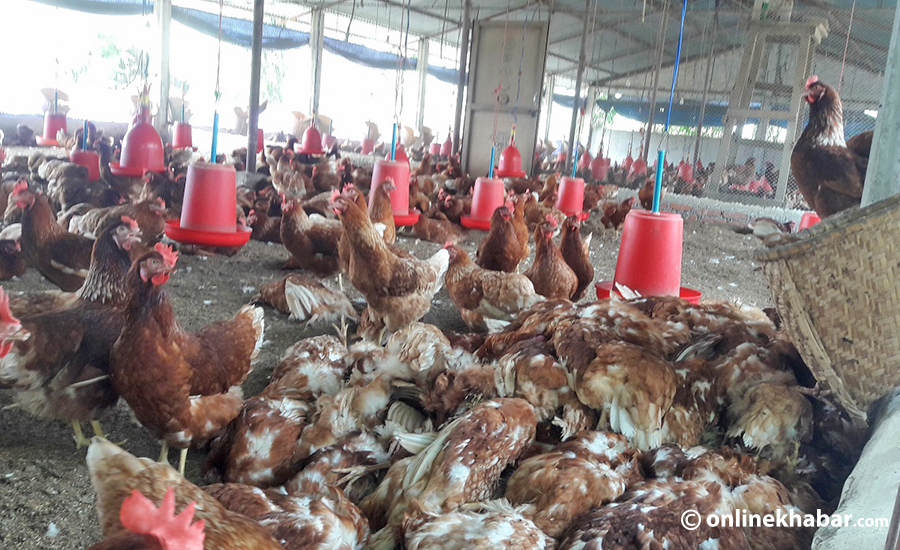
Bird flu and its impact on production are being cited as the main reasons. According to the Department of Livestock Services, 835,563 birds have been culled due to bird flu infections over the past four months. In addition, 1,225,536 eggs and 264,213 kilograms of poultry feed have been destroyed.
According to Binod Pokharel, president of the Nepal Layers Poultry Farmers Association, around one million to 1.2 million layer chickens producing eggs have been destroyed across the country due to bird flu. “We used to produce 4-4.1 million eggs a day across the country. Now production has fallen to 2.9-3 million,” he says. “Production has declined significantly while market demand is increasing.”
Although market prices have risen, farmers themselves are still operating at a loss, Pokharel says. “The production cost of one crate of eggs for farmers is Rs 573, but farmers are still receiving only Rs 545 for large eggs,” he said. “Farmers have not made profits simply because consumer prices have increased. They are still suffering losses.”
A poultry entrepreneur also agrees. According to him, farmers sold chickens at a loss during the bird flu outbreak, and many poultry sheds are now empty. The government has restricted the smuggling of Indian chickens and eggs across the open border. According to the businessman, the market has faced shortages after the supply of cheaper Indian products stopped and domestic chicken production declined.
However, he argues that claims that prices have risen because feed and raw materials have become more expensive are unfounded. “Feed prices have remained stable. We don’t need to import corn from India at present, as locally produced corn can meet demand for the next five to six months,” the businessman said. “Therefore, the current price increase is not primarily due to higher production costs but to shortages in the market and the activities of middlemen.”
The chicken market also under the grip of middlemen
Another poultry businessman says the biggest problem lies in the structure of the market. “The chicken and egg market has now become just like the vegetable market. Just as consumers buy cauliflower for Rs 40 after farmers sell it for Rs 5, suppliers, dealers and retailers are making excessive profits from chickens and eggs that leave farms at much lower prices,” he said.
Because farmers cannot transport their products to markets themselves, and eggs can spoil if stored for too long, they are forced to sell at whatever price dealers offer. He says the role of commodity associations in this system, which exploits consumers and squeezes farmers, is particularly questionable.
Can the Layers Poultry Farmers Association or meat traders’ associations legally issue notices setting prices?
Consumer rights activist Madhav Timalsina considers such practices by the associations illegal. He says Nepal’s existing laws do not authorise commercial or commodity associations to set prices. “The practices of the Fruit Traders Association setting juice prices, the Egg Traders Association setting egg prices, the Poultry Farmers Association setting meat prices and the Gold and Silver Traders Association setting gold prices are completely illegal,” Timalsina says.
According to him, determining how much a commodity should cost in the market is not the responsibility of such associations. “No farmer in the country can receive a fair price. Middlemen within these associations determine prices, forcing consumers to pay more,” he says. “The same middlemen create projections that prices are going to rise, engage in cartel-like practices and attempt to charge new, higher prices even for old stock. This has led to the current situation.”
Government inaction emboldens traders
Consumer rights activist Timalsina blames the government’s weak monitoring mechanism for the overall disorder. According to him, the government lacks a scientific mechanism to regulate, analyse and determine market prices. The Department of Commerce, Supplies and Consumer Protection has never conducted an in-depth investigation into whether the prices set by such associations are justified.
“Until the authorities responsible for market intervention monitor and regulate prices, our market will remain trapped in the grip of traders,” he says. “Since the prices set by these associations are themselves illegal, the government must first stop this practice.”
He says the current situation in the chicken and egg market is essentially a cartel. Even if farmers are suffering losses, he argues, that does not give middlemen the right to exploit consumers.
He has called for immediate government monitoring and action against associations that raise prices overnight through cartel-like practices under the pretext of declining production, as well as retailers who buy eggs cheaply from farmers and sell them at inflated prices.
Poultry Business Forum Nepal also claims that suppliers and middlemen are exploiting both farmers and consumers by taking advantage of the bird flu outbreak and resulting shortages in the market. Jairam Mahat, secretary of Poultry Business Forum Nepal, says middlemen are taking advantage of the current shortage of chickens and eggs.
“There is currently some shortage in the market. Although dealers and sub-dealers purchase products from farmers in cash, the intermediaries are keeping slightly higher margins,” Mahat said. “It appears that middlemen are charging consumers more by using farmers as an excuse.”
Although chicken prices have increased in the market, he says broiler farmers are still not receiving prices that cover their production costs.
“A day-old chick itself costs Rs 75-80. On top of that, the cost of feed, electricity, water, labour and rent makes production very expensive,” he said. “It would have been easier for farmers if prices had been maintained according to production costs to provide relief to those who suffered losses for a long time because of bird flu.”
Mahat says the current shortage in the market is the result of the large number of chickens destroyed during previous bird flu outbreaks. Under existing rules, poultry sheds affected by bird flu must be disinfected and kept empty for three months. Mahat said farmers have been reluctant to place new chicks in their sheds because continuous rainfall has made disinfection difficult.
Although demand for meat appears to have increased slightly recently, the forum says meat consumption will decline during Shrawan and the subsequent 16-day period of Sorah Shraddha.
“Meat sales virtually come to a standstill during Sorah Shraddha,” Mahat said. “Therefore, farmers are hoping they will receive better prices during Dashain rather than in the coming month of Bhadra.”