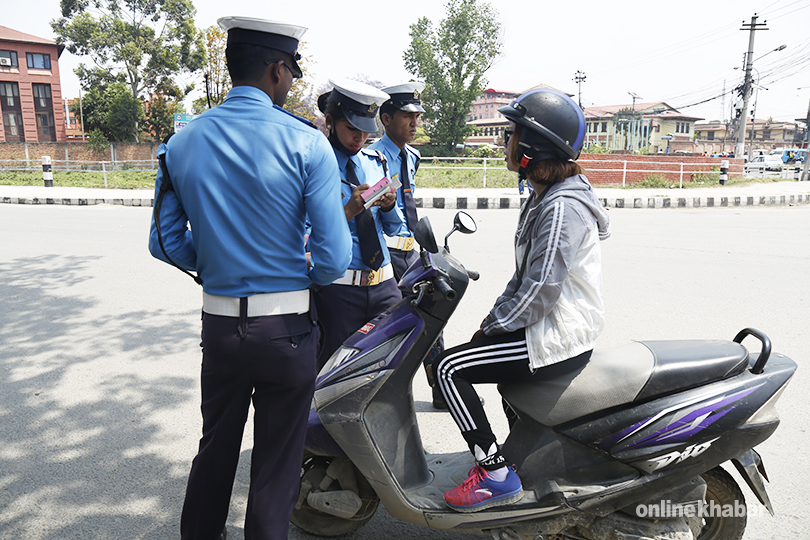
Nepal’s Ministry of Infrastructure Development has drafted a new law, the Vehicles and Transport Management Bill, that would raise traffic fines from the current Rs 500-1,500 range to as much as Rs 100,000 for a single offence. The bill is still a draft sitting with the Ministry of Law for review; it has not been passed by Parliament, but the size of the numbers alone has already set off a public argument. Officials say the country needs sharper deterrents on roads that kill roughly 28 people out of every 100,000 each year. Critics say a single fine worth three or four months’ income for an ordinary worker is not deterrence; it is ruin.
Lawyers have a name for the legal question buried inside that argument: is the punishment proportionate to the offence? Courts around the world have spent decades building tools to answer exactly this question.
What does it mean for a punishment to be “too much”?
Every legal system eventually runs into the same problem: the state has the power to punish people, but nothing in that power tells it when to stop. A parking fine of Rs 5 would be useless. A parking fine of Rs 50,00,000 would be absurd. Somewhere between those two numbers is a point where the punishment stops matching the offence, and courts have had to invent a way of finding that point without simply guessing.
The most widely used tool for this is called the doctrine of proportionality. It began in Germany, where courts reviewing police and administrative actions settled on four simple questions, each of which has to be answered “yes” before a restriction on someone’s rights or freedom can stand:
- Is the government actually trying to achieve something legitimate?
- Will this particular measure actually help achieve it?
- Is there a gentler way of achieving the same thing?
- Even if the answer to all three is yes, does the harm done to the individual still outweigh the benefit to society?
This is not an abstract philosophical exercise; it is closer to the kind of test a sensible manager might apply before approving a costly new rule: does it solve the actual problem, is there a cheaper or less painful way to solve it, and is the cost worth the benefit? Courts formalised it because governments do not always ask themselves these questions honestly, and someone needs the power to make them.
Can a fine be unconstitutional just because it’s too big?
The United States asks a narrower but sharper version of this question. The Eighth Amendment to its Constitution says the government may not impose “excessive fines.” This phrase is centuries older than the American Constitution itself; it traces back to the Magna Carta of 1215, which required that punishments (called “amercements” at the time) be “proportioned to the offence” and, crucially, that they “not deprive a wrongdoer of his livelihood.” In other words: you may punish someone, but you may not use punishment to destroy their ability to survive.
The US Supreme Court applied this idea seriously for the first time in United States v Bajakajian (1998), ruling that a fine is unconstitutional if it is “grossly disproportional to the gravity of the offence.” The doctrine became far more important in Timbs v Indiana (2019), where police in Indiana tried to permanently seize a young man’s $42,000 Land Rover over a drug offence that carried a maximum fine of only $10,000.
The Supreme Court, unanimously, said this could not stand, and specifically revived the old Magna Carta language about livelihood: a fine’s effect on a person’s ability to survive is not a side issue; it is central to whether the fine is constitutional at all. When Indiana’s own courts later worked out exactly how to measure this, they built a three-part test looking at how harsh the punishment actually is in practice, how much harm the original offence caused, and what other penalties the person had already suffered, and it took two separate court hearings and roughly six years of litigation to settle a single case.
The lesson worth carrying into the Nepal debate is simple: a punishment does not have to be unusual, or applied unfairly, or motivated by bad intent to be unlawful. It can be unlawful purely because of what it does to the person paying it. A Rs 1,00,000 fine against a Rs 25,000 monthly income is not just a large number; by the American courts’ own reasoning, it is closer to confiscating someone’s ability to live than to punishing a traffic offence.
Running Nepal’s bill through these tests
Put the draft bill through the four-question proportionality test described earlier, and the picture is genuinely mixed not simply bad, but revealing and disheartening.
On the first question, the government clears the bar easily. Reducing road deaths is an obviously legitimate goal; nobody seriously disputes that. On the second question, will higher fines actually achieve this, the answer is less certain than officials assume. Decades of research on traffic enforcement, going back to the economic theory of deterrence developed by the economist Gary Becker in the 1960s, consistently finds that the certainty of being caught changes behaviour far more reliably than the size of the punishment if caught.
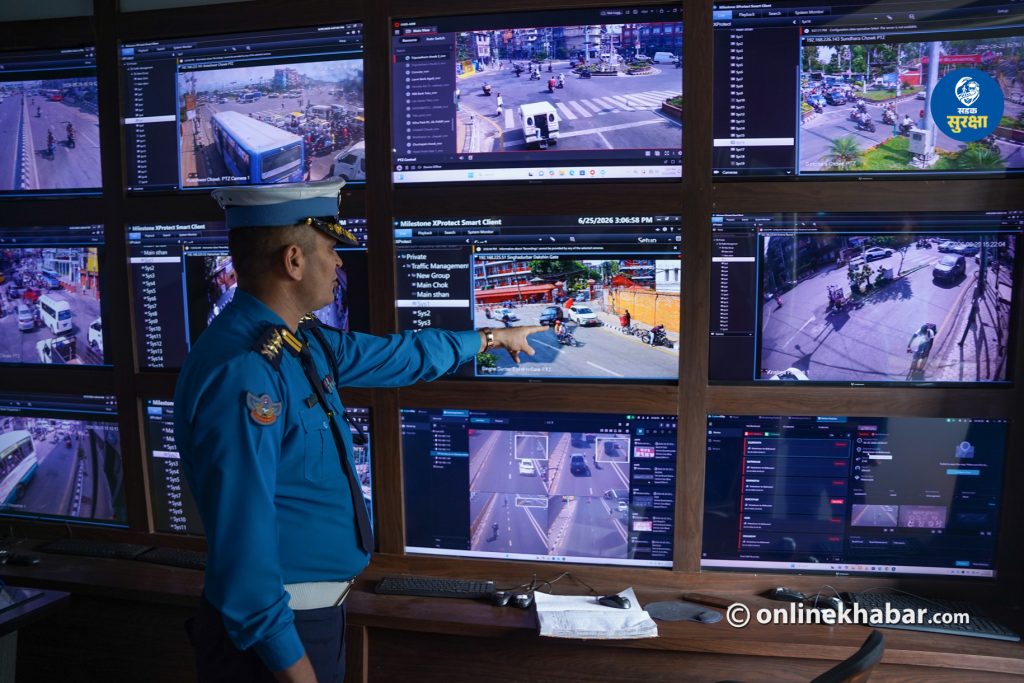
A driver who believes he has a nine-in-ten chance of getting away with speeding will not slow down no matter how large the fine becomes; a driver who believes he will almost certainly be caught will slow down even for a modest fine. Nepal’s bill raises the size of the punishment while leaving the probability of being caught largely where it was, given the state of its speed cameras, digital records, and traffic-police staffing. That is a real weakness in the government’s own logic, not just a fairness complaint.
The third question, is there a gentler way to achieve the same goal, is where the bill runs into the most trouble. Gentler, equally effective alternatives plainly exist and are already used elsewhere: fines scaled to a person’s actual income rather than fixed at a flat rate (the “day-fine” systems used in Finland, Germany, and Switzerland), a demerit-point system that suspends a licence after repeated violations rather than draining a person’s savings on the first one, and camera-based enforcement that raises the certainty of being caught without needing to raise the size of any individual fine. Wherever a less painful alternative can achieve the same result, that alone is usually enough to fail this stage of the test.
The fourth question, does the harm outweigh the benefit, is where the American “livelihood” principle becomes directly relevant. A Rs 100,000 fine for tinted windows, against a monthly income of Rs 25,000 to Rs 30,000, is not simply steep. It is roughly three to four months of a person’s entire income, gone in a single roadside encounter.
A sociological reading, why laws on paper don’t always become law in life
Sociologists of law have been writing about this gap for more than a century, and their ideas explain a great deal about why a steep fine schedule might fail even if a court somewhere finds it constitutionally sound.
The Austrian legal sociologist Eugen Ehrlich, writing in the early 1900s, drew a distinction that has aged remarkably well: the “law in books”, the formal statute passed by a legislature, is not the same thing as the “living law”, the actual set of norms and habits that govern how people behave day to day. A country can pass an excellent statute and see almost nothing change, because the living law of the street how people actually drive, what they expect enforcement officers to do, what a bribe is understood to cost versus what a fine is understood to cost continues operating exactly as before. Ehrlich’s point was not that formal law is useless, but that it only works when it lines up with, or gradually reshapes, the informal rules people are actually following.
The American jurist Roscoe Pound made a closely related argument, describing law as a tool of “social engineering” and warning legal reformers to pay attention to the gap between “law in books” and “law in action.” A law that looks perfectly rational on paper can produce a completely different, sometimes opposite, result once it meets an underfunded enforcement system, a public that does not trust that system, and officials who have discretion to apply the rule selectively. Pound’s warning maps almost exactly onto the traffic fine debate: a steep fine schedule enforced by underpaid, discretion-holding traffic officers, in a country where petty bribery at checkpoints is a well-documented practice, does not automatically produce safer roads. It can just as easily produce a bigger bribe.
A law’s text is only the beginning of the story. Whether the bill actually reduces road deaths will depend far more on enforcement capacity, public trust, and the realistic behaviour of underpaid officers and cash-strapped drivers than on the number printed in the statute.
The constitutional picture, seen from Nepal
Nepal’s Constitution does not contain an explicit “excessive fines” provision. But it does not need one for a proportionality argument to have a foothold. Article 18, the right to equality, expressly forbids discrimination in how general laws are applied on a list of grounds that includes “economic condition.” A flat fine that lands identically on a Rs 25,000-a-month motorcyclist and a Rs 25,00,000-a-month executive is, in its real-world effect, deeply unequal, crippling for one, trivial for the other, even though it treats them identically on paper.
Article 16, the right to live with dignity, and Article 20, the rights relating to justice, mean that a state-imposed economic penalty should not be allowed to threaten a person’s basic ability to live. And Article 133, together with the constitutional-remedy guarantee in Article 46, gives the Supreme Court of Nepal the writ jurisdiction through which such an argument could, in principle, be raised.
What would actually help
If the goal is genuinely safer roads rather than a bigger number on a fine schedule, the doctrines discussed above point toward a more modest, practical set of reforms rather than a single dramatic fine hike.
- Scale fines to something other than a fixed rupee amount: vehicle category or engine size, for instance, which several Southeast Asian countries use as a rough proxy for ability to pay without needing full income verification.
- Invest in the certainty side of deterrence: more cameras, more reliable digital records
- Pair the fine schedule with demerit points and mandatory retraining, so repeat offenders face escalating consequences that do not depend on how much cash they can produce at the roadside.
- Hold government agencies to the same standard the bill asks of citizens: penalties for unrepaired potholes or non-functioning traffic lights, an idea already raised in Parliament and one that speaks directly to Weber’s point about legitimacy: a rule feels fair, and gets obeyed, when it applies to everyone, including the state.
A law that looks defensible in a judgment is not the same as a law that actually changes behaviour on the street, and Nepal currently has neither the case-law history, the accessible legal remedy, nor the income data that made these doctrines work where they were first built. The more realistic path is not to wait for a future court case to strike the bill down on borrowed doctrine, but to design proportionality into the bill now before it becomes law, not after.