
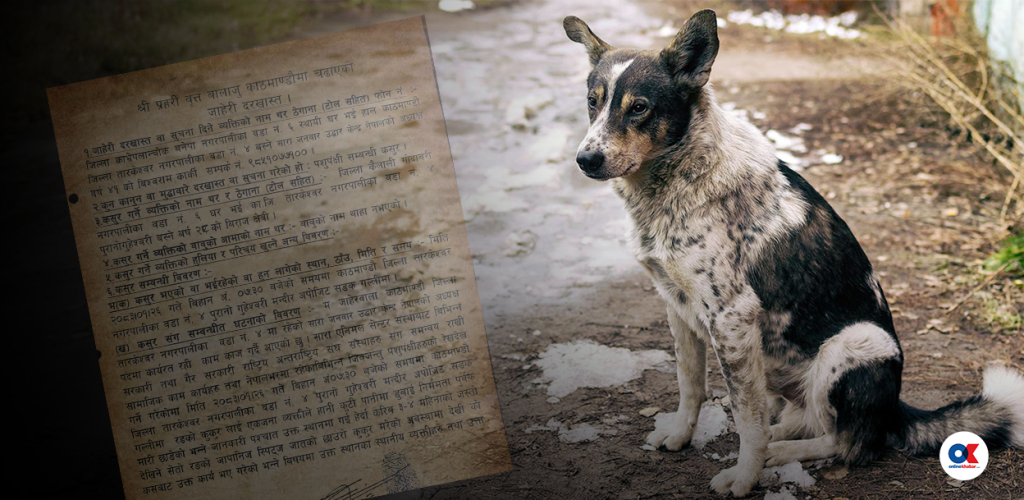
Until a few years ago, violence against street dogs was treated as a trivial matter. Reports of dogs being run over by vehicles, struck with sharp weapons, doused with hot water, or beaten to death were routinely dismissed by police as “just a dog case.” But animal rights activists say things have begun to change.
According to animal rights activist Bishwa Ram Karki, police have initiated action in 12 separate cases of violence against dogs in the Kathmandu Valley in just the past month. Complaints are now being formally registered, post-mortems conducted, suspects held in custody, and cases taken to court.
BG Mall incident — Three women arrested, one absconding
In a case of cruelty to a dog in Kathmandu’s BG Mall area, three women were arrested and held in custody for 14 days before being released on bail. An arrest warrant has also been issued against an elderly man believed to be involved, but he remains at large.
Puppy killed while sleeping
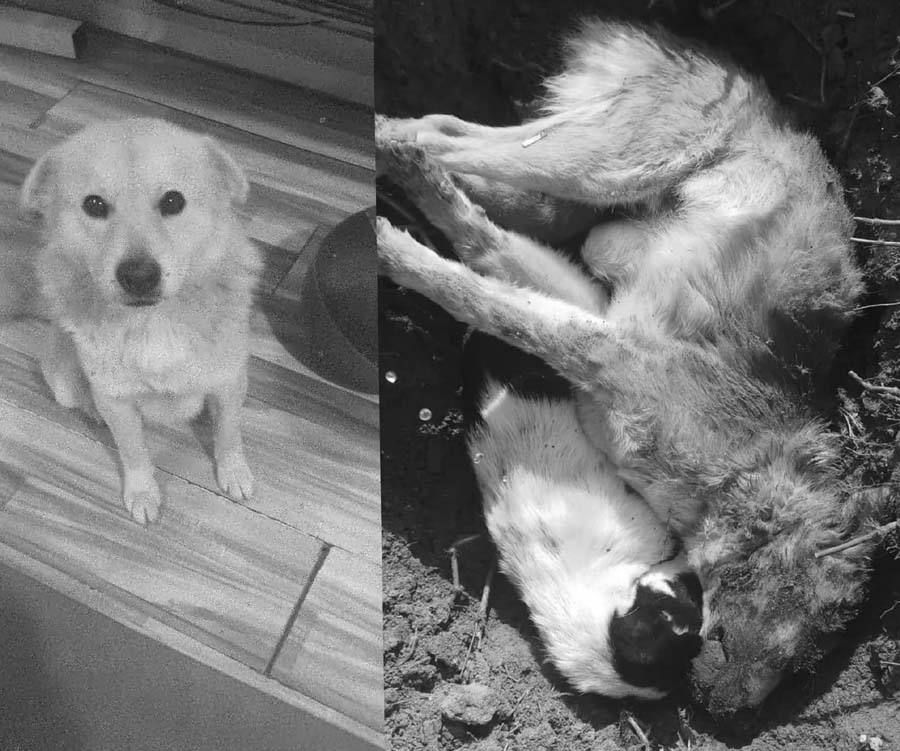
In another case, a small puppy was killed while it was sleeping. A formal complaint has been filed and the accused remains in police custody.
Hit and run cases in Goldhunga and Boudha
A case has been registered after a vehicle struck a dog in Goldhunga last week, with the accused now under a five-day investigation extension.
In another case in the Boudha-Kopan area, a motorcycle struck a dog and left it critically injured.
“It was hit hard enough to cause serious head injuries,” Karki says.
Mini truck kills two puppies in Lalitpur
Action is also being taken in a case where a mini truck ran over and killed two puppies in Lalitpur. The accused is currently in police custody.
Dispute with locals in Mulpani
In a case from Mulpani where a dog was seriously injured, a dispute arose with residents. Some who initially admitted involvement later began denying it, requiring further discussion.
Karki said the case is now being prepared for formal legal proceedings.
“Police used to refuse to file complaints”
Karki says that in the past, it was difficult even to get a complaint formally registered.
“Whether it was a hit-and-run or a case of killing with a sharp weapon, police simply wouldn’t accept the complaint,” he recalls.
But awareness of animal rights laws has grown within the police force.
“We have been applying constant pressure for two years, citing the constitution and the law and following up. That’s why things are finally happening,” he says to Onlinekhabar.
Animal rescue centres, rights advocates, social media users, and the press have all played a significant role in publicising incidents and creating pressure.
“Before, perpetrators never came within reach of the law. Now they are being arrested, held in custody, and facing action. The message has gone out that harming animals brings consequences,” Karki says.
No settlements, only legal action
Karki noted that in many cases, there are attempts to settle out of court.
“Many people try to talk us out of filing a case and resolve it informally,” he said. “But we no longer negotiate. We take the position that the law must be applied as written.”
What does the law say?
Before 2017, there was no specific law on this matter. But since the Muluki Criminal Code came into force, cruelty to animals is treated as a criminal offence. Senior advocate and environmental law expert Padam Bahadur Shrestha explains that those found guilty of cruel treatment of animals can face up to three months in prison, a fine of Rs 5,000, or both.
Anyone who witnesses cruelty to a dog can file a complaint at a police station. If police refuse to accept it, complaints can also be submitted to the District Administration Office or the District Government Attorney’s Office.