Kathmandu, May 12
Nearly 2 million people across the country are estimated to be affected by monsoon-related disasters this year. The National Disaster Risk Reduction and Management Authority (NDRRMA) has projected that 9,197,731 people from 457,145 households will be impacted.
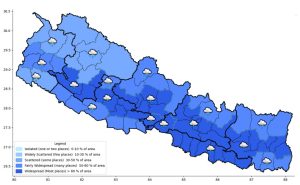
The Department of Hydrology and Meteorology has forecast below-average rainfall but above-average temperatures during this year’s monsoon season.
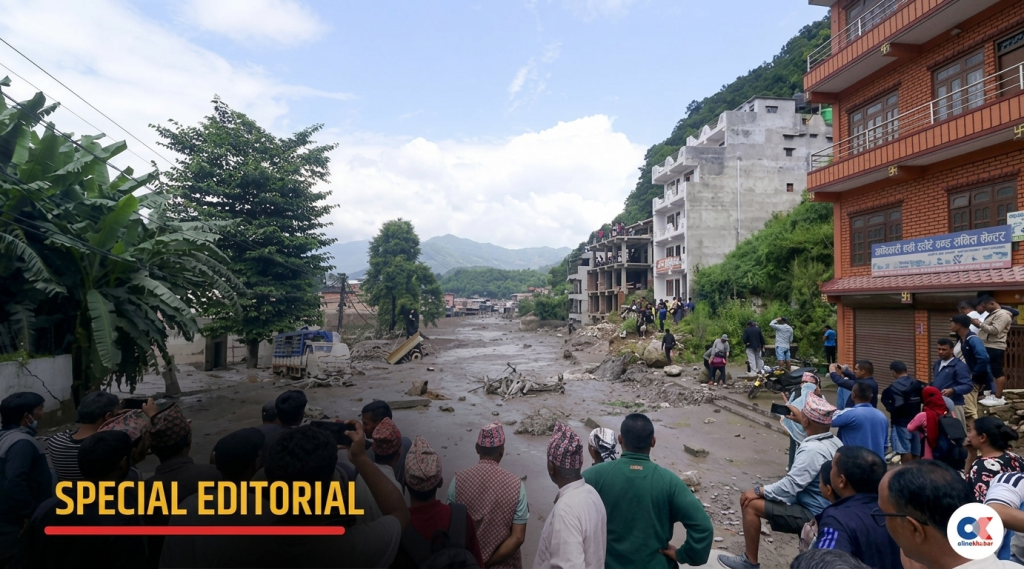
Although rainfall is expected to be lower than in previous years, the projected rise in average temperatures is expected to trigger glacial lake outburst floods (GLOFs) in some high Himalayan areas, leading to risks of floods, landslides, inundation, riverbank erosion, and flash floods in lower river basin areas. In addition, people in the southern Terai plains may also be affected by heat waves.
Which province will be most affected?
According to the NDRRMA’s Monsoon Preparedness and Response National Action Plan 2083 (2026), Lumbini Province is projected to be the hardest hit. An estimated 523,656 people from 119,830 households in Lumbini are expected to be affected by monsoon-related disasters this year.
Other provinces face the following projected impacts: Bagmati Province — 327,376 people; Gandaki — 287,107; Koshi — 275,867; Madhesh — 228,687; Sudurpashchim (Far-Western) — 227,730; and Karnali — 127,308 people.
Historical context
Over the past 10 years, monsoon-related disasters have claimed 3,074 lives and left 502 people missing. Landslides have been the deadliest cause, killing 1,483 people, followed by lightning (805 deaths), floods (678), and heavy rainfall (108).
Preparedness measures
NDRRMA spokesperson Shanti Mahat stated that, given the likelihood of similar natural disasters this year, the Authority has assigned responsibilities to various ministries for preparedness and response. The NDRRMA will provide overall leadership and coordination, while the Home Ministry and Defense Ministry will handle search, rescue, and relief operations. The Ministry of Federal Affairs has been tasked with rapid recovery, including facilitating and coordinating with local governments during the disaster response period.