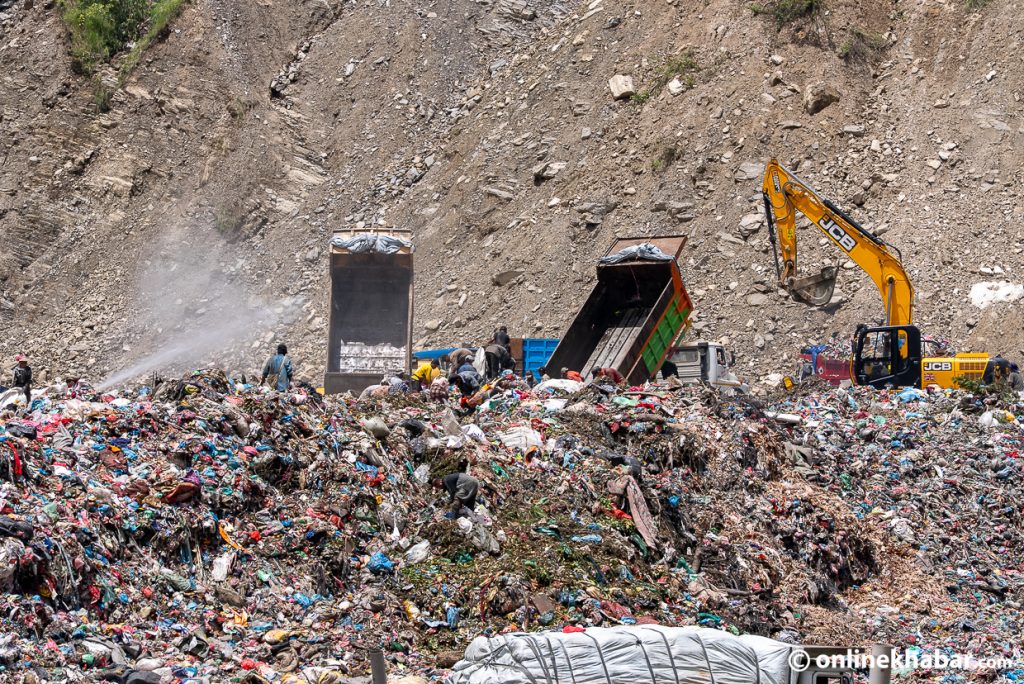

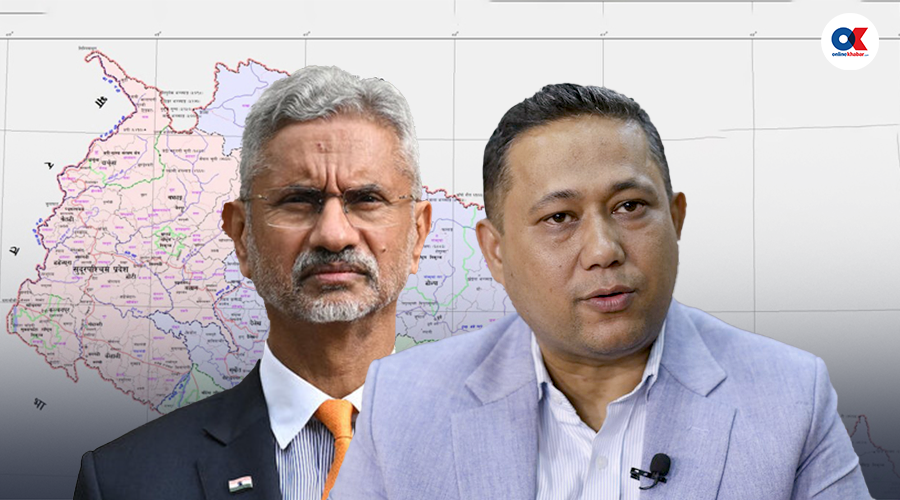
During Indian Prime Minister Narendra Modi’s visit to China in 2015, an agreement was reached to open a trade route through Lipulekh Pass. Nepal, however, viewed this agreement as an unauthorised deal over its own territory.
The government led by then-Prime Minister Sushil Koirala sent diplomatic notes to both India and China on the matter. India offered no written response. China, too, stayed silent.
Four years later, in 2019, when India included the Kalapani region in its new political map, Nepal again sent a diplomatic note. This time, the response took more than three weeks to arrive.
Experts interpreted India’s silence as a sign that it was not taking Nepal’s claims seriously and was not interested in border negotiations. When the response did come, India dismissed Nepal’s claim as “unwarranted” and inconsistent with historical facts.
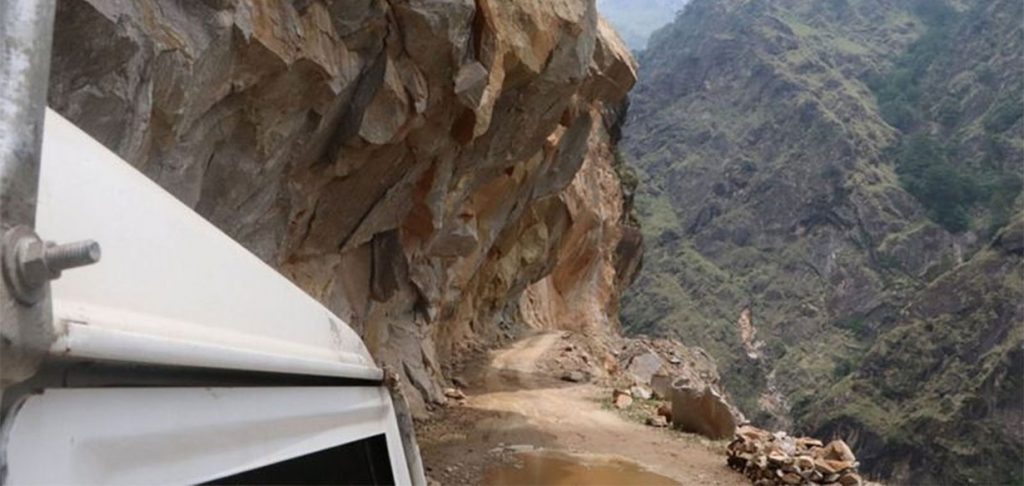
Events in 2020 grew more complicated. After India inaugurated a 79-kilometre road in the Lipulekh area, Nepal lodged a strong protest and went beyond sending a diplomatic note. It amended its official political map to formally include Limpiyadhura, Lipulekh, and Kalapani as Nepali territory.
The response was a forceful one, yet India dismissed Nepal’s move as “artificial” and “unilateral.”
By this point, every note Nepal had sent had been met with nothing but rejection, indifference, or prolonged silence from India.
In 2025, during Chinese Foreign Minister Wang Yi’s visit to India, the two nations again agreed to resume border trade through the Lipulekh route, without consulting Nepal. Nepal subsequently sent separate diplomatic notes to both India and China. This time, India responded in a few words, characterising the matter as “trade that has been going on for decades” and effectively normalising Nepal’s concerns. China said nothing publicly.
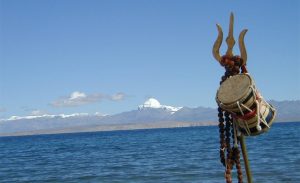
The most recent addition to this sequence of diplomatic notes came in May 2026. After India announced the resumption of the Kailash Mansarovar Yatra via Lipulekh for June–August 2026, the government led by Balendra Shah (Balen) sent a six-point diplomatic note to both India and China, only after consulting opposition parties, sending a clear signal of national consensus.
This time, India responded in what might be called a record short time, within hours. Indian Ministry of External Affairs spokesperson Randhir Jaiswal asserted that the Lipulekh route has been in use since 1954 and that this is not a new development. He rejected Nepal’s territorial claim as neither justified nor grounded in historical fact and evidence, but also kept the door open for bilateral talks. China, as always, maintained public silence.
A clear pattern
This sequence of events reveals a consistent pattern. On the one hand, Nepal has repeatedly taken diplomatic initiatives in defence of its sovereignty and territorial integrity, yet most of its notes have been ignored, answered late, or flatly rejected. On the other side, India has continued to repeat its old position, while China has used silence as a strategic tool.
Foreign affairs expert Dinesh Bhattarai, who served under Prime Minister Sushil Koirala, recalls that India did not respond to the notes sent during that period. He welcomes the current government’s initiative.
“At that time, our letters went unanswered,” he says. “But the government has now sent another note, signalling that our position remains firm; this is positive.”
Former Ambassador Deep Kumar Upadhyaya notes that despite Nepal’s repeated requests for dialogue, its neighbours have consistently sidelined the issue.
“This new government’s effort is good,” he says. “We must pursue a solution through quiet diplomacy and assert that this is our primary agenda.”
Nevertheless, India’s swift response to the most recent note and its keeping the door open for talks offer some positive signals, indicating that India does not want to turn the dispute into a fully frozen relationship and is willing to keep diplomatic dialogue alive.
Are diplomatic notes merely symbolic?
The failure of diplomatic notes to produce concrete results has raised questions about whether they serve any purpose beyond the symbolic. While each note has placed Nepal’s position on record before the international community, provided a basis for future negotiations, and conveyed a message of national unity, the weakness of follow-through has left room for doubt.
Former Ambassador and diplomat Nilambhar Acharya describes diplomatic notes as a fundamental means of opening the door to dialogue.
“Our clear position is that talks should follow the sending of a note,” he says. “The tragedy is that substantive talks have not happened so far.”
He emphasises that such diplomatic efforts must continue and that a resolution must be sought through bilateral negotiations.
Former Foreign Minister Pradeep Gyawali argues that Nepal’s diplomatic notes should be understood not as a means of cooling relations but as a reflection of continuity and stability in foreign policy.
“Sending a diplomatic note is not about chilling the relationship,” he says. “And you certainly cannot sacrifice national interest in the name of improving relations. Not sending a note might suggest our position has changed, so this must be treated as consistent policy.”
Border expert Buddhi Narayan Shrestha speaks positively of the Balen government’s decision to send diplomatic notes to India and China on Lipulekh.
“The current government seems to have done its homework and moved with urgency,” he says.
He attaches particular significance to India’s statement that it remains ready to resolve remaining border issues through dialogue and constructive diplomacy, and says he is optimistic about the Balen government.
“This diplomatic note does not appear to have been sent merely as a diplomatic formality, as in the past,” he adds. “It can work both publicly and through silent channels, and it is also useful for building international pressure.”
Diplomat Jayaraj Acharya argues that Nepal should use India’s response to this round of notes as an opportunity to open the door to diplomatic dialogue. He says that India, which had not been willing even to talk with Nepal since the new map was issued, has now provided a response that should be taken positively.
“The issue has now been raised. We should take this positively and use it as an opportunity to resolve it through dialogue,” he says to Onlinekhabar.
He notes that since India has kept the possibility of talks alive even while maintaining its own position, this can be made into an important link for resolving the border issue between the two countries.
The mechanism for dialogue
The highest and most comprehensive mechanism for discussing all issues between Nepal and India is the Nepal-India Joint Commission, established in 1987 and co-chaired by the foreign ministers of both countries.
While a Boundary Working Group addresses the technical aspects of the border dispute, and a Foreign Secretary-level mechanism covers specific disputes such as Kalapani and Susta, it is the Joint Commission that provides overall policy direction. In diplomatic circles, it is regarded as the primary forum for seeking political consensus on disputed issues.
Former Foreign Minister Gyawali, expressing concern that India has to some degree neglected Nepal in the past, stresses that in the days ahead Nepal must go beyond correspondence and call for a Joint Commission meeting to raise border issues. He also underscores the importance of the relationship with China.
“China is equally important; it cannot be left aside,” he says.
Over the course of a decade, Nepal has sent more than eight diplomatic notes asserting its sovereignty and territorial integrity over Limpiyadhura, Lipulekh, and Kalapani, a record that underscores its sustained diplomatic efforts. These notes have not brought any immediate change to India’s maps or actions. But Nepal’s consistent position has been placed on record, and the latest exchange suggests the conversation is not yet closed.