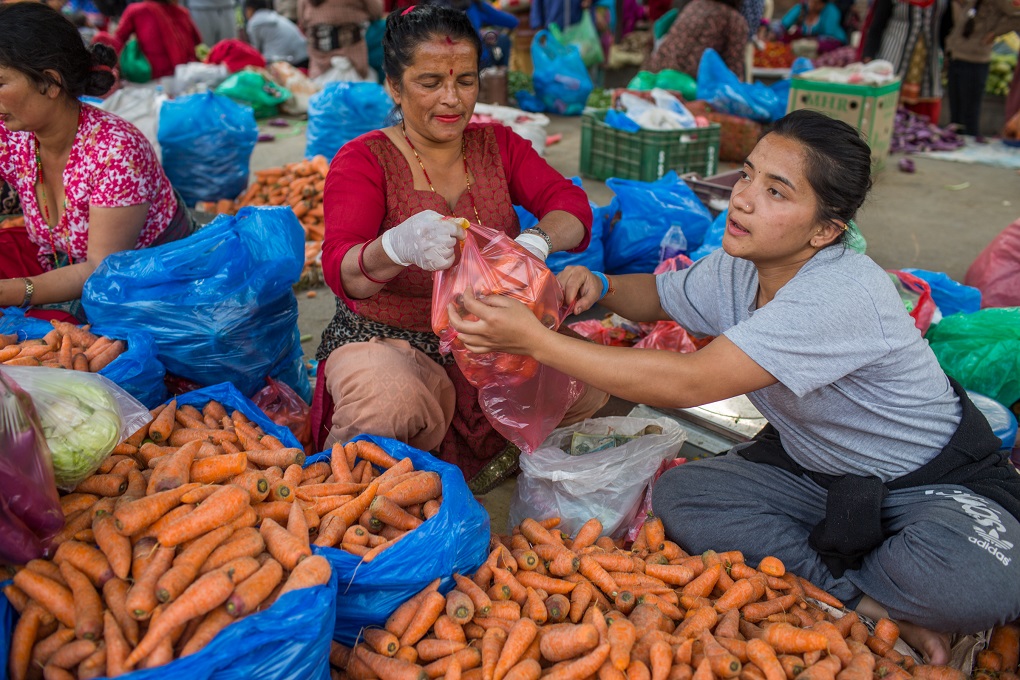



In the streets of Thamel, New Road, Asan, the counterfeit garments have become a notable feature, vibrant yet chaotic. The garments are stitched in local workshops across the Kathmandu Valley and sold with counterfeit labels of globally recognised fashion brands at a fraction of their genuine prices. These counterfeit garments usually focus on tourist areas such as Thamel, the epicentre, and are dominant in outdoor and trekking materials, often displaying fake North Face, Patagonia, and other adventure brands. This has been an alarming issue as thousands of consumers visit these shops, along with the collective transaction of at least ten hundred thousand rupees on a daily basis or even more. Trademark Infringement happens in broad daylight. Garments are mimicked with well-known trademarks, which not only affects the domestic market but also leaves an unfavourable perception in international markets.
Many of the counterfeit goods are imported from China and India, or are locally assembled using cheap materials and copied designs. Consumers face the most immediate risks. Fake garments usually use inferior fabrics, poor stitching, substandard dyes, leading to skin irritation, quick wears and others. However, on the other side of the Nepali economy, where most of the population is under the lower middle class, these counterfeit garments offer accessible style and utility, employment to hundreds and thousands of people inside the valley.
Laws regarding counterfeiting and consumers’ rights:
The Patent, Design and Trademark Act, 2022 (PDTA Act, 2022) aims to establish a fair market system by promoting quality, fairness, consumer rights, and healthy competition. Sections 3, 12, and 16 of the Act provide provisions for acquiring rights over patents, designs, and trademarks, respectively, and clearly prohibit anyone from copying, using, or allowing others to use such registered rights without ownership transfer or written permission as per Section 21(d). In case of violations, penalties are imposed based on the nature of the offense: under Section 3, offenders may be fined according to the severity of the offense along with confiscation of goods under Section 11; under Section 12, a fine of Rs. 50,000 and confiscation under Section 15 applies; and under Section 16, a fine of Rs. 100,000 along with confiscation under Section 19 is prescribed.
Similarly, the Consumer Protection Act, 2075, ensures the protection of consumer rights in Nepal. Section 3 guarantees fundamental rights such as the right to be informed about price, quantity, purity, and quality, as well as the right to seek legal action against unfair trade practices. Section 4(1) mandates the Government of Nepal to regulate the supply, pricing, quality, measurement, labelling, and advertisement of goods and services. Section 11 outlines the liability of sellers, while Section 16 prohibits unfair trade and business practices. Furthermore, Section 18(b) explicitly forbids deceptive practices such as misrepresenting goods or services or falsely claiming higher standards. Violations of Section 18 can result in imprisonment ranging from three to six months, a fine between Rs. 100,000 and Rs. 300,000, or both.
Regulatory bodies
Nepal’s Consumer Protection Act, 2075 and Patent, design and Trademark Act 2022, both prohibit the manufacture and sale of counterfeit goods, with penalties including fines and imprisonment. The Department of Commerce, Supplies and Consumer Protection has carried out periodic raids in Kathmandu markets, seizing fake garments from retail outlets. Consumers are encouraged to report suspected counterfeit sellers to the Department of Commerce or via the national consumer helpline. Buying from authorised retailers and being sceptical of pricing well below market rate remain the most reliable self-protection tools. There are two regulatory bodies that regulate and enforce these laws of Intellectual property and Consumer protection on behalf of the Nepal Government.
The Department of Industry, operating under the Ministry of Industry, Commerce and Supplies, serves as the main authority for trademarks, acting both as a registrar and a quasi-judicial body. It is responsible for registration, investigation of complaints, issuance of cease-and-desist orders, and seizure of counterfeit goods; recent data indicates that 356 cases—mostly related to trademark infringement—were registered last year, with 483 cases resolved. Meanwhile, the Department of Commerce, Supplies and Consumer Protection focuses on market-level enforcement, conducting surprise inspections especially in major cities, monitoring pricing and labelling practices, and imposing fines on violators.
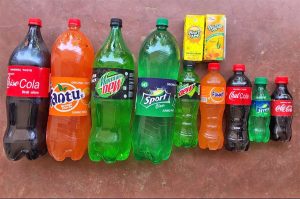
Although we have regulatory mechanisms and laws relating to intellectual property rights, Rights relating to consumer protection, the thing that is absent from the scene is the public proactive attitude towards the culture of awareness i.e to say the concept of “caveat emptor– let the buyer be aware”. The lack of culture resulted in widespread infringement of Trademarks in the Nepali market. Global brands are frequently mimicked through look-alike products. In the broad day light trademark, tag of brands like Nike, Adidas, and Coca-Cola are sold as original products. These very activities violate not only the governing acts but also the very founding principle of the WTO of fair trade. Counterfeiting also undermines tax collection, as informal trade evades duties and VAT. A strong legal framework with weak enforcement and limited regulating mechanisms is nothing but a hoax- a deception of fair market and quality assurance.
Addressing the trade requires coordinated effort from government, business, and consumers to foster a healthier retail environment that respects innovation while meeting the needs of the diverse Nepali population.