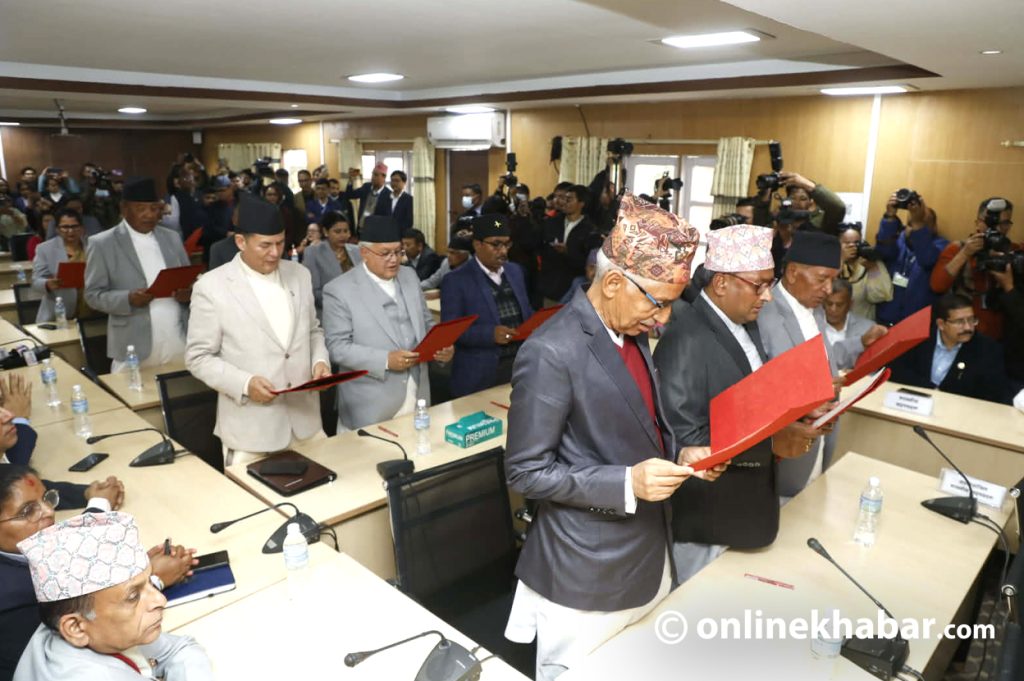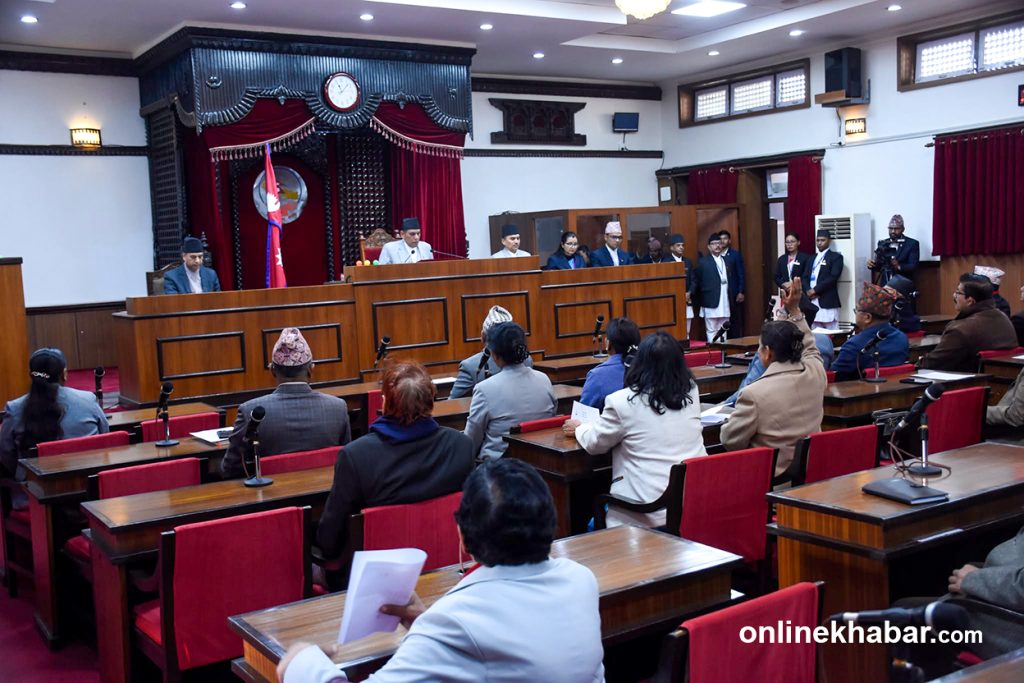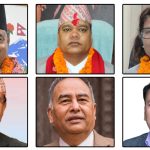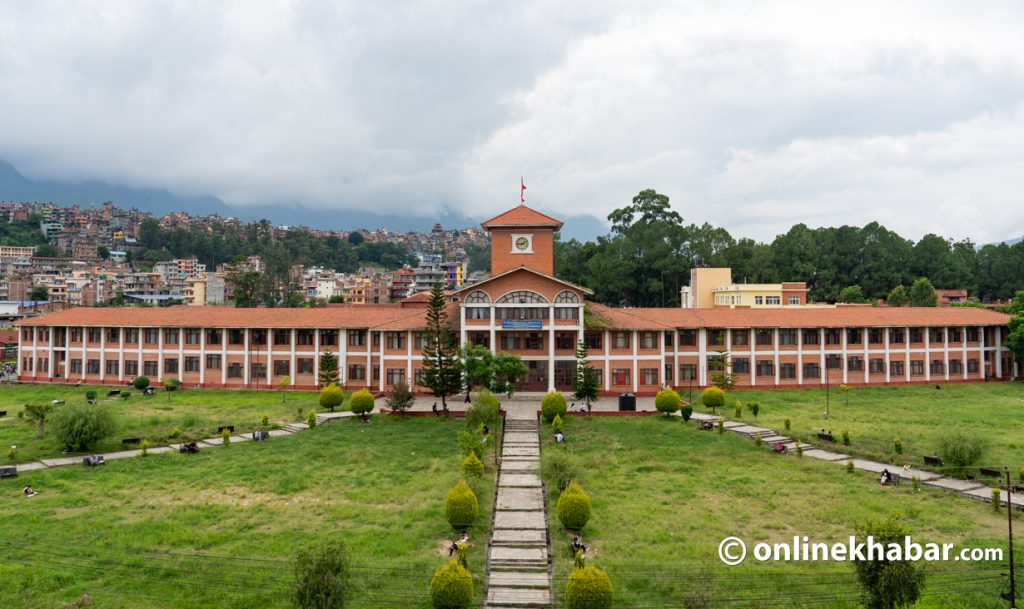

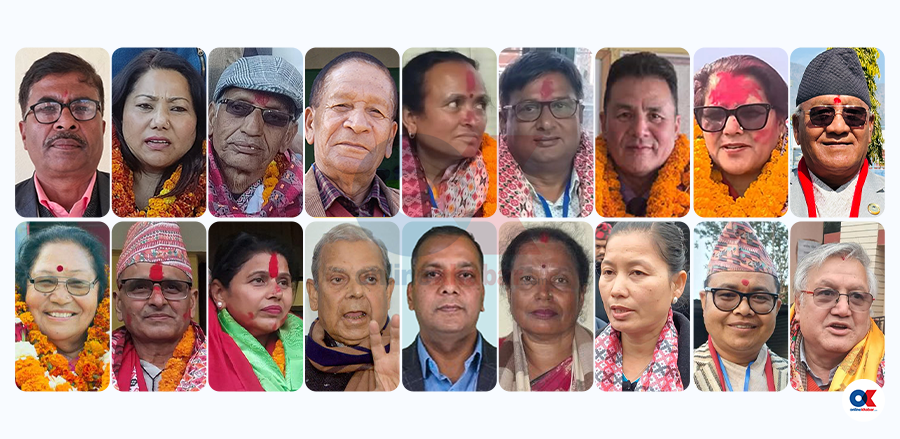
Eighteen new faces have been elected to the National Assembly, including a mix of experienced leaders, first-time parliamentarians, youth, and representatives from inclusive groups.
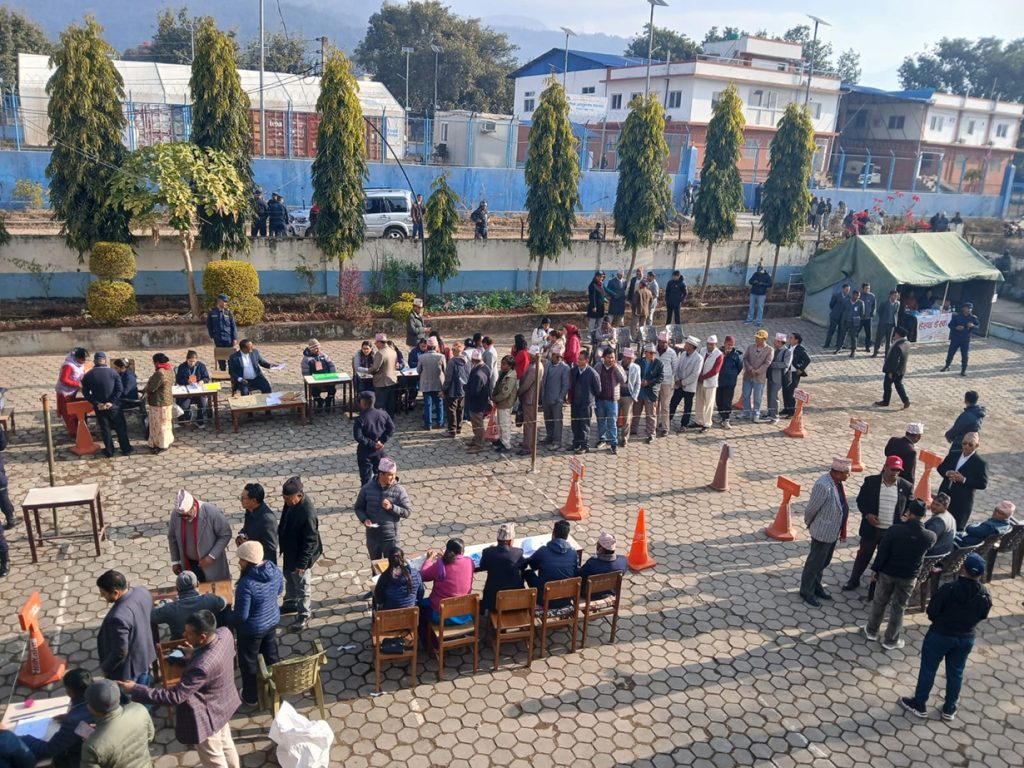
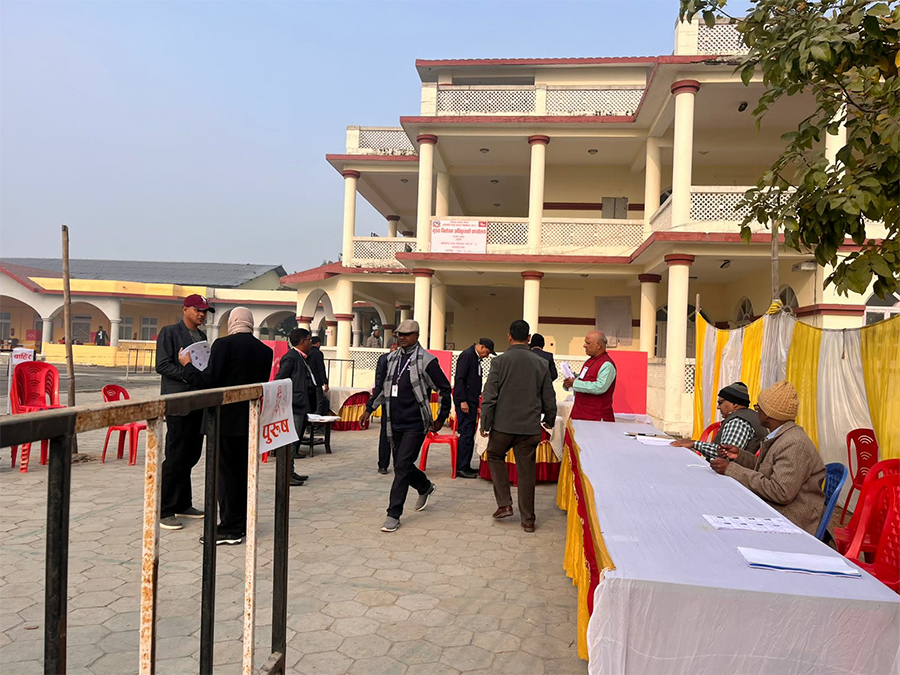
Elections were held on Sunday for 18 of the 19 seats whose terms are set to expire on Falgun 20. The Nepali Congress, CPN-UML, and Loktantrik Samajwadi Party (LSP) contested the election in alliance, while the Nepal Communist Party contested independently. Candidates backed by the alliance emerged victorious.
Members of provincial assemblies and chiefs and deputy chiefs of local governments serve as voters in National Assembly elections. Across all seven provinces, there are 550 provincial assembly members. Among local levels, there are 1,506 voters, including mayors, chairpersons, and their deputies from 753 local units. The term of the newly elected National Assembly members will begin on 21 Falgun.
Several of those elected on Sunday have previously served in the House of Representatives, while others are completely new to parliamentary politics.
Four former Lower House members move up
Those elected to the National Assembly who have previously served as members of the House of Representatives include Mahanta Thakur, Ram Kumari Jhakri, Sunil Bahadur Thapa, and Lalit Jung Shahi.
Eighty-three-year-old Mahanta Thakur, elected from Madhesh Province, was a member of the dissolved House of Representatives. A multiple-time lower house lawmaker, he has entered the National Assembly in the later phase of his political career.
Thakur entered parliamentary politics in 1991 after winning the election from Sarlahi Constituency No. 5 as a Nepali Congress candidate and later served as deputy speaker. He won again from Sarlahi in the 1994 mid-term election. He lost in the 2008 election but became a lawmaker through cabinet nomination. He was defeated again in 2013 but won elections from Mahottari-3 in 2017 and 2022. This time, he has moved from the House of Representatives to the National Assembly.
Ram Kumari Jhakri, elected from Lumbini Province, is also a former member of the House of Representatives. She was elected under the proportional representation system in 2017 but lost the 2022 election. She has now been elected to the National Assembly.
Born on May 10, 1978, in Gulmi, Jhakri rose to prominence through student politics under ANNFSU.
From Karnali Province, Lalit Jung Shahi is a former Constituent Assembly member. Born on November 15, 1955, he is a resident of Chandannath Municipality-5, Khalanga, Jumla.
Influenced by the ideology of BP Koirala, Shahi has been active in politics for decades. He unsuccessfully contested the first Constituent Assembly election in 2008 as a rebel candidate against his own party’s nominee but remained in the party. He was elected from Jumla in the second Constituent Assembly election in 2013 and played a role in drafting the Constitution of Nepal 2015. He lost the 2022 provincial assembly election but has now been elected to the National Assembly. After his election, Shahi pledged to help bring the constitution back on track, saying it had deviated from its intended course.
Sunil elected unopposed
Sunil Bahadur Thapa, elected unopposed to the National Assembly from Koshi Province, is the son of former prime minister Surya Bahadur Thapa.
The 66-year-old has prior experience as a federal lawmaker and minister. He was directly elected to the Constituent Assembly from Dhankuta-2 in 2013 as a Rastriya Prajatantra Party candidate. In May 2017, he served as Minister for Commerce and Supplies in Prime Minister Sher Bahadur Deuba’s cabinet.
However, the last two House of Representatives elections were unsuccessful for Thapa. He lost the 2017 and 2022 elections from Dhankuta to UML’s Rajendra Kumar Rai. He left RPP in 2020 and joined the Nepali Congress, later becoming a central committee member through the party’s 14th general convention. From Chaitra 2079 BS to Chaitra 2082 BS, he served as chief political adviser to President Ram Chandra Paudel.
Thapa was elected unopposed after his main rival, Nepal Communist Party candidate Hemraj Ghimire, failed to reach the election officer’s office on time during nomination registration on Poush 23.
Born on April 13, 1959, in Pakhribas, Dhankuta, Thapa previously worked in various countries under the United Nations. He entered active politics after resigning from his post at the UN High Commissioner for Refugees in Sudan.
Roshni Meche brings marginalised community to parliament
Another National Assembly member elected from Koshi Province is Roshni Meche, who represents the marginalised Meche community.
Rosani defeated Nepal Communist Party candidate Namita Nyaupane in Sunday’s election. With her victory, the door has opened for her to take the lead in shaping federal policies related to marginalised communities.
The Meche community, which resides in areas including Mechinagar, Birtamod, Haldibari, and Kachankawal in Jhapa, currently receives a monthly social security allowance of Rs 4,000. Rosani’s election is considered a moment of pride for the community.
She previously worked at the secretariat of then prime minister KP Sharma Oli. A resident of Mechinagar-12, Jhapa, Rosani entered politics through the UML-affiliated Democratic Indigenous Nationalities Federation. She holds a master’s degree in sociology and a bachelor’s degree in law. Over the next six years, she plans to raise the voices of marginalised and minority communities in the federal parliament.
Dharmendra, Ranjit, and Rekha from Madhesh
Apart from Mahanta Thakur, three others have been elected to the National Assembly from Madhesh Province: Dharmendra Paswan and Ranjit Karn of the Nepali Congress, and Rekha Jha of CPN-UML.
Dharmendra Paswan is a Dalit rights activist known for raising his voice against discrimination, injustice, and exclusion. The 54-year-old leader from Rautahat is regarded as disciplined, people-oriented, and living a simple lifestyle. He studied political science up to the bachelor’s level and has experience working with various non-governmental organisations. He has also served as general secretary of the Dalit Association and has pledged to work for the economic and social development of the Dalit community during his tenure.
Ranjit Karn is a former central president of the Nepal Students’ Union. A resident of Rajbiraj, he has been active in the Nepali Congress since his student days and was elected under the minority quota from Madhesh Province.
Rekha Jha of CPN-UML has also been elected to the National Assembly from Madhesh.
Inclusive representation, youth voices
Newly elected member Som Portal says he will raise youth-related issues in the National Assembly. Elected from Koshi Province under the Dalit cluster, Portal said he would advocate for both Dalit concerns and youth issues, as mandated by his party.
He noted that the National Assembly was previously viewed mainly as a chamber to honour senior and experienced leaders, but stressed the need for meaningful youth participation. Portal began his political journey at the ward committee level and worked through local, district, and provincial responsibilities before reaching the National Assembly.
Born in Falgun 2035 BS, Portal has experience in local governance and development and served as chair of the Jhapa District Coordination Committee from 2017 to 2022.
From Bagmati Province, Geeta Devkota of the Nepali Congress and Dr Prem Dangal of CPN-UML have been elected. Dangal, a UML central committee member, is a resident of Gokarneshwar-5, Kathmandu. He has worked in various roles within ANNFSU and party committees and previously served as chair of the All Nepal Peasants’ Federation. He has led regional farmers’ organisations and authored several books on food sovereignty, neoliberalism, climate change, sustainable development, and the Nepali farmers’ movement.
Devkota, born in 1971, has been active in politics since 1987 through the Nepal Students’ Union. She was elected a central committee member of the Nepali Congress at its 14th general convention and currently serves as vice-chair of the Beekeepers Farmers Federation.
From Gandaki Province, Jagat Timilsina of the Nepali Congress and Smriti Devkota of CPN-UML have been elected.
Timilsina was a lecturer at Tribhuvan University’s management faculty and has served as president of the Congress-affiliated Democratic Professors’ Association since 2016. A resident of Shuklagandaki-7, Tanahun, he had not previously held a party post.
Smriti Devkota entered the National Assembly after losing three consecutive elections. She had contested the 2017 local election as a UML candidate for deputy mayor of Gorkha Municipality and the 2022 mayoral election from the same municipality, but lost both. She was again nominated for the National Assembly election in 2024 and has now succeeded.
From Lumbini Province, Vasudev Jangali and Chandra Bahadur KC of the Nepali Congress have been elected. Jangali hails from Dang, while KC is from Gulmi.
From Karnali Province, Lalit Jung Shahi of the Nepali Congress and Mina Rakhal of CPN-UML have been elected. Rakhal, a resident of Dailekh, was a proportional representation member of the Karnali Provincial Assembly in 2017 and later became a UML central committee member through the party’s 11th general convention.
From Sudurpaschim Province, Khamba Bahadur Khati of the Nepali Congress and Leela Bhandari of CPN-UML have been elected. Khati is a former general secretary of the Nepal Bar Association and a former attorney general, while Bhandari is a leader with a Maoist background.