

Kathmandu, August 30
Indian and Chinese tunnel rescue teams have finally begun operations in Rasuwa, five days after devastating floods swept through the district, as hundreds of people are feared trapped inside tunnels of hydropower projects.
Around 600 people are estimated to be trapped in tunnels of various hydropower projects affected by the floods, although authorities have yet to rescue those trapped underground.
Rescue operations began Sunday at the Chilime, Upper Trishuli-1 and Langtang hydropower projects after foreign rescue teams arrived in Nepal.
A nine-member Chinese tunnel rescue team has been deployed at the 216-MW Upper Trishuli-1 project, according to sources at the Ministry of Foreign Affairs. The team arrived in coordination with China Railway, the Chinese contractor working on the project.
Around 600 people working at the Upper Trishuli-1 project are still unaccounted for, according to Giriraj Adhikari, chief executive officer of Nepal Water and Energy Development Company. Of them, around 400 are believed to be trapped inside tunnels.
Some 260 people who managed to escape the project area have already been rescued, including 10 South Korean nationals. However, those believed to be trapped inside the tunnels have yet to be rescued.
Of the estimated 400 people trapped underground, around 300 are believed to have been working inside the tunnel and about 100 at the headworks, Adhikari said.
A second Chinese tunnel rescue team also arrived in Nepal on Sunday morning, according to the Chinese Embassy in Nepal. It was not immediately clear where the second team had been deployed.
Meanwhile, an 11-member Indian technical team has been deployed to the Chilime Hydropower Project. The team includes doctors, paramedics and tunnel engineers. A separate 22-member Indian Army team has also been mobilised for rescue operations.
The Indian team conducted an aerial reconnaissance of the Chilime and Langtang areas by helicopter on Saturday before beginning rescue operations in coordination with Nepali security agencies.
The joint team of Indian and Nepali rescuers has already recovered two bodies from inside the Chilime hydropower tunnel.
Nepali Army spokesperson Assistant Brigadier General Rajaram Basnet said the rescue team had entered about 100 metres into the 250-metre-long tunnel but had not found any survivors.
The company estimates that six employees are trapped inside the Chilime tunnel.
The rescue teams are using specialised equipment to clear mud, sludge and debris that filled the tunnels after the floods and landslides.
Earlier, a mountain rescue team sent by Simrik Air had entered about 100 metres into a tunnel but was unable to proceed because it was completely filled with sludge. The team had reported that specialised equipment and tunnel rescue experts were required.
At the Upper Trishuli-3A project, rescuers on Sunday located a cable access tunnel after three days of continuous efforts. The tunnel provides a possible route for rescuers to enter the underground powerhouse area.
Nepal Electricity Authority Acting Managing Director Dirghayukumar Shrestha said the cable access tunnel can be used to enter the area where workers are believed to be trapped.
Five openings had earlier been drilled to send air into the tunnel and assess conditions inside.
Around 40–42 technical personnel, including highly skilled experts, had been working in the underground powerhouse for an overhaul when the flood struck, according to the Nepal Electricity Authority.
The rescue effort at the project began two days after the floods, but rescuers had been unable to reach the tunnel for several days.
Questions over delayed foreign assistance

The arrival of foreign rescue teams has also raised questions over the pace of Nepal’s response.
Hydropower companies have said they repeatedly requested government assistance to rescue employees and workers trapped underground.
Nepal Engineers’ Association President Subas Chandra Baral said the country lacked the specialised skills, equipment and capacity required for large-scale tunnel rescue operations.
He said foreign experts and equipment could have been brought in much earlier.
“The cost of the delay could be very high,” Baral said, adding that the association had repeatedly urged the government to speed up rescue efforts.
A senior Nepal Electricity Authority official also said the failure to bring in foreign experts and equipment earlier exposed Nepal’s limited tunnel rescue capacity.
The Ministry of Foreign Affairs, however, has denied that the government delayed permission for foreign rescue teams.
Foreign assistance has also been offered by South Korea, the United Kingdom and Australia.
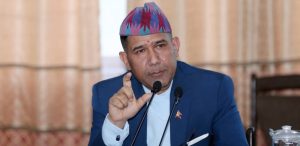
Foreign Secretary Amrit Rai said a South Korean rescue team had arrived in Nepal, although it had yet to be deployed in the field.
The UK government has also announced that it would send a rapid deployment team to Nepal, primarily to assist British nationals and coordinate with Nepali authorities and the British Embassy.
According to sources, the British rescue team has arrived in Nepal and is on standby. However, the UK had also offered to send rescue personnel, but the Nepal government reportedly indicated that they were not required.

Australia had similarly offered to send a rescue team, but it did not come to Nepal after the government did not grant permission, according to sources.
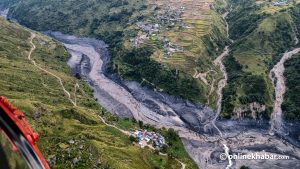
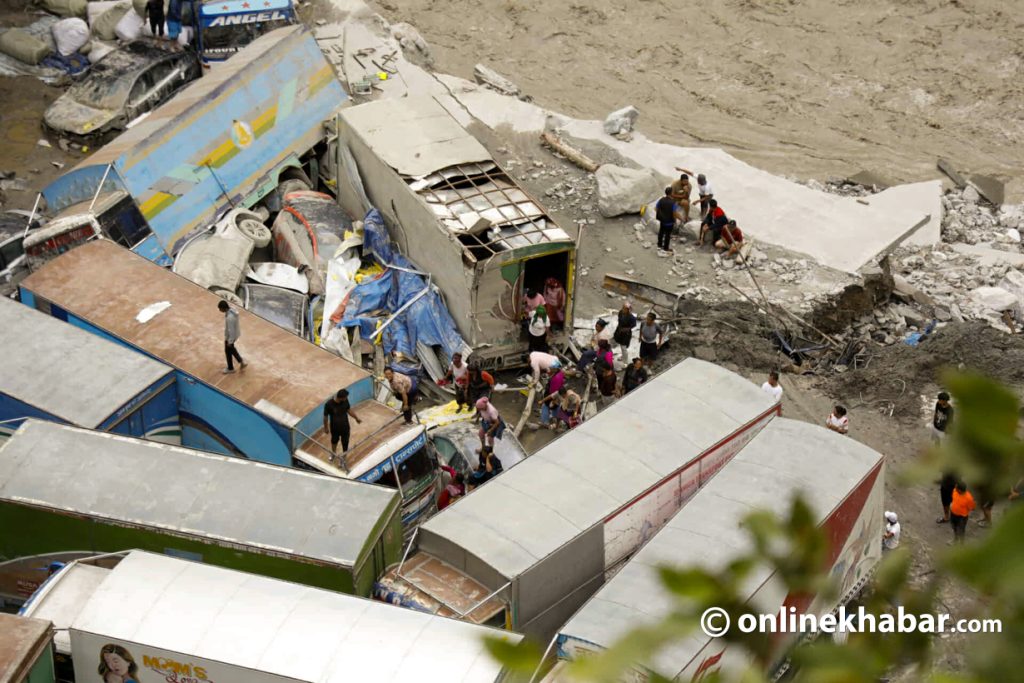
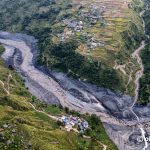
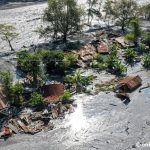
The devastating floods triggered by the Bhotekoshi and Trishuli rivers on August 26 caused widespread destruction across Rasuwa and neighbouring districts, damaging hydropower projects, roads and other infrastructure.
The National Disaster Risk Reduction and Management Authority has reported that 589 foreign nationals were missing following the disaster, of whom 261 have been rescued alive. Among those missing, 167 are Indian nationals and 40 are Chinese nationals.