Kathmandu, November 22
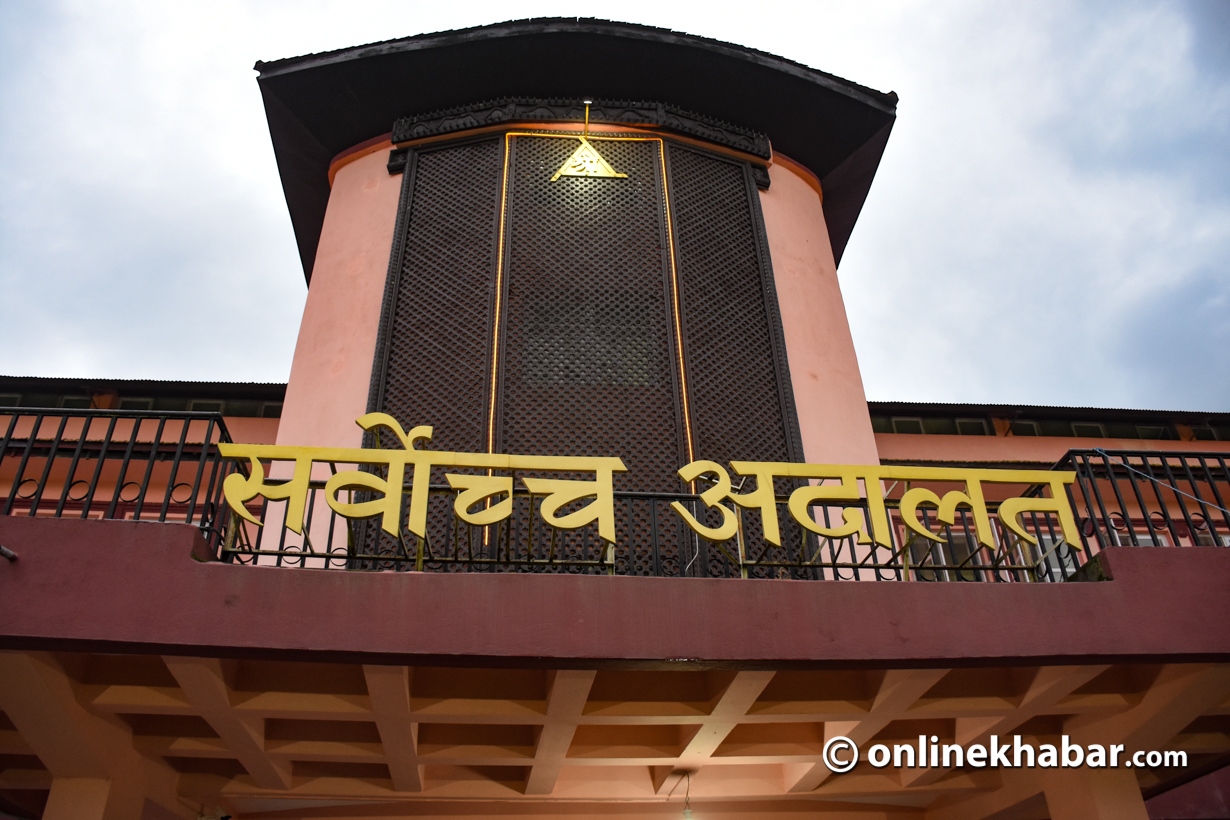
The Supreme Court administration has refused to register a writ petition alleging that universities have independently introduced standards for artificial intelligence (AI) detection, adversely affecting students in the absence of a clear state policy on the technology.
Law students had sought an order preventing universities from using plagiarism-detection software to identify AI-generated content until the government introduces a clear policy and legislation governing AI use in academia.
The petitioners alleged that Tribhuvan University (TU) had been rejecting students’ theses, research papers and other academic projects based on reports generated by unverified software that produces speculative results, despite Nepal lacking a clear policy on AI use.
The petition filed by law students, including Roshan Auji and Bibek Chaudhary, was rejected at the Supreme Court administration level on the grounds that the claims were not sufficiently clear.
In an order issued by Registrar Baburam Dahal, the court administration said the petition did not clearly establish which fundamental or legal rights of the petitioners had been violated, while seeking to raise the matter as a public interest dispute under the court’s extraordinary jurisdiction.
“The subject matter of the petition appears to relate to the use of technology and academic integrity. However, the petitioner has not clearly stated which of their fundamental or legal rights have been violated, and has brought the petition as a public interest dispute under the extraordinary jurisdiction of this court. Therefore, the petition cannot be registered,” the order states.
What did the petitioners demand?
The petitioners had called for a comprehensive discussion and study into the necessity and justification of AI detection in the academic sector.
They sought the formation of a high-level expert committee comprising specialists in law, information technology, computer science, cybersecurity, linguistics, education and research, along with academic representatives from universities and student representatives.
The committee would study the use of AI detection in academic institutions and recommend policies and laws based on its findings.
“Tribhuvan University is imposing impractical rules citing international practices,” the petitioners stated in their writ petition. “Despite the Office of the Prime Minister and Council of Ministers clearly stating that no separate law regulating AI has been enacted so far, educational institutions are using unauthorised software.”
The petitioners alleged that TU, Nepal Law Campus and other institutions were using software developed by foreign companies that generated unreliable and speculative results.
They claimed that the software was being used to reject or restrict journal articles, reports, research papers and seminar papers submitted by students.
TU has implemented the ‘TU Anti-Plagiarism Software Management and Operation Regulation, 2023’, under which it conducts AI detection tests on theses, project work and other academic submissions.
The petitioners also raised concerns over students’ personal information and digital privacy, alleging that their data was being transferred to foreign servers in violation of the Privacy Act, 2018.
They claimed that the regulations introduced by TU, along with AI detection practices based on those rules, exceeded the authority granted under existing laws and regulations, leaving students directly affected.
According to the petitioners, even passages written entirely by students themselves were being flagged as ‘likely AI-generated’, forcing them to repeatedly rewrite, revise and resubmit seminar papers.
“The authority to regulate AI appears to fall within the jurisdiction of the Office of the Prime Minister and Council of Ministers under the Nepal Government’s Allocation of Business Rules,” the petition stated. “Until a policy framework is established, universities, law campuses, the Press Council, the Nepal Bar Council or the Ministry of Defence cannot independently conduct AI detection and impose penalties.”