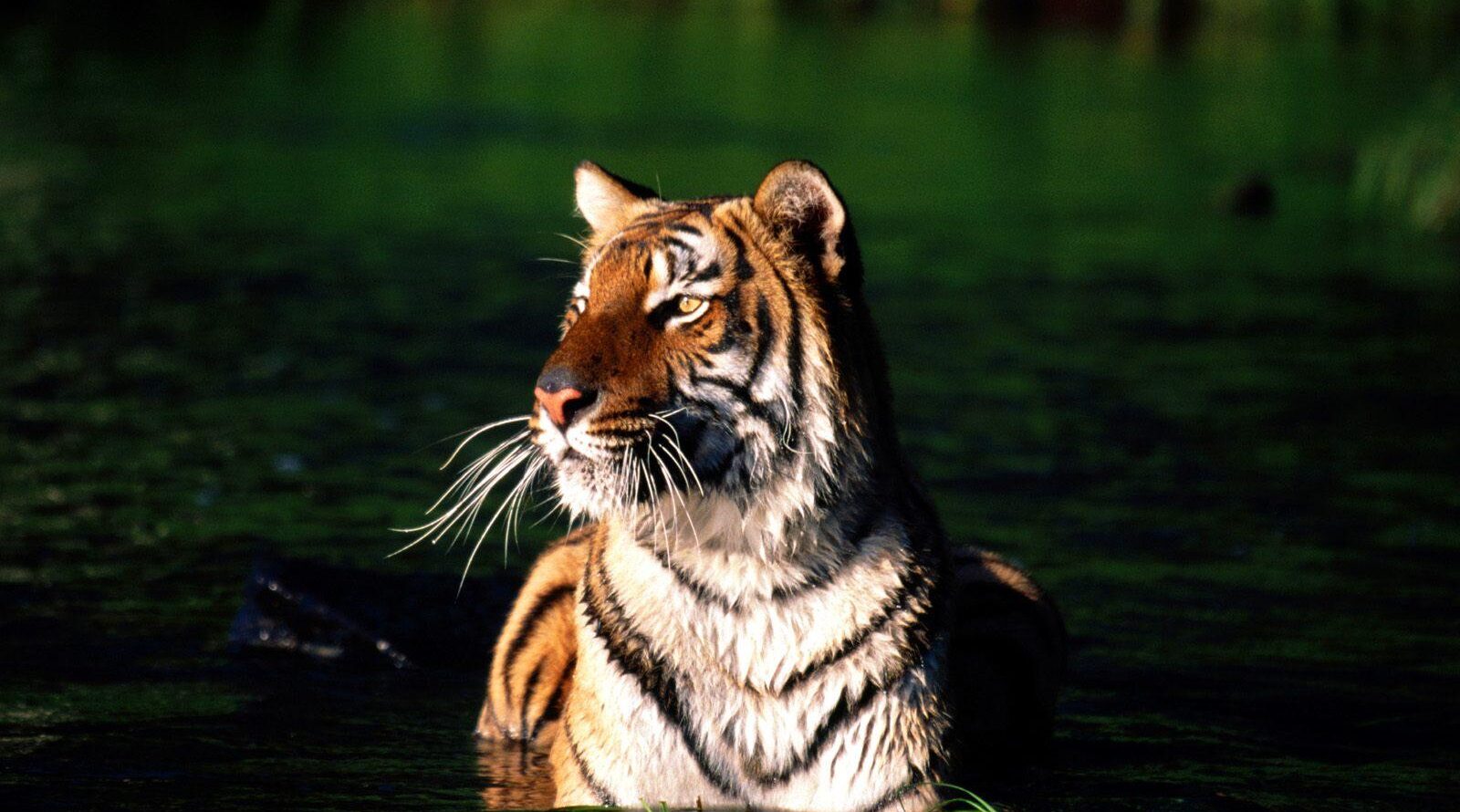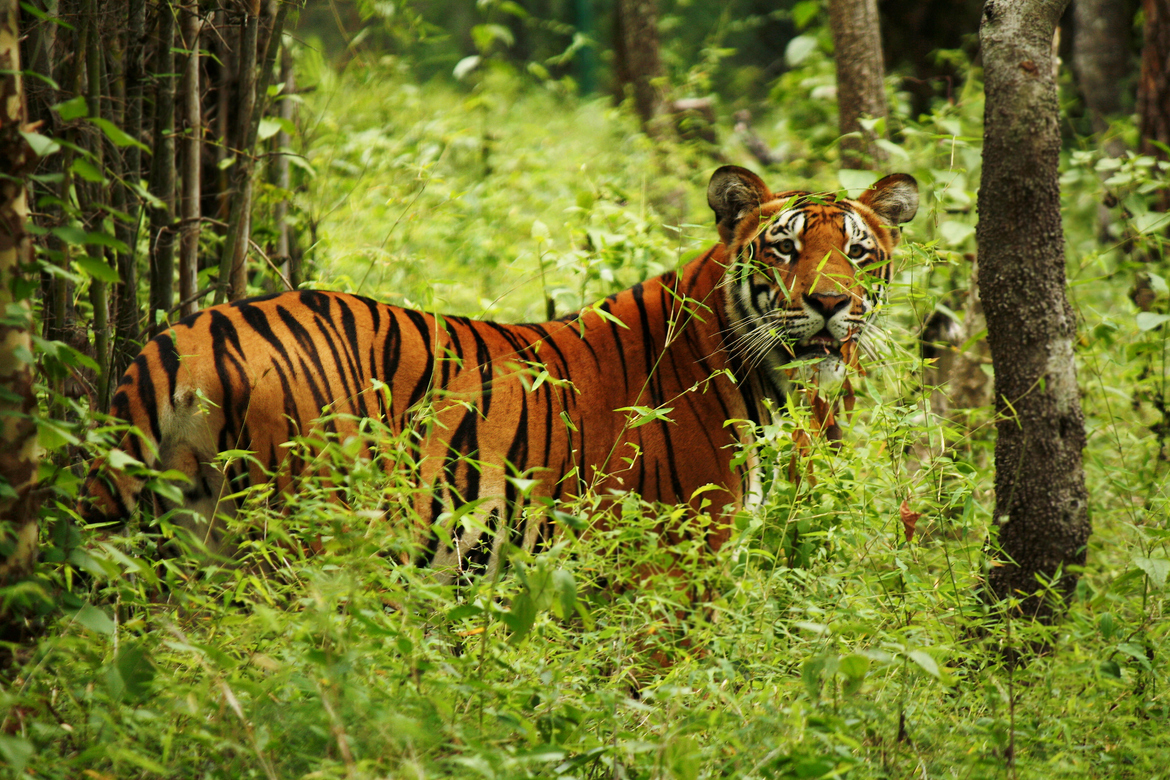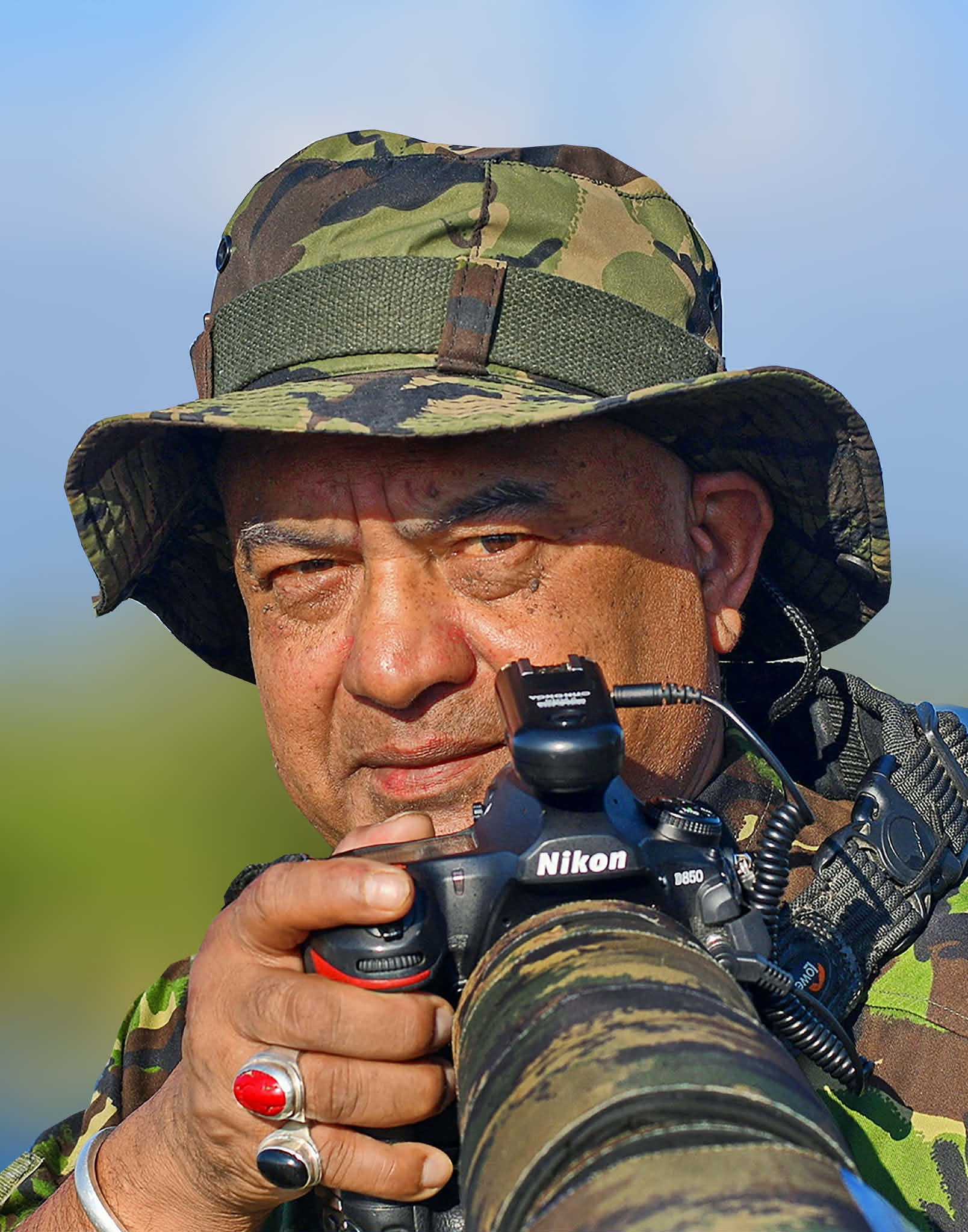

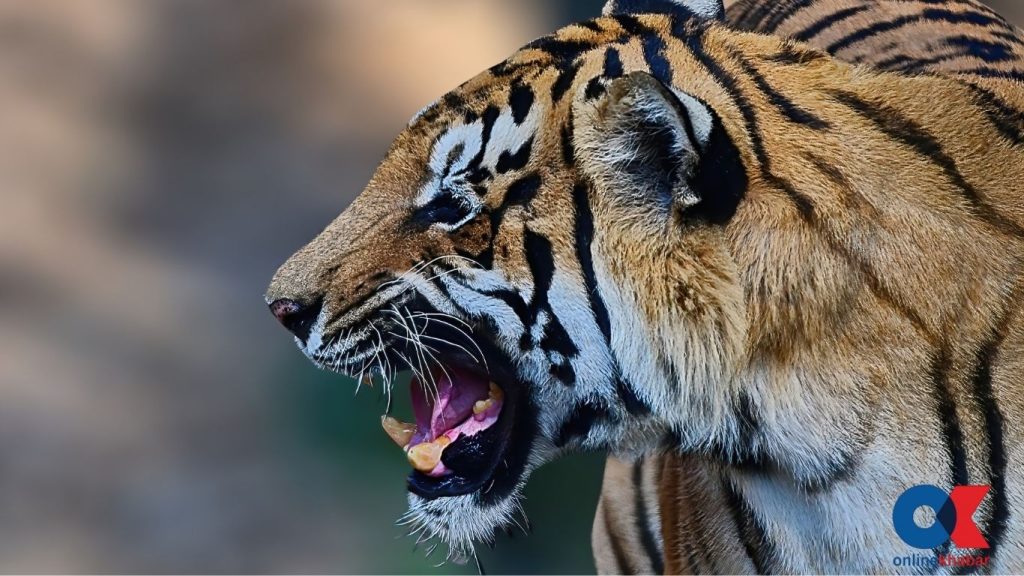
Between February and March of this year, I travelled to Bardia National Park and its surrounding corridors to document tigers in their natural habitat. As the summer heat intensifies, these apex predators are drawn from the brush to the rivers and ponds of the Khata Corridor to cool themselves. While I spent twenty-one days in the region, I dedicated only three days to safaris within the park’s official boundaries, during which I successfully captured a tiger on camera. The remainder of my journey was spent in the park’s more vulnerable peripheries: the Khata corridor and the areas of Madhuvan, Patharboji, and Dalla, where the boundary between wildlife and human settlement is at its thinnest.
In the settlements bordering the forest, villages like Mukta, Durga, Amberpur, and Sonaha, the presence of the tiger is a constant, simmering source of fear. Here, the geography of daily life overlaps dangerously with the corridors of the wild. The Khata area is particularly perilous; located just one kilometre from the Indian border, it is bisected by the Aurahi River, a vital artery for roaming tigers. For the locals, the riverbank is not just a water source but a site of potential tragedy. Following a series of attacks that have left several residents injured or dead, the onset of nightfall brings a heavy silence to the community, as few dare to walk the paths where the forest and village become one.
Guided by my colleague, Theng Chu Tharu of Dalla, I began a daily vigil in the Khata corridor, arriving each morning at 11:00 to take pictures of the tiger. On the first day, I successfully photographed a tiger that had emerged from the thicket to drink water. Hidden beneath a flag, I observed the predator for nearly half an hour. Forest officials and community guards later noted that such a close-range photograph was unprecedented in this sector, where the sheer density of the tiger population usually keeps people at a distance.
The next day, I sat on the edge of the forest, waiting to capture the tiger in the Madhuvan 3 forest of the same area. Here too, I managed to capture a tiger. However, in the evening of the same day, a tiger attack in Madhuvan Ward No. 5 claimed the lives of two women. Thereafter, I would constantly go to Khata Forest at 11 am and take pictures of tigers. Most of the time, I saw tigers there. Hearing the tigers roar, I realised that this area is scary. In the lonely forest on the banks of the Aurahi River, there was no one except me, Theng Chu Tharu, and the forest guard.
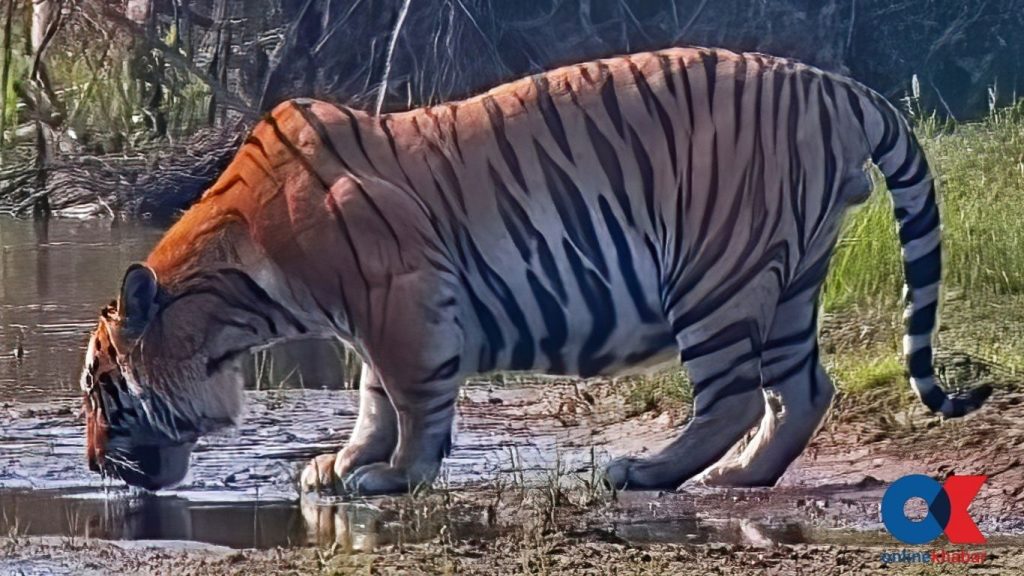
While tigers are fierce animals, they are also shy. I have experienced this a lot. A tiger was hiding in the water on the bank of the Aurahi River in Khata. Since I could not see the tiger clearly in the forest, I went down from the heights to the river and started taking pictures of it. After a few moments, the tiger heard the shutter sound of my camera, and as soon as it saw me, it immediately got out of the water and entered the forest. Even in national parks or forests, tigers enter the bush when they see people. This leads to a complex question: if the tiger is fundamentally shy, what triggers them to attack the humans?
Within Bardia National Park, areas where tigers are especially seen are Baghaura, Tented Camp, Lalmati, Balconi, Kathhas, Lamkauli, and others. Occasionally, tigers can also be seen drinking water in ponds or on roads inside the National Park. Compared to other seasons, tigers are more visible from March to April, due to the heat.
Jocelyn Stokes, a 34-year-old wildlife conservationist and filmmaker from Jackson, Wyoming, USA, visited Bardia National Park for nine days to shoot tigers. She expressed her happiness at seeing tigers inside the national park every day. She was extra happy because she managed to capture some great moments of tiger behaviour. Stokes is producing a documentary series about women-led conservation solutions around the world, featuring Doma Paudel in Nepal.
According to Deepak Rajbanshi, a senior nature guide and wildlife photographer in Bardiya, Stokes’ tiger shooting was successful, and she was lucky to see a tiger every day. Rajbanshi believes that her documentary will attract nature-loving foreign tourists to Nepal.
During her stay in Bardia, Stokes met with residents of the Madhuvan and Khata areas, who depend on the Aurahi River for fishing, grazing livestock, and collecting firewood. In the Madhuvan forest, an injured tiger has been preying on local farmers’ domestic animals, heightening the risk of conflict. Stokes felt it was vital to raise public awareness on how to stay safe and avoid encounters with predatory wildlife in the region.
In another part of Bardia, 55-year-old Bhadai Tharu, famously known as the “Tiger King,” had a harrowing encounter with a tiger while inspecting the Gauri Women’s Community Forest in Khata. The tiger attacked him, causing him to lose his left eye, but he managed to fight back and save his life. Today, Bhadai Tharu leads public awareness programs in the region, advocating for the protection of tigers and all wildlife. He also commended a foreign photographer for her bravery in documenting tigers within these dangerous forests.
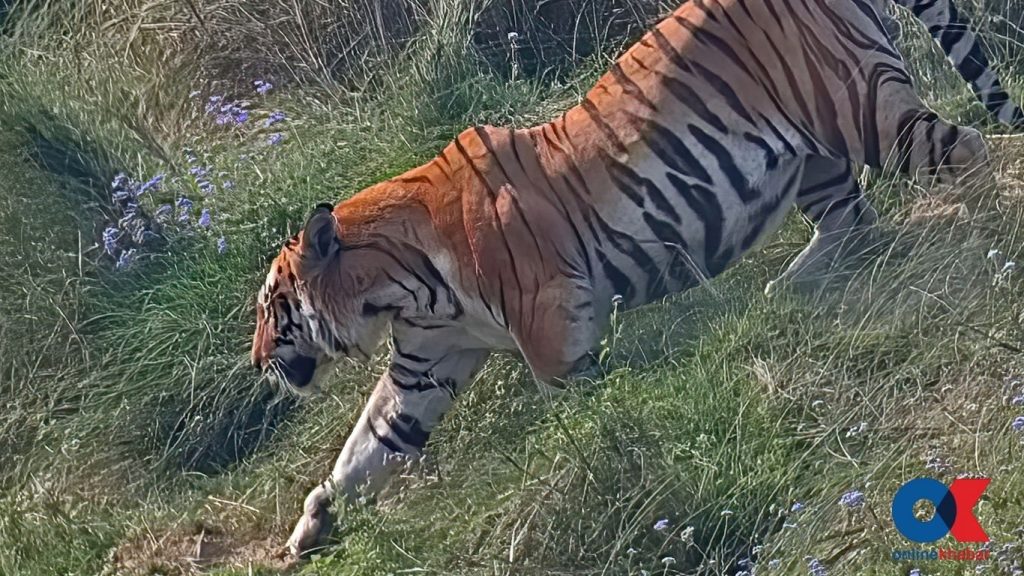
The tiger population in Nepal has seen a significant increase, rising from 121 in 2009 to 355 in 2022. This population is distributed across the country’s protected areas: 128 tigers in Chitwan, 125 in Bardia, 41 in Parsa, 36 in Shuklaphanta, and 25 in Banke National Park. A new nationwide tiger census was launched on December 16, 2025, with final results expected in 2026. This three-month survey deployed over 1,100 camera traps across key corridors like Chitwan-Parsa and Banke-Bardia to study habitats and hunting patterns. These findings are crucial for managing the rising instances of human-tiger conflict and ensuring the long-term protection of the species.
Reports from early 2026 indicate a troubling surge in tiger attacks across Nepal, particularly in the Bardia region. In January 2026 alone, at least five fatalities were reported, followed by two additional deaths in the first week of February. These tragic incidents underscore a deepening crisis of human-wildlife conflict.
For a long time, I have been going to Bardiya National Park every year to photograph tigers. However, I photograph tigers more frequently in the buffer zone and community forests of Bardia than in the National Park. My experience suggests a troubling trend: the sheer volume of safari jeeps within the national park, and the resulting noise pollution, is driving tigers into the quieter refuge of nearby community forests. Tigers thrive in silence, and when their core habitat becomes congested, they seek the tranquillity of the peripheries, which unfortunately brings them into closer contact with humans. I am confident that limiting the number of vehicles permitted inside the park would encourage tigers to remain within its boundaries. Furthermore, constructing a secure perimeter wall around the park would be a vital step in significantly reducing lethal encounters between tigers and the local population.
In 2010, Russian President Vladimir Putin organised the first-ever Tiger Summit among the world’s 13 tiger-range nations. During the summit, Nepal committed to doubling its tiger population to 250 by 2022; however, it exceeded this goal, nearly tripling its numbers in just 12 years. That same year, the World Tiger Forum established July 29 as Global Tiger Day to celebrate and promote conservation efforts.
The Bengal tiger (Panthera tigris tigris) is a carnivorous mammal primarily found in forest habitats. It is the largest and most powerful subspecies of the tiger. These majestic predators can be found across several range countries, including Nepal, India, China, Cambodia, Indonesia, Laos, Malaysia, Myanmar, Russia, Thailand, and Vietnam
The Bengal tiger is distinguished by its golden-yellow coat and striking black stripes, accented by a white chest, belly, and eye markings. Adult males can weigh up to 306 kg and reach 13 feet in length, while females are significantly smaller. In Nepal, these predators inhabit the Terai region, spanning the parks of Chitwan, Parsa, Bardia, Banke, and Shuklaphanta. These protected areas are linked to the Indian border via vital biological corridors.
The tiger’s habitat spans moist evergreen and semi-evergreen forests, deciduous woodlands, and the marshy grasslands of the Ganges coastal region. This adaptable predator is found from sea-level forests in Bangladesh to altitudes exceeding 4,000 meters in the foothills of Bhutan. In Nepal’s Terai region, following the eradication of malaria in the 1950s, a surge in migration from the hills led to extensive deforestation. Consequently, tigers are now largely restricted to protected areas as their natural range has shrunk and competition for resources has intensified.
Their diet primarily consists of sambar deer, chital, wild boar, buffalo, gaur, and occasionally domestic livestock. Guided by a keen sense of hearing, smell, and sight, tigers typically hunt with immense concentration, often ambushing prey from behind. While capable of great speed, their heavy frames mean they tire quickly, relying more on stealth and endurance than long-distance chases. Naturally solitary, tigers prefer secluded environments where they can maintain and defend their own specific territories.
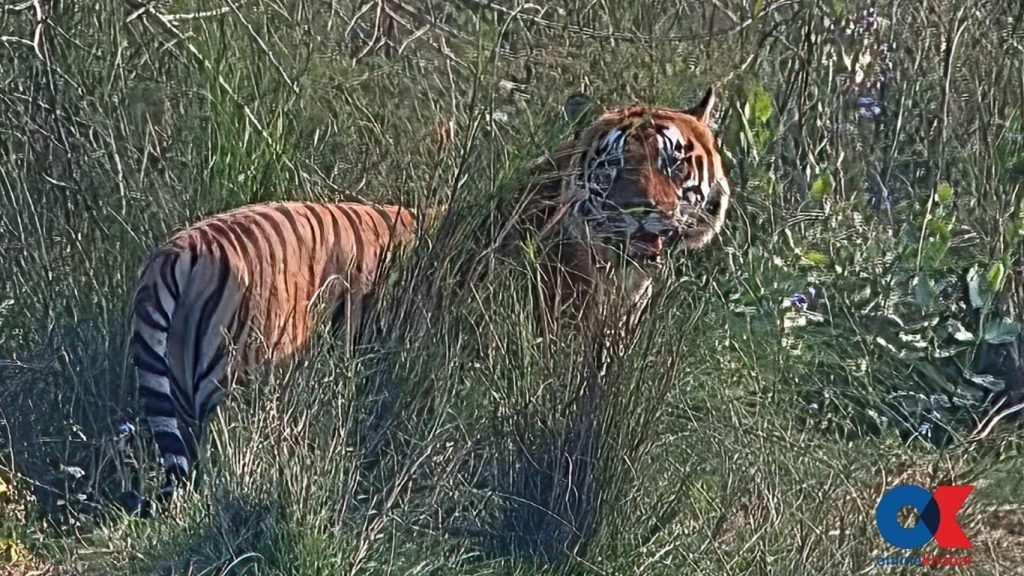
Male and female tigers come together only during the breeding season. Following a gestation period of 93 to 112 days, a tigress typically gives birth to two or three cubs. These cubs remain with their mother for approximately two and a half years to master the art of hunting before venturing out to establish their own territories.
Tigers need relatively large territories and a steady supply of prey to thrive. The average minimum territory size for a female tigress is about 15–20 square kilometres. They prefer to live alone in quiet environments and mate only during mating season. An adult male tiger has his own territory, and within that territory, many female tigers live. They also have their own small, fixed areas. Male tigers travel several miles in their territory each day and mark it by clawing or urinating.
A tiger runs 65 kilometres per hour and can swim well. The roar of a tiger can be heard up to about 3 kilometres. Tigers can see six times more than humans at night. As the bones of a tiger are very strong, it can overcome a height of 5–8 meters in a single jump. An adult tiger eats about 18 to 40 kg of meat at a time and then does not hunt for about 4 to 5 days. Because tigers drink a lot of water, they live on the banks of ponds and rivers.
Nine species of tiger
Of the nine original tiger subspecies, only six remain today: the Bengal, Sumatran, South China, Malayan, Indochinese, and Siberian tigers. The Caspian (Panthera tigris virgata), Bali (Panthera tigris balica), and Javan (Panthera tigris sondaica) tigers have not been sighted in decades and are officially considered extinct.
The IUCN Red List classifies tigers as endangered, noting that their populations are in a critical state across their entire range. Furthermore, they are listed under Appendix I of the CITES agreement, providing them the highest level of international trade protection. In Nepal, the tiger is a protected species under the National Parks and Wildlife Conservation Act. According to Section 26(1) of the Act, any individual who kills or harms a tiger faces a fine of five to ten lakh rupees, five to fifteen years of imprisonment, or both.