File
Kathmandu, September 13
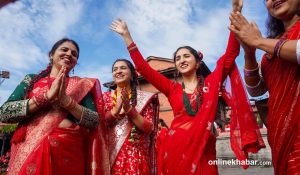
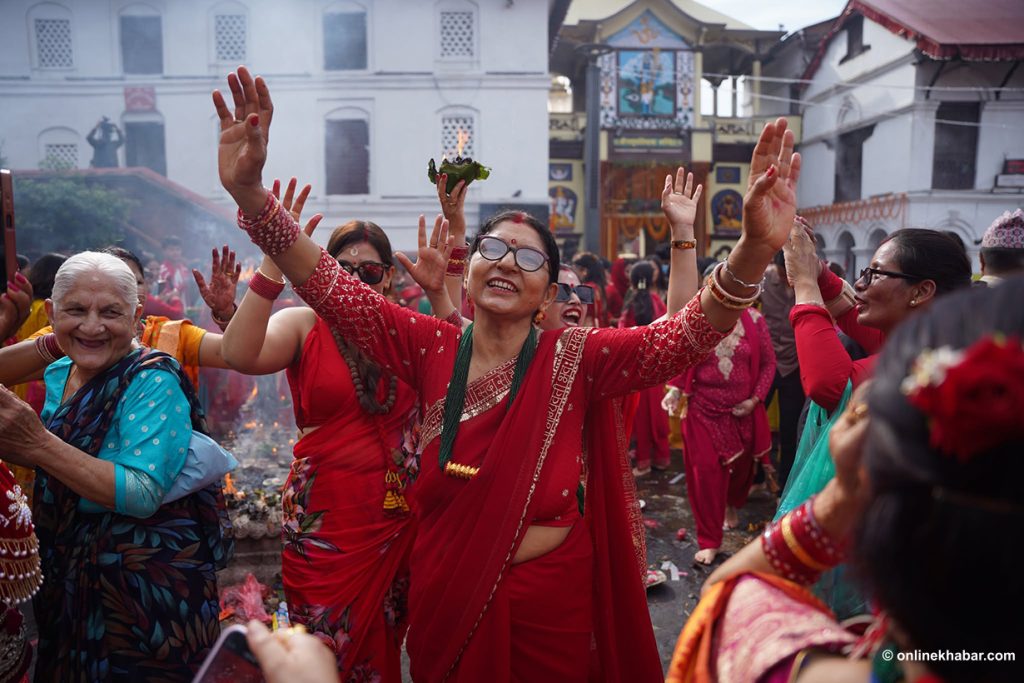
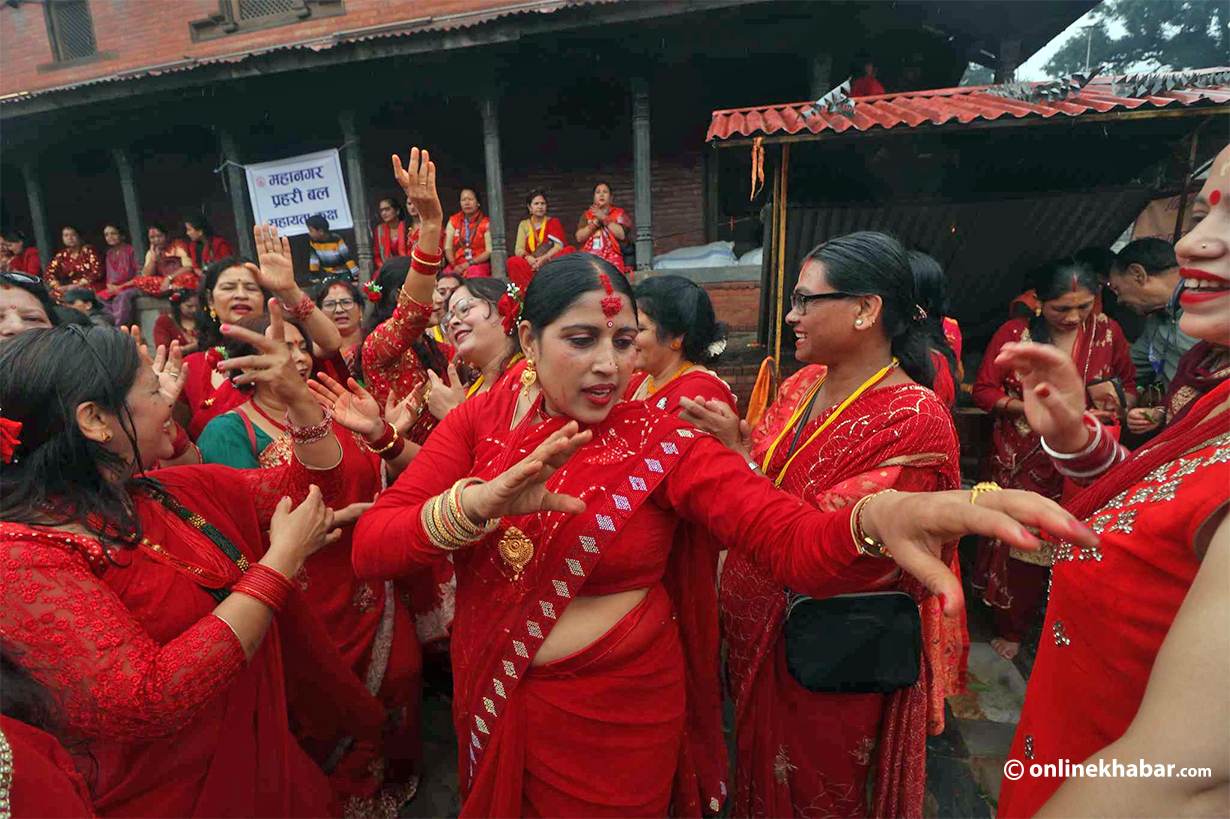
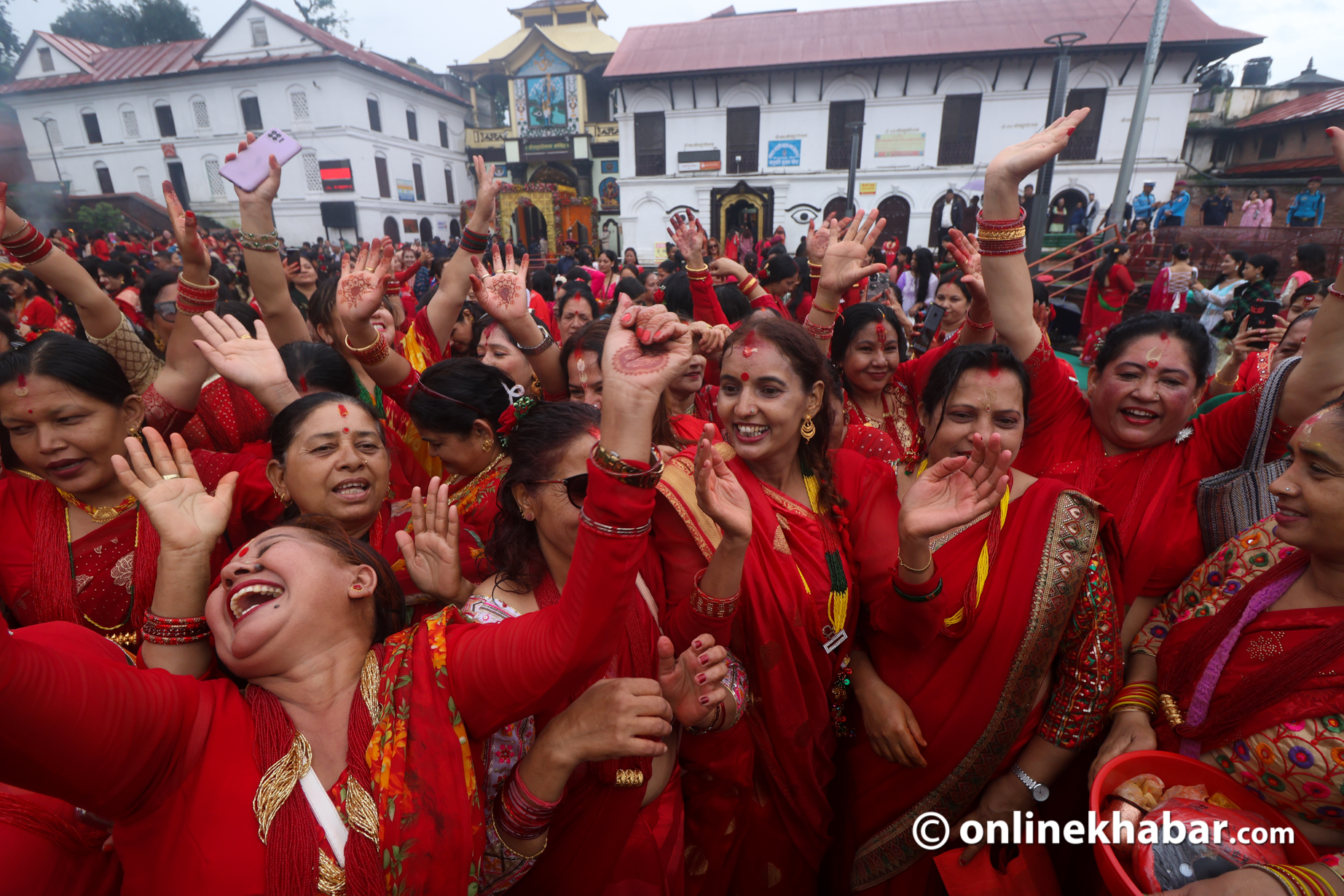
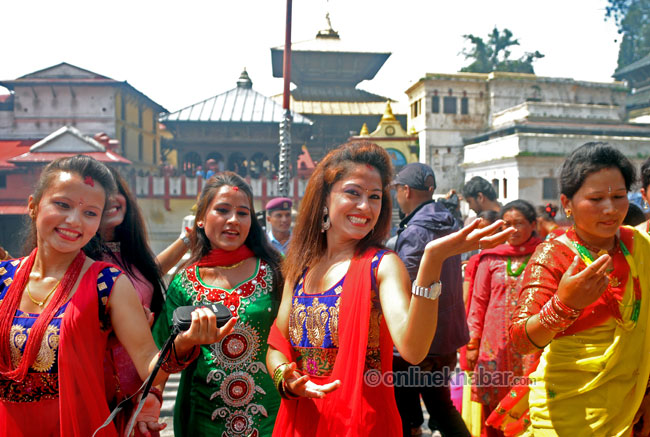
The four-day Haritalika Teej festival begins Sunday with women across Nepal preparing to eat dar, a traditional feast consumed ahead of the fasting observed on Teej.
Dar is traditionally eaten on the second day of the bright half of Bhadra, a day before the main Teej fast. The tradition involves families, particularly parents and brothers, inviting daughters and sisters to their homes for the feast. Dairy-based dishes and other filling foods are commonly served.
According to religious scholar Toyaraj Nepal, wheat bread and ghee are considered particularly filling for women preparing for the fast.
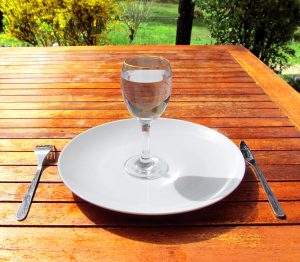
Women who observe a strict fast on Teej eat dar to prepare themselves physically for the following day’s fast. Religious texts traditionally prescribe eating the feast by the second half of the night.
Teej is also regarded as an occasion for women to share their joys, hardships and grievances through songs and gatherings with friends and relatives.
However, sociologists and cultural scholars have raised concerns over the growing commercialisation of the festival. They say the practice of holding dar feasts weeks or even a month before Teej, along with excessive displays of jewellery and clothing, has contributed to the distortion of the festival’s traditional character.
The main Teej fast will be observed on Monday, followed by Ganesh Chauth on Tuesday and Rishi Panchami on Wednesday, marking the end of the festival.
The festival is traditionally associated with the Hindu goddess Parvati, who is believed to have observed a strict fast and performed penance to have Lord Shiva as her husband.
—RSS