


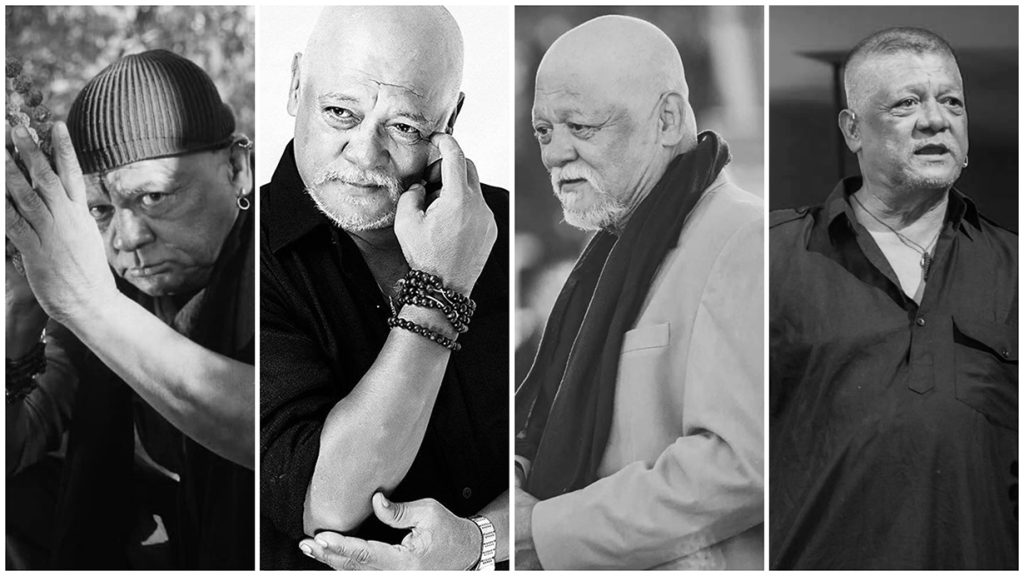
Sunil Thapa, one of Nepal’s most influential film actors and a figure who reshaped how villainy was portrayed in Nepali cinema, died early Saturday morning in Kathmandu. He was 68.
Thapa had been scheduled to leave for a film shoot that morning. The night before, he had asked a close friend and fellow actor, Wilson Bikram Rai, popularly known as Takme Budha, to wake him early. That call never came. Instead, Rai awoke to devastating news: Thapa had died at Norvic International Hospital in Thapathali, Kathmandu.
His death has sent a wave of mourning through Nepal’s film industry and beyond, marking a profound loss for Nepali and Indian cinema and television. For many, it leaves a silence difficult to fill, one created by an actor whose presence was commanding, whose performances were meticulous, and whose characters lingered long after the screen faded to black.
Thapa’s career was not confined to Nepal. Alongside his work in Nepali cinema, he earned recognition in Indian films and television series, where his performances won him audiences across borders.
Born on May 19, 1957, Thapa contributed to acting, modelling, sports and various aspects of the film industry. He began his professional life as a model, working in Mumbai in the 1970s for prominent brands including Binny and Mafatlals. In those early years, he also played competitive football, representing ICL Club Bombay and Orkay Sports Club.
While modelling, he worked as a photojournalist for Junior Statesman magazine. He covered Bhutan’s 1974 coronation ceremony.
From Bollywood beginnings to Nepali stardom
Thapa made his Bollywood debut in 1981 with the Hindi film Ek Duuje Ke Liye, a major commercial success that introduced him to Indian audiences. He later returned to Nepal and rose to prominence following the release of Chino, a landmark Nepali film that secured his place in the country’s cinematic history.
It was Chino that transformed him into a household name. His portrayal of the antagonist “Ratey Kaila” was both unsettling and magnetic, earning acclaim from critics and audiences alike. The character became so iconic that Thapa was widely recognised by the role’s name rather than his own.
Though he became synonymous with villainous roles, Thapa resisted caricature. He portrayed antagonists not as exaggerated figures of evil, but as intelligent, psychologically complex individuals shaped by power, pride and circumstance. His performances lent villains credibility and depth, altering how conflict was constructed in Nepali cinema.
In 2014, he appeared as a boxing coach in the Bollywood film Mary Kom, starring Priyanka Chopra. The role earned him a Filmfare Award nomination and further established his reputation in Indian cinema.
A versatile presence
Thapa appeared in more than 138 Nepali films, beginning with Masal in 1985. His most recent release was Eklo, while Ram Naam Satya remains his final completed shoot. Another film, Pahad, directed by Tulsi Ghimire, is awaiting release.
Though best known as a villain, he played a wide range of roles, mentors, authority figures, revolutionaries and morally conflicted characters. His acting style relied on controlled physicality, emotional restraint and sharply delivered dialogue. Often, silence itself became his most potent weapon on screen.
Tall and imposing, with a resonant voice and piercing gaze, Thapa commanded attention without excess. Unlike many actors who relied on exaggeration to convey menace, he favoured subtlety, measured speech, deliberate pauses and minimal gestures that intensified his presence.
Redefining villain in Nepali cinema
Before Thapa, villains in Nepali films were often portrayed as simplistic or theatrical. He changed that entirely. His characters were intelligent, strategic and psychologically grounded.
He imbued antagonists with human complexity, allowing audiences not only to fear them but, at times, to understand them. This multidimensional approach elevated storytelling and brought greater realism to cinematic conflict.
In doing so, Thapa set a new standard for future generations of actors. He demonstrated that villains could be as compelling, powerful and memorable as heroes, and sometimes more so.
His influence extended beyond Nepal. His work in Indian cinema showed that Nepali actors could perform at an international level, challenging assumptions and opening doors for others to follow.
A lasting legacy
Sunil Thapa was not merely a successful actor. He was a transformative force who redefined one of Nepali cinema’s most essential archetypes. His performances, the range of his roles and his artistic discipline have left an indelible mark on Nepal’s cultural memory.
His legacy will endure in the films he made, the characters he shaped and the inspiration he offers to future generations of artists.