

Kathmandu, November 26
The government led by the Rastriya Swatantra Party (RSP) has increasingly relied on ordinances to amend existing laws, even as it commands a near two-thirds majority in Parliament, raising questions about its commitment to parliamentary lawmaking.
Parliament’s monsoon session lasted more than five months this year. Yet, after the session ended, the government recommended an ordinance to amend the Press Council Act on November 3. Three weeks have passed since the ordinance was sent to the President’s Office, but it has yet to be issued.
The proposed amendment concerns a law with significant implications for press freedom and freedom of expression. Its introduction through an ordinance, rather than parliamentary deliberation, has left the President’s Office weighing whether to proceed.
Officials at the President’s Office say the ordinance is still under review.
The Federation of Nepali Journalists and other stakeholders have also urged the President to reconsider the proposed ordinance, arguing that it could curtail freedom of expression and press freedom.
“Legislation concerning matters linked to fundamental rights guaranteed by the Constitution has been brought through ordinances instead of Parliament. That is why it is being studied,” an official at the President’s Office said.
Two other ordinances are also awaiting approval at the President’s Office. They concern amendments to several Nepal laws, including those related to culture, tourism and civil aviation, and the formation of a commission to investigate incidents during the Gen Z movement, provide compensation and facilitate reparations.
The government has not publicly released detailed information on the three pending ordinances or the laws they seek to amend.
How much of the lawmaking has Parliament actually done?
According to parliamentary records, the federal Parliament has passed 12 laws since the RSP-led government came to power, including ordinance-replacement bills, regular bills, budget laws and budget-related legislation. During the same period, the government has issued 13 ordinances, with three more awaiting approval at the President’s Office.
Of the 12 laws passed by Parliament, six were replacement bills that gave legislative approval to laws previously amended through ordinances.
These include replacement bills related to public procurement, money laundering, cooperatives and health science academies.
Of the remaining six laws, three were budget-related legislation — the Appropriation Act, the Public Debt Act and the Finance Act. These are routine bills presented to Parliament alongside the annual budget.
Excluding budget-related laws, only three of the remaining subject-specific laws were passed. Of those, the National Forensic Science Laboratory Establishment and Operation Act and the Alternative Development Finance Mobilisation Act originated from bills introduced in Parliament before the current government was formed.
The National Forensic Science Laboratory bill was registered in the National Assembly on January 7, 2025, by then-Education Minister Bidya Bhattarai.
Similarly, the Alternative Development Finance Mobilisation Bill was introduced on January 2, by then-finance minister of the interim government, Rameshwar Prasad Khanal. The RSP-led government subsequently advanced both bills and turned them into laws.
The third law was the Act to Reinstate the Existing Provisions of the Nepal Special Service Act, 1985.
The government led by then-prime minister Sushila Karki had issued an ordinance to transfer the National Investigation Department from the Office of the Prime Minister to the Ministry of Home Affairs. After the ordinance became inactive, the current government introduced a bill on June 29 to restore the department under the Office of the Prime Minister and Council of Ministers.
The bill was passed by Parliament and authenticated by the President on September 16.
The record suggests that the number of subject-specific laws drafted and introduced in Parliament on the initiative of the RSP-led government itself remains limited.
155 laws amended through ordinances
In its eight months in office, the current government has issued 13 ordinances that have amended 155 existing laws. Some new legal provisions have also been introduced through ordinances.
Before the monsoon session, the government issued eight ordinances. They included ordinances on amendments to several Nepal laws, removal of public officeholders, public procurement, universities, health science academies, money laundering, cooperatives and the Constitutional Council.
The ordinance amending several Nepal laws revised 19 laws, including the Land Act, Land Revenue Act, Forest Act, Civil Service Act, Health Service Act, Social Security Act, Land Use Act, Insurance Act and Legislation Act.
The university ordinance amended 15 laws related to different universities, while the health science academies ordinance amended six laws.
The ordinance on the removal of public officeholders amended 24 laws and repealed provisions of 77 other laws, affecting a total of 101 laws through a single ordinance.
The ordinance stipulated that officeholders appointed to public institutions before March 16 could be removed regardless of their appointment terms, benefits or tenure. More than 1,500 public officeholders were removed under the provision.
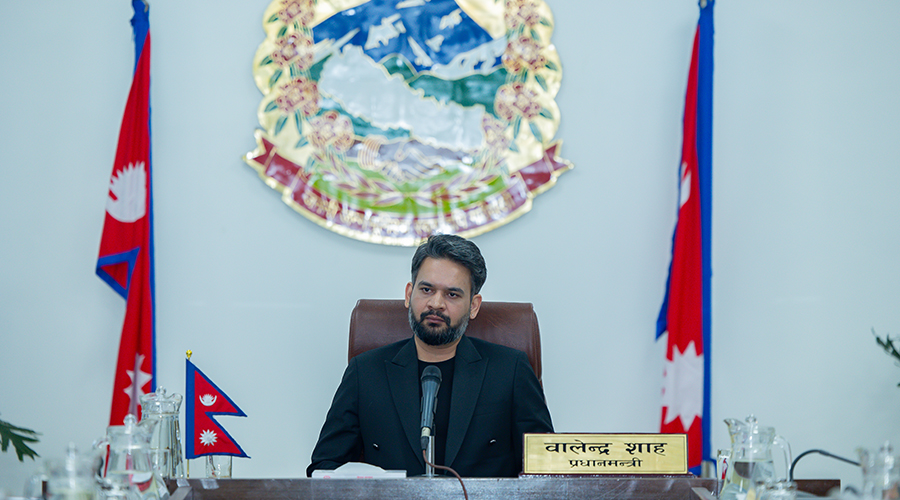
To reinstate legal provisions rendered inactive by the ordinance, Prime Minister Balendra Shah registered a bill in Parliament on September 21, seeking to restore provisions of several Nepal laws. The bill has yet to be approved by Parliament.
Of the eight ordinances issued before the monsoon session, four were converted into laws through replacement bills. The remaining four failed to become laws.
Following the end of the monsoon session on October 2, the government recommended eight more ordinances to the President. Five have since been issued.
The five ordinances, including amendments to laws on science, technology and innovation, forests, land and disaster management, have amended 10 existing laws and introduced one new law.
The remaining three ordinances are still awaiting approval at the President’s Office.
Under the Constitution, ordinances must be presented before both houses of Parliament once a session begins. They must then be converted into laws through replacement bills within 60 days of the commencement of the session. Otherwise, the ordinances lapse, rendering the new or amended legal provisions introduced through them inactive.
RSP’s changing position on ordinances
The RSP, which had criticised previous governments for bypassing Parliament and using ordinances to make laws, has adopted the same practice after coming to power.
RSP leaders had repeatedly criticised the use of ordinances by previous governments. On March 5, 2025, when an ordinance amending the Financial Procedures and Fiscal Responsibility Act, 2019, was presented in the House of Representatives for approval, seven lawmakers submitted notices of disapproval. The effort was led by Swarnim Wagle, who is now the finance minister.
At the time, a bill to amend the same law was already under clause-by-clause discussion in the House Finance Committee. Wagle criticised the government for introducing an ordinance when the amendment could have been pursued through the parliamentary process.
He described the move as contrary to parliamentary rules, procedures and the dignity of the thematic committee, arguing that the government had issued the ordinance merely to demonstrate that it was doing something.
Similarly, after the monsoon session of Parliament ended on September 16, 2024, demands were being raised for the winter session to be convened. Instead, on January 10, 2025, the Cabinet decided to recommend three ordinances to the President to amend laws related to land, investment and government operations.
The following day, then-lawmaker and now law minister Sobita Gautam objected, accusing the government of trying to govern by bypassing Parliament.
Questioning the government’s attempt to amend laws without convening Parliament, she expressed confidence that the President would refuse to issue the ordinances.
Then-lawmaker Manish Jha had also argued that ordinances should be used only in exceptional circumstances. In an article published on January 30, 2025, he compared ordinances to closed-door meetings and parliamentary proceedings to public debate, emphasising the importance of open deliberation in lawmaking.
Then-lawmaker Sumana Shrestha and others had also defended constitutional provisions and parliamentary procedures governing lawmaking.
But the RSP-led government, now comprising many of those same leaders, has itself increasingly resorted to ordinances to amend laws.
Constitutional expert Bhimarjun Acharya says the government’s decision to use ordinances despite having a favourable parliamentary majority raises questions.
“The RSP has the easiest parliamentary arithmetic in recent parliamentary history to enact laws through Parliament if it wants to,” Acharya says. “Yet, in practice, the RSP-led government also appears intent on bypassing Parliament to make laws.”
According to Acharya, the questions the RSP raised about parliamentary procedure and the rule of law while in opposition were legitimate. But he says the party has repeated the same practice after entering government.
“When the RSP was in opposition, it questioned the misuse of ordinances and warned against making laws by bypassing Parliament. Those concerns were legitimate, and we supported them,” Acharya says. “But after coming to power, the RSP has displayed the same tendency. It has also chosen the ordinance route to enact and amend laws. Its double standard is quite evident.”
Acharya says previous coalition governments had often resorted to ordinances because they feared they might not have sufficient parliamentary support. In some instances, ordinances were also used to serve political interests.
But he questions why a government with a near two-thirds majority and a single-party mandate would still choose the ordinance route.
“Issuing an ordinance, in essence, is about serving political interests,” Acharya says. “The executive seems to fear that making laws through Parliament could face obstacles. Now that the government has a single-party mandate and nearly a two-thirds majority, why would the executive still fear obstruction in introducing bills and passing laws through Parliament?”
RSP parliamentary whip Prakash Chandra Pariyar, however, says the Constitution allows the government to issue ordinances when Parliament is not in session.
“In the past, even when the Constitution stipulated that laws had to be enacted within three years, many were not made, and citizens suffered as a result. The lack of legal provisions created problems in various areas. The government has now introduced ordinances to deliver results in response to public expectations,” he says.
Pariyar argues that the RSP-led government has resorted to ordinances to control corruption, improve administration, restructure institutions and accelerate development projects when Parliament is not in session.
He also acknowledges the importance of Parliament as the primary institution for lawmaking.
“Before a narrative takes hold that the government has become too comfortable with ordinances instead of regular lawmaking, Parliament itself must be established as the principal forum for making laws,” Pariyar says.