Jajarkot, August 25
Reconstruction of permanent homes for victims of the 2023 Jajarkot earthquake has begun from Bheri Municipality in Jajarkot, one of three districts severely affected by the disaster.
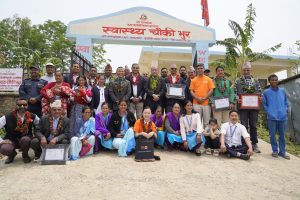
The reconstruction work formally began on Sunday from Ward No. 1 of Bheri Municipality, according to Suresh Sunar, undersecretary at the National Disaster Risk Reduction and Management Authority (NDRRMA).
The foundation stones for the homes of earthquake victims Chandre Kami and Kaushila BK of Rawatgaun were laid to mark the start of the reconstruction, said Deepak Rana, ward chair of Bheri-1.
For families who have been living in temporary shelters for a long time, the start of permanent housing construction has renewed hopes of finally having a home of their own.
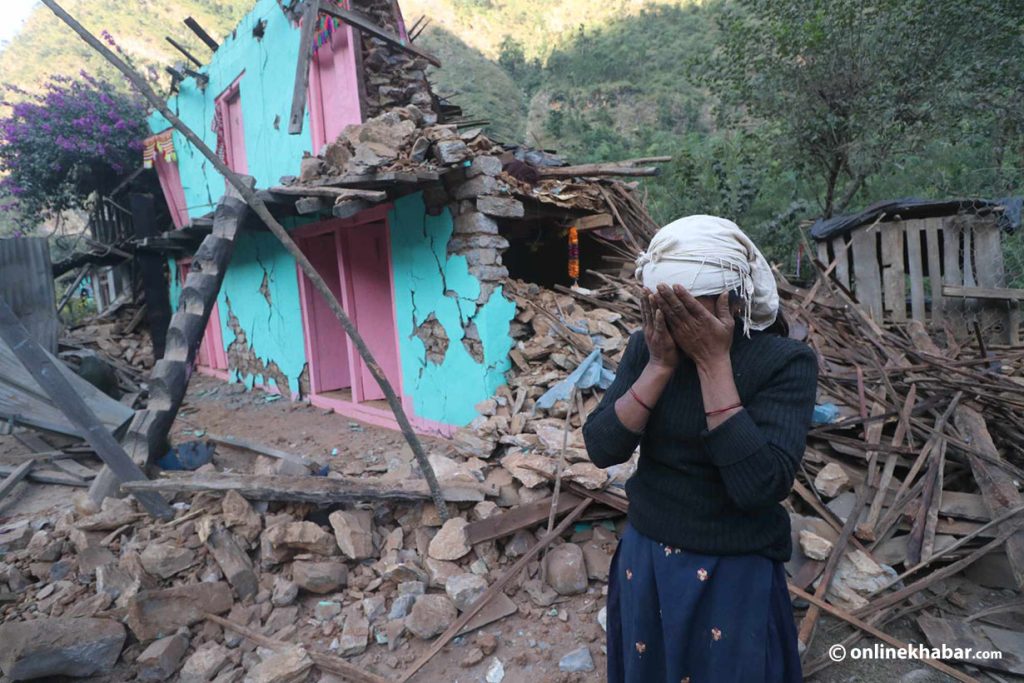
Kami’s family suffered both human and property losses in the earthquake. His four-year-old grandson, Bipin BK, died after being buried in the earthquake.
The reconstruction work began with the launch of the ‘Zero-Cost Reconstruction Programme’ for earthquake-affected residents of Jajarkot. Under the programme, earthquake victims in Jajarkot, Salyan and Rukum West will receive additional support and facilitation for reconstruction.
The programme, initiated by the NDRRMA, aims to facilitate the reconstruction of homes and other structures damaged by the earthquake, with economically vulnerable families and those facing difficulties rebuilding their homes expected to receive priority.
The earthquake, which struck on November 3, 2023, with its epicentre at Ramidanda in Jajarkot, caused extensive loss of life and property in Jajarkot, Salyan and Rukum West. Jajarkot suffered the heaviest damage.
188 homes listed for reconstruction in Bheri
In the first phase, 120 homes in Bheri-1 and 68 in Bheri-2 have been listed as beneficiaries for complete reconstruction, bringing the total to 188 homes.
The reconstruction of all 188 homes will be taken forward in the first phase, with priority given to families whose beneficiary selection and other required procedures have been completed.
Under the reconstruction arrangement, the NDRRMA will provide payments to the municipality for completed homes, while the municipality will make the payments to the beneficiaries.
Local governments will identify beneficiaries and forward their details through the District Administration Office to the authority, after which the reconstruction process will move forward.
Sunar urged other local governments to complete the beneficiary selection process for earthquake-damaged households and send the required details to the authority as soon as possible.
“Reconstruction will begin where beneficiaries have been identified and the required procedures completed. Other local governments also need to identify beneficiaries and send the details immediately,” Sunar said.
A team led by Sunar and Senior Divisional Engineer Sushilkumar Shrestha is currently in Jajarkot to facilitate the reconstruction process and provide technical support.
The team is coordinating with local governments across the district and gathering information on beneficiary details, required procedures, technical aspects and the progress of private housing reconstruction.
Reconstruction begins after a long wait
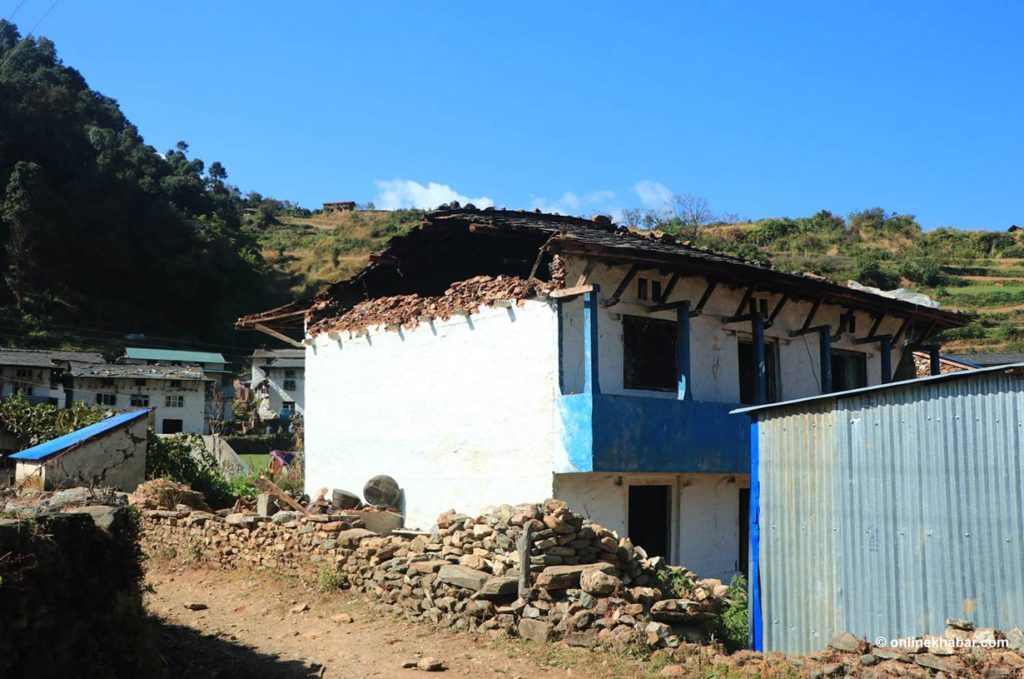
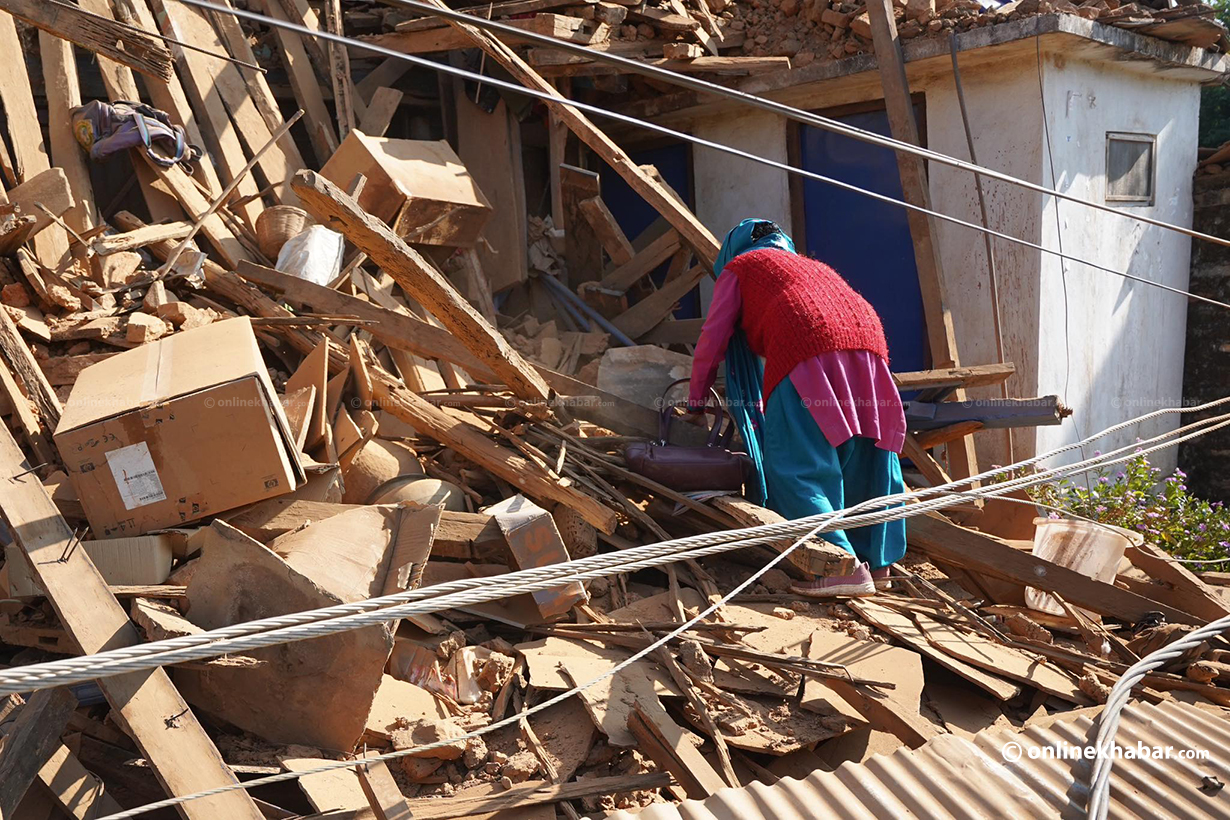
The earthquake caused extensive damage across Jajarkot, with thousands of homes affected and casualties reported in several local units.
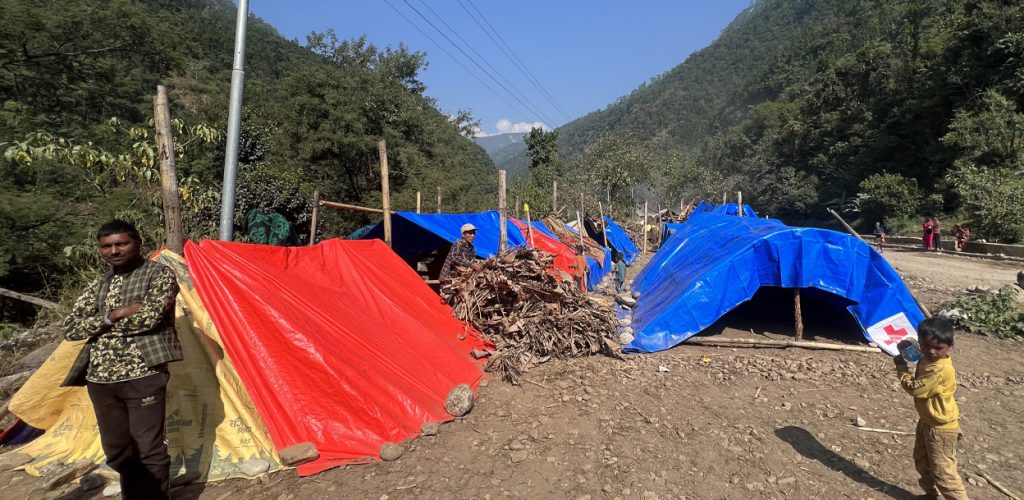
Authorities initially built temporary shelters to provide earthquake victims with immediate protection. However, nearly three years after the disaster, many families are still living in temporary structures, tents and makeshift shelters because their permanent homes have not been rebuilt.
For families whose homes were completely destroyed, permanent housing has remained a major concern. The need to live in temporary structures during the monsoon, cold weather and other difficult conditions has added to their hardship.
Dipak Rana, ward chair of Bheri-1, said the existing procedures for reconstruction need to be changed, claiming that the current system is making it difficult to carry out the work.
With reconstruction now beginning in Bheri, authorities expect beneficiary selection and reconstruction work to gain momentum in other affected local units as well.
Earthquake victims in Nalgad still waiting for grants
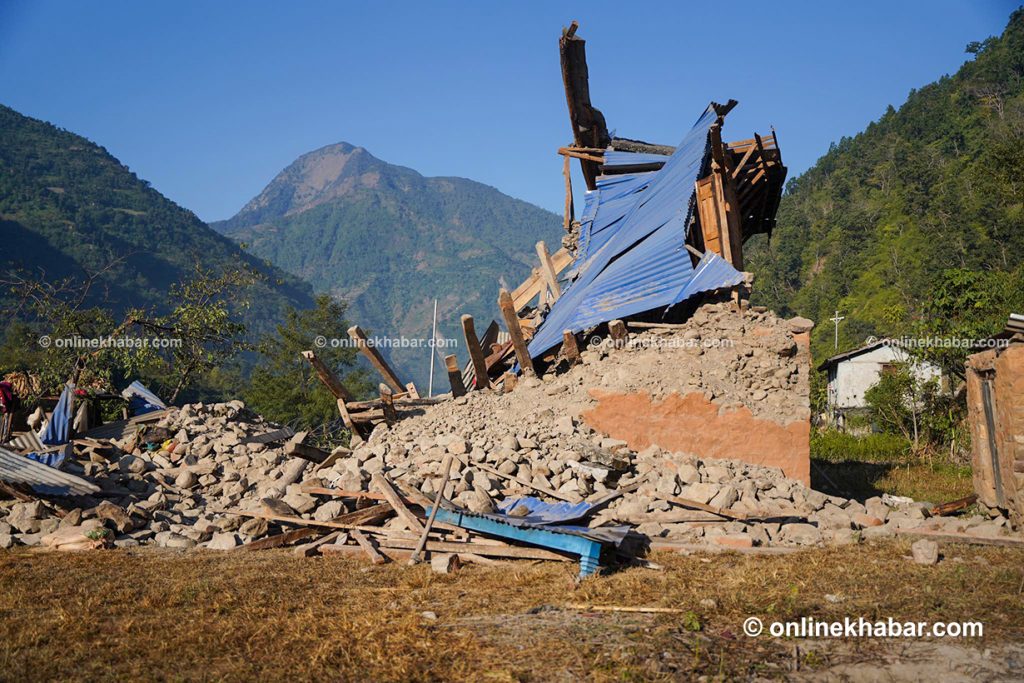
Nalgad Municipality is among the local units worst affected by the earthquake. Many homes in the municipality were completely destroyed.
Although the government had arranged to provide Rs 50,000 per family for the construction of temporary shelters, some victims say they did not receive the amount on time.
Some victims have also complained that they have not received funds expected from the federal government or the second instalment from the municipality. They say the lack of funds has made it difficult to build temporary shelters and begin rebuilding their homes.
Victims who have not completed the grant process for temporary shelters are now demanding that they also be included in the beneficiary list for permanent housing reconstruction.
They have called for immediate resolution of problems in beneficiary selection, document collection and verification at the local level.
Although permanent housing reconstruction has now begun, authorities face the challenge of ensuring that all affected families are included and that the work progresses quickly.
Local representatives say identifying genuine victims left out of beneficiary lists, addressing delays in grant distribution, arranging adequate technical manpower and ensuring easy access to construction materials will be crucial to making the reconstruction campaign effective.
A total of 14 local units across Jajarkot, Salyan and Rukum West were affected by the earthquake. Sunar said work had previously been difficult due to a lack of manpower, but 30 to 40 technical personnel are now being mobilised to begin reconstruction work.