

Kathmandu, September 1
The devastating flood in the Bhotekoshi River in Rasuwa on August 26 has wiped out the Rasuwagadhi–Kerung border point, the main lifeline for Nepal-China trade, forcing containers carrying imports from China to be diverted towards the Korala border point in Mustang.
The diversion comes just ahead of major festivals including Dashain, Tihar and Chhath, when demand for imported goods typically rises.
But Korala lacks the infrastructure, manpower and reliable road network needed to handle the sudden increase in trade.
This means importers are likely to face significant difficulties, while higher transportation costs could eventually push up prices in the Nepali market.
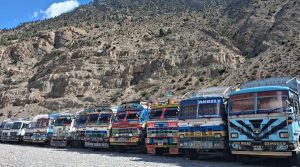
The number of heavy freight vehicles entering Mustang has already started to rise as cargo previously routed through Rasuwagadhi is diverted to Korala.
According to data from the Armed Police Force’s Jomsom checkpoint, 66 cargo containers carrying goods from China had entered Mustang by Sunday evening. The checkpoint said the number of containers heading towards Korala has been increasing.
However, the containers carrying the diverted goods have not yet reached the Mustang Customs Office.
According to Bidur Chudal, chief customs officer at the Mustang Customs Office, the diverted cargo is still on the way and customs clearance at Korala has not yet begun.
Empty containers are currently heading towards Korala to collect the goods.
“At the moment, only empty containers are going up. The diverted vehicles have not arrived yet,” Chudal told Onlinekhabar. “The empty containers are heading uphill to collect the goods. According to the information we have received, around 100 empty containers have already gone up.”
He said all the diverted goods would eventually have to enter through Korala if there was no other option, and customs clearance would be expedited once the vehicles arrive.
Customs short of staff and infrastructure

Although the government has promoted Korala as an alternative border point, its customs infrastructure remains limited.
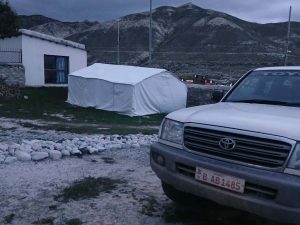
The Mustang Customs Office, located at an altitude of around 4,650 metres, has a sanctioned strength of 18 employees, but only 12 are currently working there.
The lack of adequate infrastructure has also raised concerns about how the customs office will handle the increased workload.
Customs officials say they will work around the clock once the cargo containers begin arriving.
Despite its limited infrastructure, the Korala customs point collected Rs 6.92 billion in revenue in the last fiscal year 2025/26. It collected another Rs 290 million in the first month of the current fiscal year.
Businesspeople, however, complain that the government has failed to invest in manpower and road upgrades despite the border point’s strong revenue performance.
Chudal said discussions were underway with the Department of Customs about adding staff and infrastructure in anticipation of the sudden increase in traffic.
Although Nepal’s infrastructure is not as advanced as that on the Chinese side, Chudal said the customs office was continuing its regular operations using the resources available.
Food imports remain a problem
With Rasuwagadhi destroyed, Korala is now expected to handle a larger share of goods entering the Nepali market from China.
But while the border point can handle many types of imports, food and perishable goods pose a particular challenge.
Businesspeople say it is currently difficult to import fruits, vegetables and food products through Korala because of the lack of quarantine facilities and adequate manpower.
The road is the bigger problem

Bringing goods through Korala is not easy for either traders or truck drivers.
The road from Mustang to Kathmandu is narrow, rough and geographically challenging at several points, making it difficult for large containers to travel.
Chudal also acknowledged that road conditions could become a major obstacle.
“After you go uphill from Beni, there is a landslide risk along the Kaligandaki Corridor up to a place called Ghasa. Once you go above Jomsom, there is around 100 kilometres of unpaved road,” he said. “The road is currently usable, but there is a natural concern that it could deteriorate once vehicle and traffic volumes increase.”
Given these difficulties, traders have demanded that sealed containers arriving through Korala be transported directly to the Chobhar dry port in Kathmandu for customs clearance.
Customs officials, however, do not consider the proposal practical because of the additional travel time and security risks along the route.
There is another problem: heavy snowfall begins in Mustang soon after Dashain and Tihar, meaning Korala cannot operate at full capacity throughout the year.
Longer transport route, higher prices
The closure of Rasuwagadhi and the longer, more difficult route through Korala are expected to have a direct impact on the cost of goods.
According to Manoj Babu Shrestha, president of the Nepal National Business Federation, diverting goods stranded in Kerung towards Korala will significantly increase transportation costs.
Kathmandu is only around 110 kilometres from Rasuwagadhi. But goods travelling from Kerung to Korala have to cover an additional distance of around 1,100 kilometres.
“We have diverted goods that were sitting at transport warehouses in Kerung towards Korala, but the additional 1,100-kilometre distance will sharply increase transportation costs,” Shrestha said. “This will increase the cost of goods, and prices in the market could rise by Rs 100 to Rs 150 per item.”
He said the increase in freight charges would directly affect the prices of ready-made garments, shoes, raw materials, food products and fruits.
The country’s own road network is another major obstacle.
The main route connecting containers from Mustang to Kathmandu—the Muglin-Narayangadh section of the Prithvi Highway—has itself been repeatedly disrupted.
The Prithvi Highway has been completely blocked since Monday after the road subsided at Krishnabhir in Dhading.
“Small vehicles, vans or Tata Mobiles may be able to come through the Dakshinkali–Sisneri–Hetauda route, but large containers cannot use that road,” Shrestha said. “The lifeline connecting Kathmandu itself is damaged. Once that road is gone, it makes little difference whether the goods come through Korala or anywhere else.”
Although goods would normally be expected to arrive within five days based on distance, he said there was currently no certainty about how long transportation would take because of the poor condition of the roads.
For the immediate term, the government has arranged for all freight vehicles to travel towards Kathmandu via the Kanti Lokpath.
Goods on which taxes were paid also swept away
While traders face higher costs and difficult roads when using Korala, some businesses have already suffered losses after floodwaters swept away goods stranded in Kerung.
Traders complain that the government has remained a spectator as containers carrying goods that had already completed customs procedures were swept away.
They also say they have received little sympathy or support from the government.
“Around 50 to 70 vehicles carrying our goods were swept away in Kerung. The goods had been kept in the customs yard, customs duties and taxes had been paid, declarations had been filed and the vehicles were preparing to leave,” Shrestha said. “We are not even in a position to receive a refund or compensation for the taxes we paid to the government. We have been hit from every direction.”
Tatopani also remains an uncertain alternative
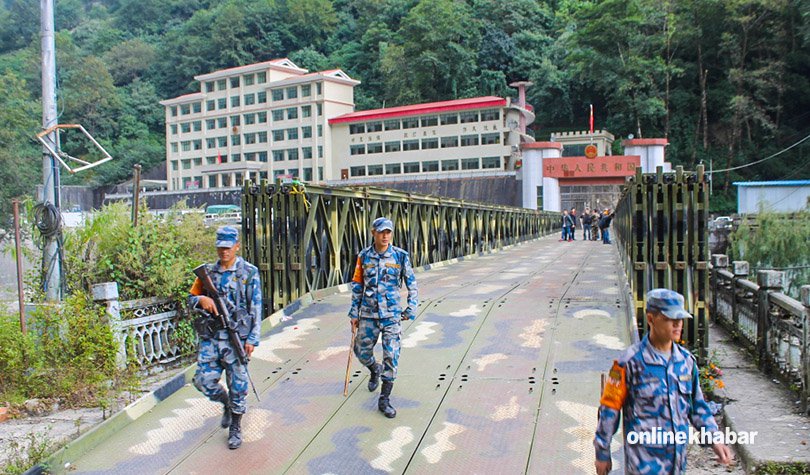
With Rasuwagadhi destroyed, the Tatopani border point in Sindhupalchok was also considered an alternative.
But bringing vehicles stranded in Kerung through Tatopani would require an additional detour of around 550 kilometres.
Traders say the route is also unreliable because of recurring landslides around Liping in the Tatopani area, and is unlikely to be dependable until the end of September.
The uncertainty surrounding the northern border points has already pushed around 40 percent of Chinese goods towards sea routes through Indian ports.
Such shipments take between one and three months to reach Nepal and eventually have to use the already deteriorated Muglin road.
At a time of crisis, Korala is serving as a lifeline for Nepal-China trade. But its narrow roads, landslide risks and reliance on just 12 customs employees make it difficult to see how billions of rupees worth of trade can be handled smoothly.
Stakeholders say the state must focus on constructing alternative tracks and repairing roads while the risk of further flooding remains.
They warn that unless the government moves at a war footing to expand Korala customs infrastructure and manpower and improve the Muglin–Narayangadh road, Nepali consumers could soon face severe shortages and sharply higher prices.