Kathmandu, August 26
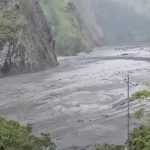
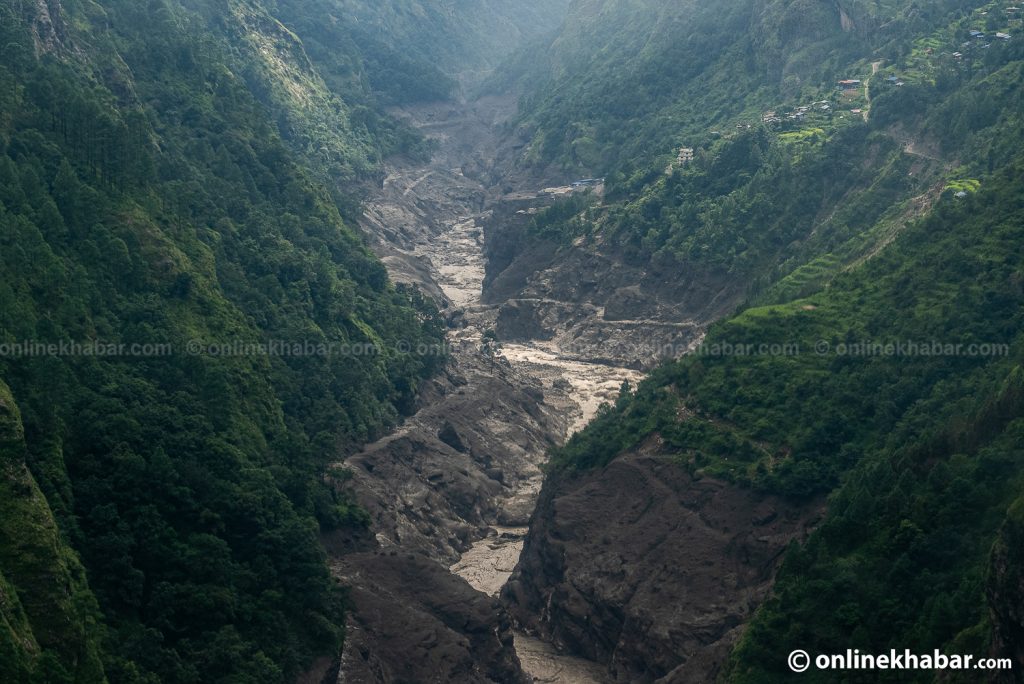
The Rasuwa flood has killed at least 95 people and left hundreds missing after a sudden surge of water swept down from the Tibet side of the Nepal-China border on Wednesday morning.
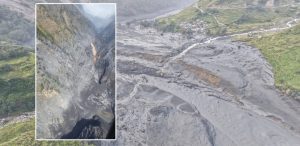
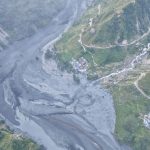
The flood struck the Timure area of Rasuwa at around 9am before surging downstream through Syaphrubesi, Mailung and Betrawati and into the Trishuli River. It caused widespread destruction across Rasuwa, Nuwakot, Dhading and other downstream areas.
Homes, markets, roads, bridges, hydropower projects, transmission infrastructure and border trade facilities have been damaged or swept away.
Nepal Police said 95 bodies had been recovered as of Wednesday evening. Of them, 27 were women, 37 men, six girls, five boys and 20 people whose identities have yet to be established.
A large number of people remain missing, although authorities have yet to determine the exact number.
85 security personnel missing
The Rasuwa flood has also caused major losses among security personnel deployed in the affected areas.
According to officials from Nepal Police, the Armed Police Force and the Nepal Army, 85 security personnel remain unaccounted for.
Nepal Police Central Spokesperson DIG Abinarayan Kafle said 32 police personnel were missing.
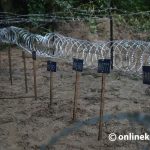
Nine Armed Police Force personnel deployed at the Border Outpost in Timure are also missing, according to APF spokesperson DSP Shailendra Thapa.
Nepal Army spokesperson Brigadier General Rajaram Basnet said 44 soldiers deployed for the security of Langtang National Park and hydropower projects had not yet made contact.
Police personnel stationed at the Area Police Offices in Timure and Syaphrubesi, as well as police posts in Rasuwagadhi and Mailung, are among those missing.
Police Assistant Head Constable Santosh Rijal, who was stationed at Betravati, said the scale of destruction was so extensive that it was difficult to assess the damage.
Rijal had been using a loudspeaker to warn residents about the approaching flood when the water suddenly surged. He managed to escape.
403 tourists out of contact
The disaster has also disrupted tourism in the region.
According to the Nepal Tourism Board, 403 tourists are out of contact, including 341 foreign nationals and 62 Nepali tourists.
The group includes 203 men and 200 women.
Indian nationals account for the largest number, with 133 tourists reported out of contact. The list also includes 47 Americans, 33 Britons, 34 Australians, 24 Canadians, 19 Malaysians, seven Ukrainians and six South Africans.
Six Singaporeans, five New Zealanders, five Japanese, four Germans, three French nationals and two Spanish nationals are also among those reported missing.
Timure, Syaphrubesi among worst-hit areas
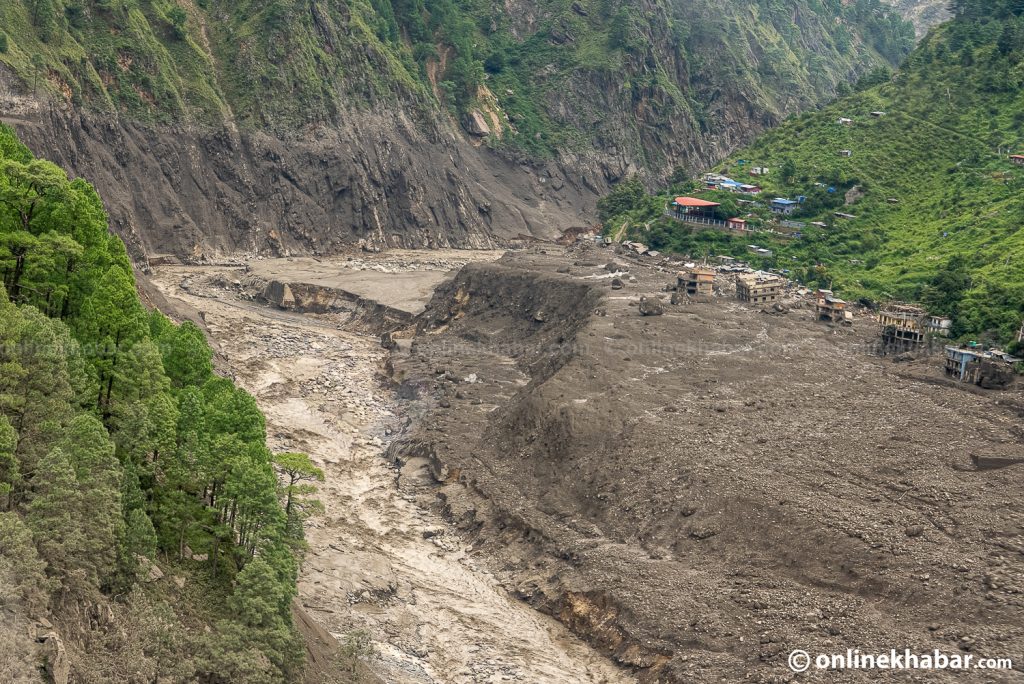
Timure, near the Nepal-China border, was among the areas hardest hit by the Rasuwa flood.
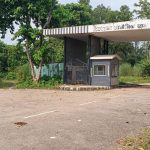
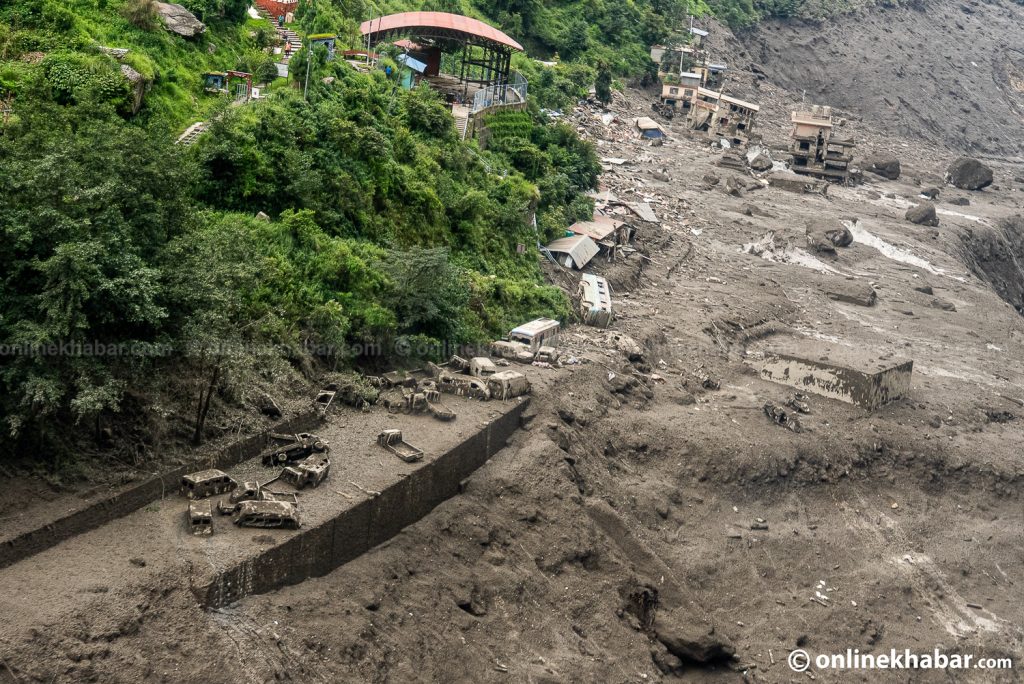
Homes, shops, vehicles, commercial goods, roads and other infrastructure were swept away. The area around the Timure customs office was also badly affected, disrupting a major route for Nepal-China trade.
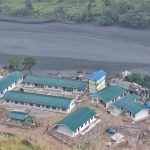
The Rasuwagadhi customs yard reportedly lost all vehicles parked there. The Rasuwagadhi hydropower project’s powerhouse and substation also suffered serious damage.
Syaphrubesi was another major centre of destruction. Homes, hotels, shops, a police post and roads were swept away or severely damaged.
The road connecting Syaphrubesi with Timure has been cut off. Tourist buses and other vehicles were swept away, while tourists staying at hotels in the area were left stranded.
Local residents described the flood as resembling a sudden dam break.
Hydropower projects and power network damaged
The Rasuwa flood has caused extensive damage to hydropower and electricity infrastructure.
The Nepal Electricity Authority said the Chilime Hydropower Centre, Rasuwagadhi Hydropower Project and Trishuli-3A Hydropower Project were affected.
The Trishuli 3B Hub 220 kV substation was completely damaged, while several transmission lines were disrupted.
The affected lines include the Samundratar–Trishuli 132 kV line, Chilime–Trishuli 66 kV line, Chilime Hub–Trishuli 3B Hub–Matatirtha 220 kV line and Trishuli–Balaju 66 kV line.
The Chilime 220 kV hub tower has also been affected.
The authority said it was attempting to restore electricity through alternative systems where possible.
The 216MW Trishuli hydropower project has also suffered serious damage, while the Mailung Khola and Devighat hydropower facilities were affected.
Preliminary assessments indicate that 13 to 15 hydropower projects have been affected by the disaster.
Around 19 bridges swept away
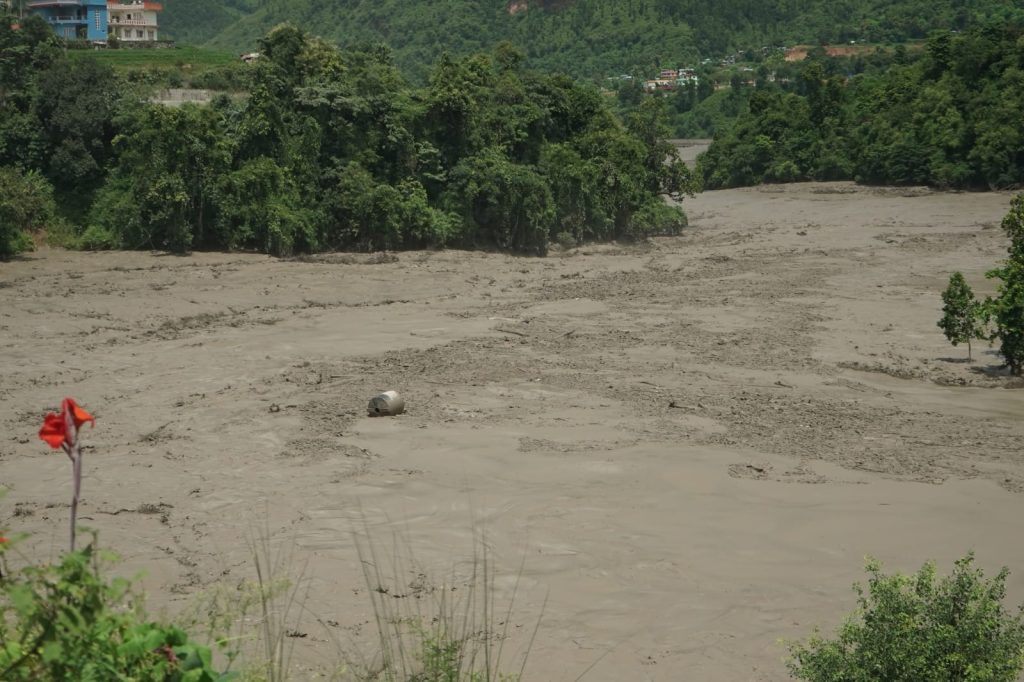
The flood has destroyed or damaged roads and bridges along the Bhotekoshi-Trishuli corridor.
Around 19 bridges have reportedly been swept away, including a bridge connecting Dhading district headquarters.
In Nuwakot’s Trishuli area, around 60 houses were reportedly swept away in preliminary assessments, while two concrete bridges were destroyed.
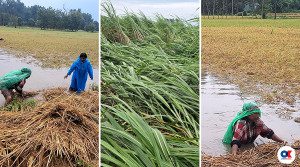
Betravati, Galchhi and Gajuri have also suffered damage to roads, bridges, houses and agricultural land.
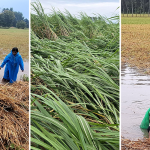
Floodwater and debris have covered farmland in several locations, causing significant losses for farmers.
The impact extended downstream towards Muglin. Authorities warned residents and travellers along the Trishuli and downstream areas to remain on high alert.
Muglin itself suffered comparatively less damage after residents had time to move to safer areas.
Cause of Rasuwa flood remains unclear
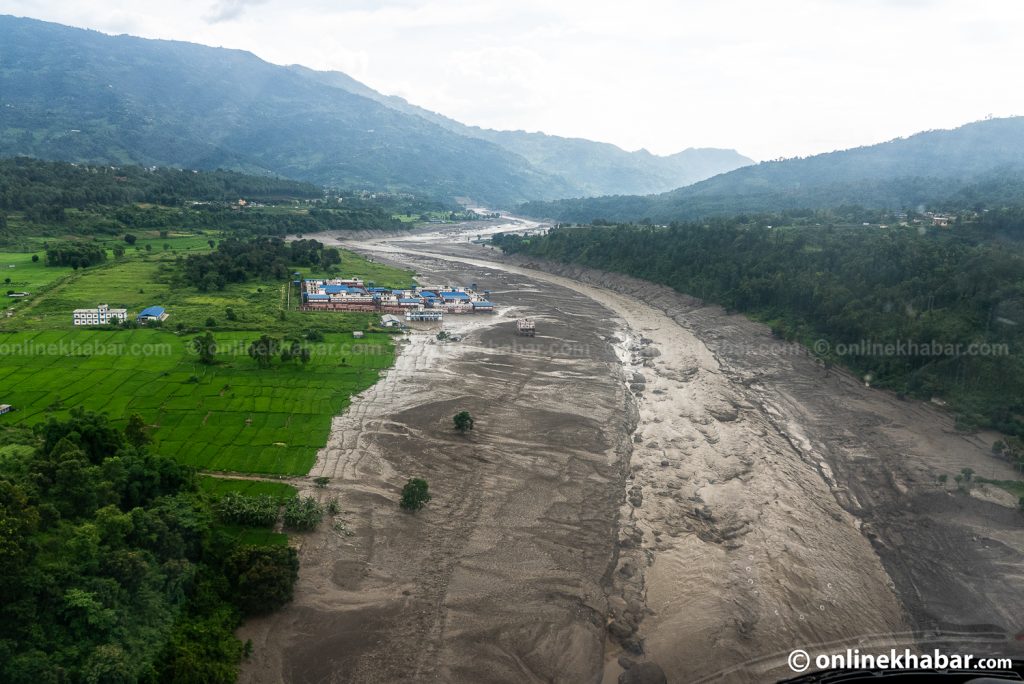
The exact cause of the Rasuwa flood has yet to be established.
Experts have offered several preliminary explanations involving the high-altitude areas of Tibet.
Some believe a glacial lake outburst flood (GLOF) may have triggered the disaster after one or more unstable glacial lakes suddenly released large volumes of water.
Professor Ranjan Kumar Dahal of Tribhuvan University’s Central Department of Geology said the volume and force of water suggested that a glacial lake may have burst, potentially in combination with an avalanche.
Researcher Amrit Thapa of the University of Alaska Fairbanks has suggested that an ice-rock landslide may have caused the sudden flooding of the Lhende River.
The National Disaster Risk Reduction and Management Authority, citing Planet Labs satellite imagery, said a snow-rock landslide occurred around 20 kilometres northeast of the Rasuwagadhi border point on the Nepal-China border.
The authority said the landslide caused a debris-laden flood in the Lhende River, which then flowed through Timure and into the Trishuli.
Foreign Minister Shishir Khanal told Parliament that preliminary information suggested an earthquake occurred in the area at around 8:37am, potentially triggering a landslide and subsequent flooding.
The US Geological Survey recorded a magnitude 4.4 earthquake in the Nepal-China border region.
However, experts have cautioned that the earthquake alone cannot yet be established as the cause of a flood of this scale.
Scientists have also pointed to potentially dangerous glacial lakes in the Tibetan region above Rasuwa. Further scientific investigation is required to determine what triggered Wednesday’s disaster.
Government intensifies rescue operations
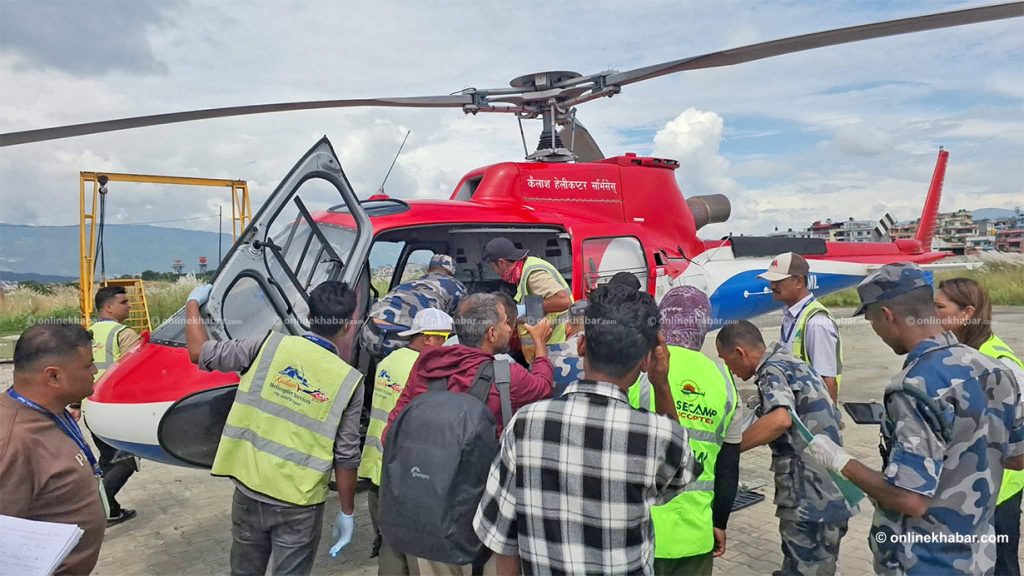
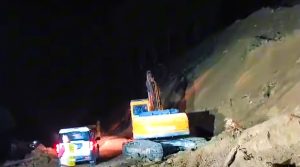
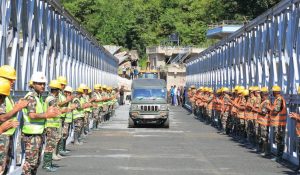
The government has mobilised all three security agencies for search and rescue operations following the Rasuwa flood.
The Cabinet held an emergency meeting and decided to declare the affected local levels as flood crisis areas. It also authorised the Home Minister to mobilise helicopters and other available resources for rescue operations.
The Nepal Army deployed teams from Dhunche and Trishuli, as well as a specialised disaster management team from its No. 6 Brigade headquarters in Gajuri.
An MI-17 helicopter equipped with an emergency medical rescue team was deployed, while the Armed Police Force mobilised around 1,100 personnel.
A total of 15 helicopters—seven from the Nepal Army and eight from the private sector—were involved in the rescue operation.
At least 97 people have been evacuated by air, according to the Army.
Hospitals including Tribhuvan University Teaching Hospital, the National Trauma Centre and the APF Hospital were placed on standby to receive those rescued from the affected areas.
At least 63 injured people had been taken to hospitals, according to an earlier Nepal Police update, with patients receiving treatment at facilities in Kathmandu, Rasuwa and Nuwakot.
Relief efforts begin
Prime Minister Balen Shah said saving lives, locating missing people and protecting affected residents were the government’s immediate priorities.
The government has called for food, drinking water, medicine and temporary shelter to be provided to affected families.
The Ministry of Agriculture has appealed to national and international non-governmental organisations to immediately mobilise food and relief supplies.
Home Minister Sudhan Gurung has held discussions with representatives of the private sector, including the Federation of Nepalese Chambers of Commerce and Industry, Confederation of Nepalese Industries, Nepal Chamber of Commerce, Nepal Bankers’ Association and Federation of Contractors’ Associations of Nepal, seeking support for relief and reconstruction.
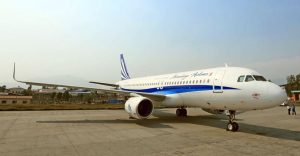
The Civil Aviation Authority of Nepal has also instructed airlines not to increase airfares amid the disruption of road connectivity caused by the disaster.
Meanwhile, search and rescue teams continue to work in the affected areas as authorities try to identify recovered bodies, locate missing people and assess the full extent of the damage caused by the Rasuwa flood.