
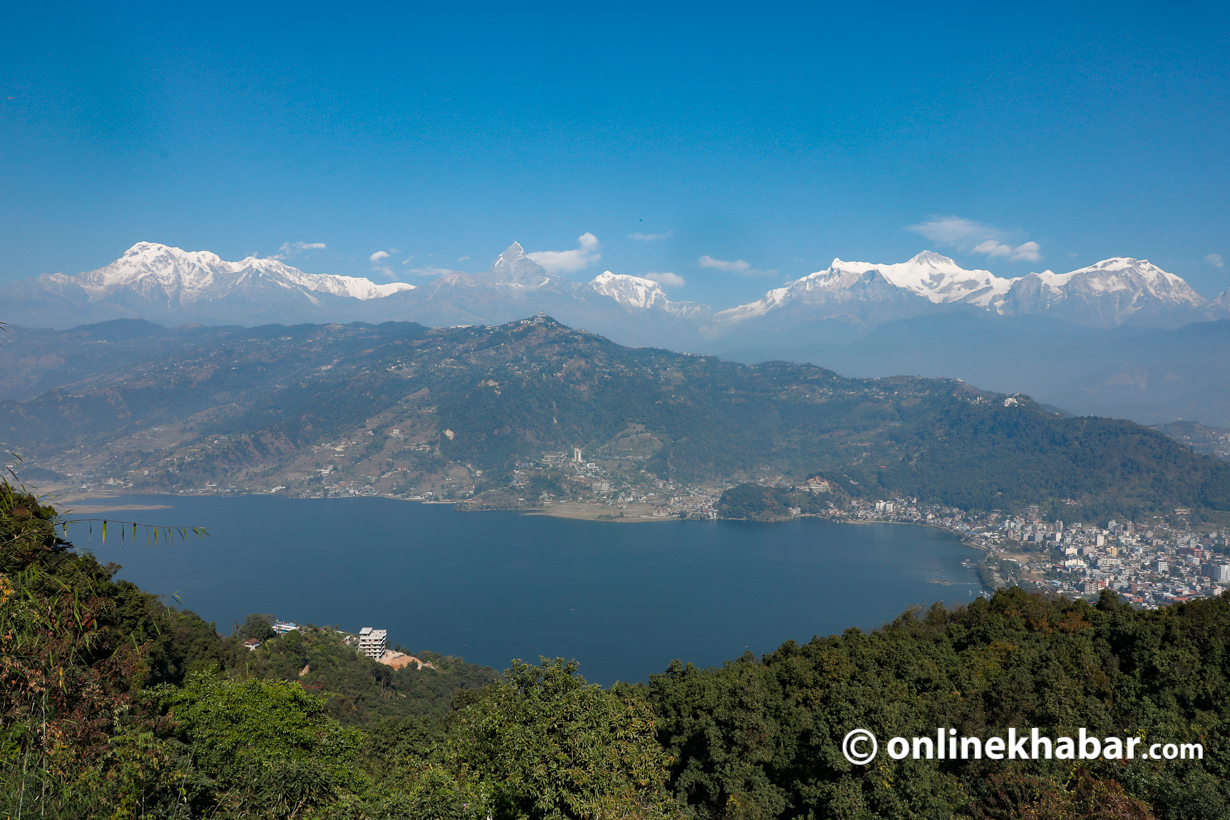
Pokhara is known worldwide for its stunning lakes, majestic mountains, and breathtaking scenery. But the city is now building a new identity beyond tourism. It is steadily emerging as a centre for education, research, and intellectual development. With its natural beauty, cultural diversity, and social harmony, Pokhara has long been a source of national pride. In recent years, the rise of universities, growing interest in research, and international academic partnerships have begun steering the city toward knowledge-based growth.
Safe surroundings, quality education, and a comfortable lifestyle are making Pokhara increasingly attractive to students from across Nepal and abroad. What was once celebrated only as Nepal’s premier tourist destination is now evolving into a vibrant “Student City” where learning and innovation thrive alongside natural beauty.
A proud educational legacy
Pokhara’s journey in education goes back centuries. In 1524 B.S., King Kulmandan Shah of Kaski granted land near Barpatan to Padmapani Padhya of Myagdi Rakhukhola to begin traditional “Pindi” education. This made Kaski a centre for Sanskrit studies and inspired the saying: ‘If you lose knowledge, go to Kaski.’
Pathsalas, monasteries, temples, and gurukuls taught Vedas, Sanskrit, astrology, philosophy, and ethics, laying the foundation for a culture of learning. During Prime Minister Dev Shamsher’s tenure, the first language school was established in Bindhyabasini in 1958 B.S., later evolving into a Sanskrit secondary school. By 2004 B.S., another Bindhyabasini school was established in Batulechaur, while schools in Bhairavtol, Nadipur, and other areas expanded access to education. The small primary school at the public inn (pauwa) in Nadipur later developed into Gyan Bhumi School.
In 2006 B.S., the establishment of Public Middle School in Nadipur gave new momentum to modern education in Pokhara. Just three years later, the school was relocated to Tundikhel and evolved into National High School. Soon after, institutions such as Bhadrakali School, Aranyajyoti Library, and Soldiers Board School (later Amar Singh School) emerged, further strengthening the city’s academic foundation. By 2014 B.S., schools like Barahi, Talbrahi, and Kanya School were founded, with Kanya School playing a pioneering role in advancing women’s education.
By 2016 B.S., nine schools had already been established. The founding of Prithvi Narayan College in 2017 B.S. ushered in a new era of higher education, producing thousands of graduates and positioning Pokhara as western Nepal’s leading educational centre. Gandaki Boarding School (2023 B.S.) added a new dimension to school education. Later, institutions such as Manipal College of Medical Sciences (1994 A.D.), Pokhara University (1997 A.D.), Pokhara Academy of Health Sciences (2072 B.S), and Gandaki University (2019 A.D.) accelerated higher and health education, giving Pokhara international recognition.
From Sanskrit gurukuls to modern universities, Pokhara’s educational legacy reflects resilience, vision, and progress. What began as a centre for traditional learning has grown into a vibrant hub of higher education, research, and global collaboration making Pokhara not just a tourist paradise, but a proud city of knowledge.
Pokhara emerging as education hub
Pokhara’s education sector is expanding rapidly. According to statistics from 2082 B.S., Kaski district has 634 schools, 375 communities and 259 institutions with 452 located within Pokhara Metropolitan City. The district also operates 377 early childhood centres, serving nearly 141,000 students, of whom about 128,000 are in Pokhara. In addition, more than 51 colleges function under various universities, further strengthening the region’s educational landscape.
Pokhara has also become a higher education hub. The city hosts Pokhara University, Gandaki University, Prithvi Narayan Campus, Manipal Medical College, and the Academy of Health Sciences. These institutions offer programs in medicine, engineering, IT, management, tourism, agriculture, and forestry. International collaborations, such as Informatics College’s partnership with London Metropolitan University, add to Pokhara’s global appeal.
Colleges like Janapriya, Janaprakash, Kanya, Kalika, Gaurishankar, and Gupteshwar provide accessible education, while specialised institutes including Western Engineering Campus, Institute of Forestry, Gandaki College of Engineering and Science, Gandaki Medical College, Nursing Campus, and Polytechnic Institutes are producing skilled manpower for Nepal and beyond.
Pokhara is no longer just a tourist paradise. It is steadily shaping its identity as Nepal’s ‘Student City,’ where schools and universities drive knowledge, skills, and innovation.
Pokhara’s promise as a student city
According to the QS 2026 rankings, Seoul, Tokyo, London, Munich, Melbourne, Sydney, Berlin, Paris, Montreal, and Toronto stand among the world’s top student cities. In India, Mumbai, Delhi, Bangalore, and Chennai have also emerged as important hubs by linking education with technology and modern lifestyles. These examples highlight the strong connection between education and urban development.
Pokhara holds strong potential to emerge as one of South Asia’s leading student destinations. Its peaceful surroundings, affordable living, and unmatched natural beauty create an environment that nurtures creativity and focus. Beyond lifestyle advantages, the city’s diverse geography offers vast opportunities for academic research. Fields such as Himalayan studies, climate change, biodiversity, sustainable tourism, agriculture, water resources, and disaster management provide rich ground for exploration. With the establishment of modern laboratories, digital learning hubs, and startup ecosystems, Pokhara could transform into a vibrant centre of innovation and knowledge.
The ‘15-minute city’ concept, where education, healthcare, transport, and essential services are accessible within short distances, aligns perfectly with Pokhara’s vision. Student-friendly infrastructure, combined with collaboration among universities, the private sector, and local communities, can establish the city as a hub of knowledge and opportunity.
Already renowned for its natural charm, Pokhara has the potential to evolve into South Asia’s most inspiring ‘Student City,’ where education, innovation, and beauty come together to shape the future.
Linking education with economy
Education in Pokhara must connect directly with employment and entrepreneurship. Establishing IT parks, innovation centres, and startup programs can give students the practical skills they need to succeed.
Collaboration across tourism, health, agriculture, and information technology would strengthen the local economy while opening new opportunities for graduates. By blending education with Pokhara’s natural beauty, the city could also promote “educational tourism,” attracting international conferences, student exchanges, and research seminars.
Pokhara’s future lies in connecting classrooms with careers, linking education to innovation and industry, and positioning itself as a dynamic “Student City.”
The role of Pokhara Metropolitan City
Pokhara Metropolitan City has a vital role in shaping the future of education. It must see education not only as a social service but as a key driver of urban growth and prosperity. Student-friendly planning is essential. Safe roads, reliable public transport, affordable housing, libraries, cultural centres, and 24-hour study spaces all help create an environment where young people can truly thrive.
With smart investment and strong commitment, the metropolis can turn the vision of a true ‘Student City’ into reality, making Pokhara both a tourist paradise and a proud hub of knowledge.
From tourist city to student city
Pokhara is globally renowned as a tourist paradise, but its future potential extends far beyond tourism.
With a long-term vision, quality education, and student-friendly infrastructure, the city can emerge as a leading educational hub in South Asia.
While tourism defines Pokhara’s present, education can shape a more sustainable and prosperous future.