
The world’s leading fashion houses take their collections and campaigns to extraordinary locations, from remote landscapes to historic landmarks. Nepal has the settings. Attracting these productions, however, requires more than a tourism slogan.
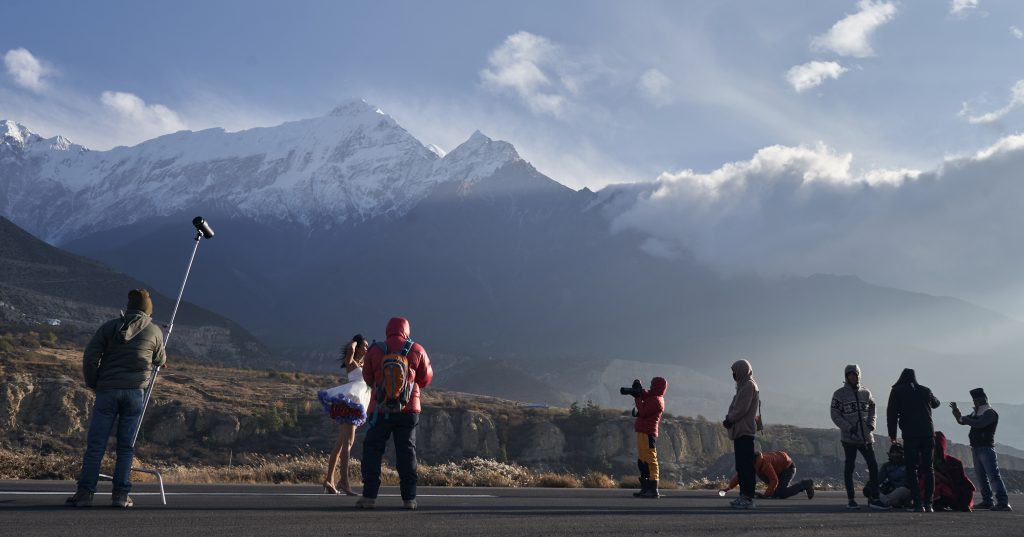
When a major international fashion house chooses a location for its next collection, runway show or advertising campaign, a beautiful backdrop is only one consideration. The creative team must work out how people and equipment will get there, where everyone will stay, what permissions are required and whether the production can run on schedule. A campaign for a luxury label can bring several dozen people into a country for days or weeks. A destination runway show can involve a much larger team, including designers, models, photographers, stylists, technical crews, clients and international media.
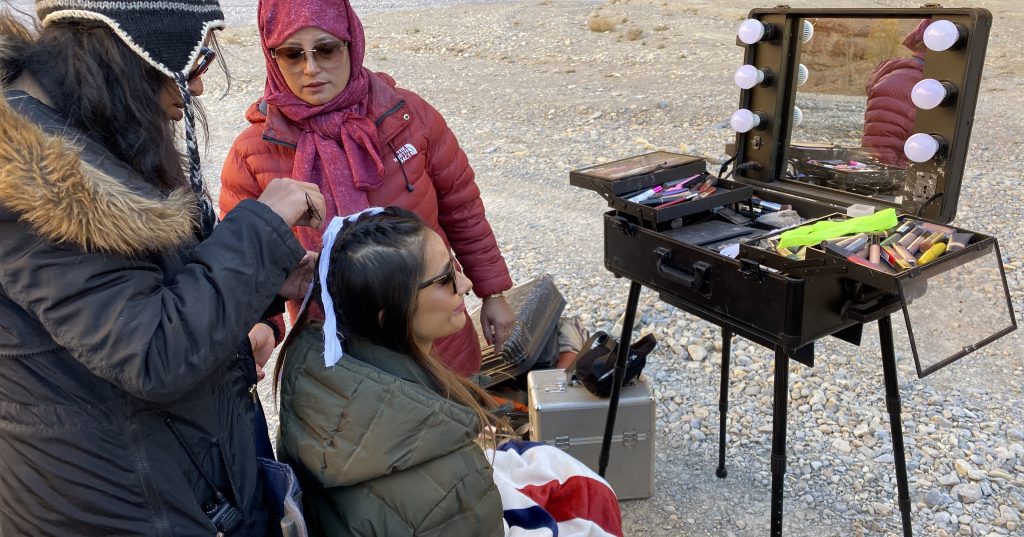
The spending extends across the local economy. Hotels provide accommodation, restaurants serve the crew, vehicles are hired and temporary structures may need to be built. Local technicians, caterers, drivers and production assistants find work. For the duration of the shoot, a place that may seem far removed from the fashion business becomes a busy workplace. There is a budget to manage and a schedule to keep. A missed connection or delayed equipment consignment can have consequences for everyone involved.
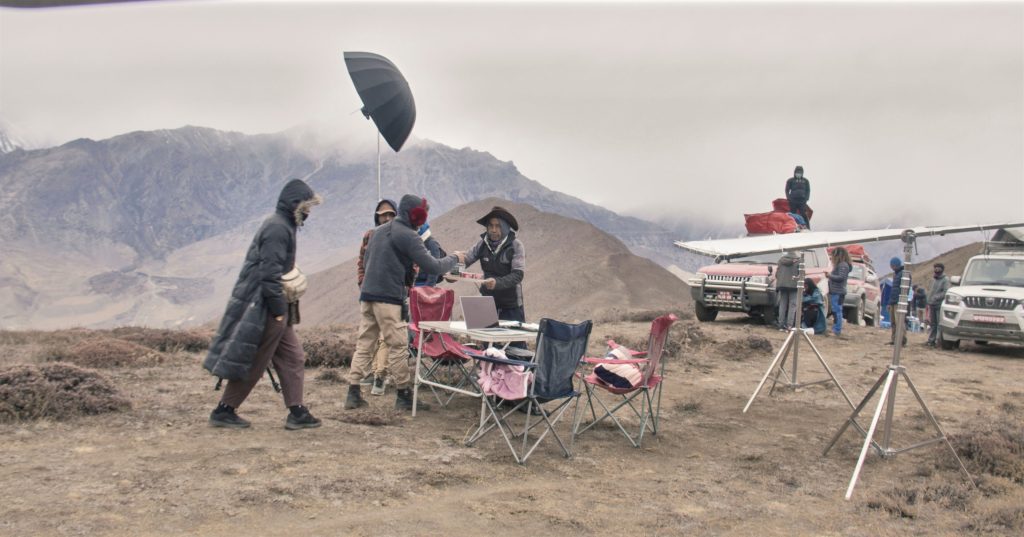
People sometimes imagine fashion photography as a photographer, a model and a camera. That may be true of some assignments, but a major international campaign can involve several vehicles, tonnes of equipment, temporary structures, specialist clothing, lighting systems and digital teams. Nepal’s production companies have been coordinating international shoots for years. Companies such as Location Nepal have experience in this field, although fashion campaigns do not necessarily have the same requirements as film productions.
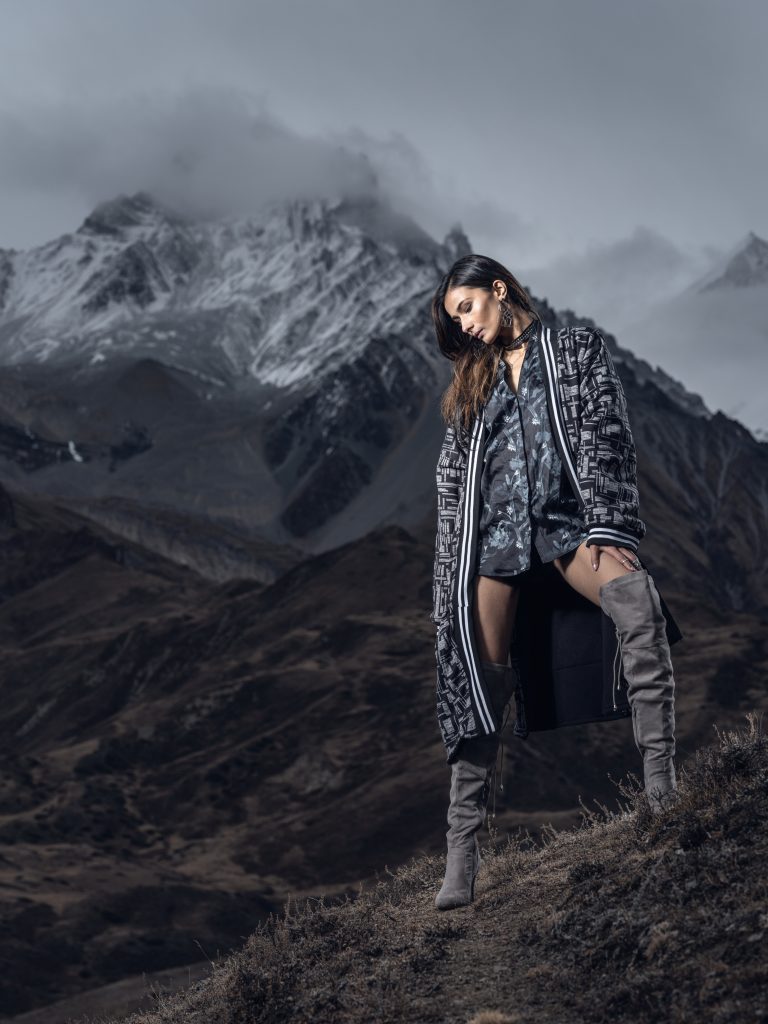
The images travel much further than the crew. Campaigns by major labels appear in international magazines, on billboards, in shop windows and across digital platforms.
Nepal could reach people who have never considered visiting the country. Someone might see a photograph, wonder where it was taken and search for the location.
That is one possible route to wider attention, although it depends on the brand identifying the place.
There is no guarantee that a fashion campaign will bring tourists. Brands control their images and have their own commercial priorities. Some may prefer not to disclose a location.
Any publicity would require the brand’s agreement, while Nepal could also prepare its own editorial material to promote the destination. Even with these limitations, an appearance in the visual world of international fashion can reach audiences that conventional tourism advertising might struggle to find.
Runway shows offer another opportunity. Fashion houses have presented collections in deserts, historic buildings, fields, lavender landscapes and remote natural settings. Photographs can make these events look effortless. The work behind them is anything but. Staging, lighting, sound, dressing areas, transport, catering and accommodation all need to be arranged, often in places never designed to host events on such a scale. The location becomes part of the collection’s identity, while the show reaches a much wider audience through fashion publications, invited guests and the brand’s own channels.
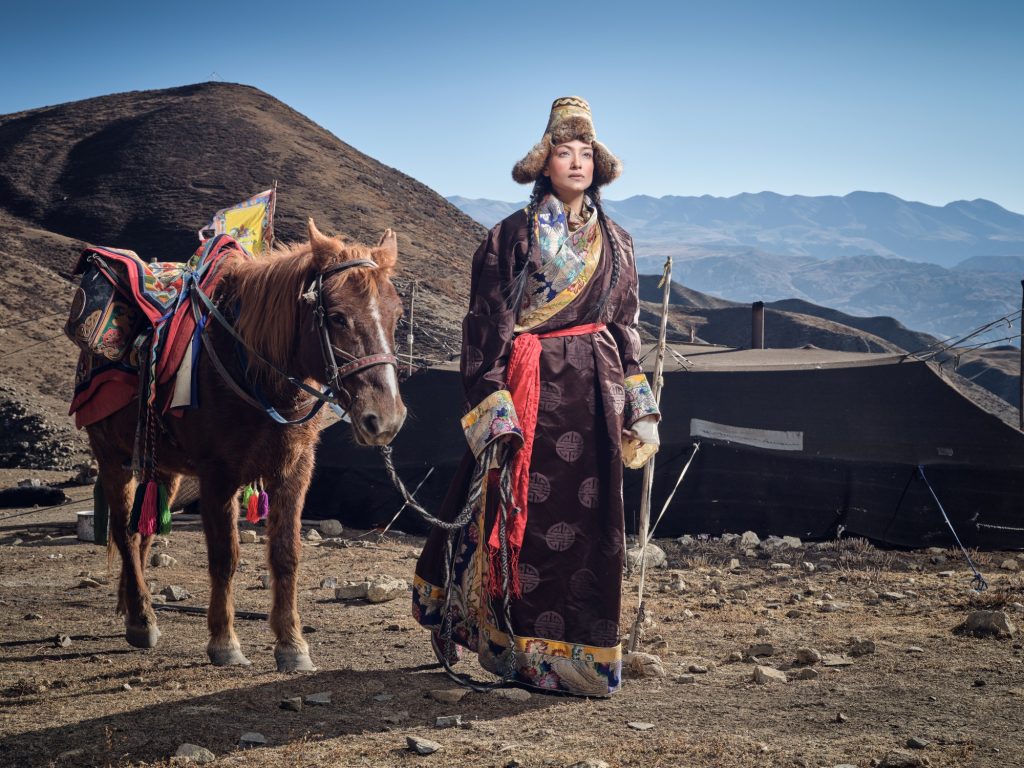
Nepal has already attempted this at an extraordinary altitude. In January 2020, the Mount Everest Fashion Runway took place at Kala Patthar, 5,340 metres above sea level. It received a Guinness World Records title for the highest-altitude fashion show on land. International and Nepali models and designers took part, supported by medical personnel and a team working in demanding conditions. It was an ambitious undertaking that demonstrated what was possible. But a single spectacle does not create a regular market for this kind of production.
There is also much more to work with beyond the Everest region. The tea estates of Ilam, the grazing pastures of Jaljala in Rolpa and the old settlement of Ghami in Mustang, with its distinctive chortens, offer very different visual settings. Their appeal lies in the details as much as the scenery: cultivated hillsides, traditional buildings, local materials and the way settlements sit within the landscape. These are settings that could give a campaign a character difficult to reproduce elsewhere.
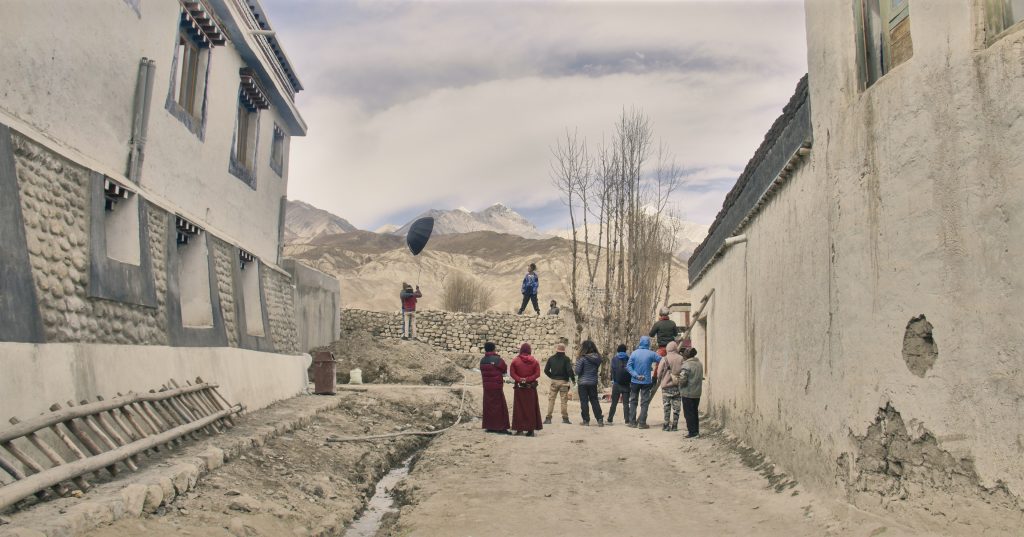
Some productions could involve entire settlements. Villages and small towns in other countries have hosted creative projects in which streets, homes, workshops and farms become part of the setting. Nepal could explore similar arrangements, with residents working as craftspeople, builders, guides, performers, suppliers or crew. Local businesses could provide accommodation, food and transport.
There is an important condition, however. A community cannot simply be treated as a convenient backdrop. Residents need a say in what happens, fair payment for their work and respect for their cultural practices and surroundings. Otherwise, the production leaves and the benefits go with it.
There is another connection between fashion and Nepal that deserves attention. Allo, the fibre extracted from Himalayan giant nettle has been used by communities here for generations. Local wool and other plant fibres also offer possibilities for contemporary textiles. International designers could work directly with local weavers, artisans and fibre producers, creating opportunities that extend beyond photography assignments. A collection made with local materials could introduce those skills to buyers and audiences who might never otherwise encounter them.
Getting a production into Nepal can be harder than finding a location. Foreign film productions have an established process through the Film Development Board, which provides guidance on local coordination, crew details, itineraries, equipment lists and relevant permissions. The Motion Picture Rules also include a provision for customs to record and release filming equipment brought in by foreign producers, subject to its return.
These arrangements are useful, but the published guidance is centred on film production. Someone planning a standalone fashion campaign, editorial shoot or destination runway event may struggle to establish where to begin, which offices to approach and what rules apply.
The scale of a production also matters. A small editorial shoot in a hotel courtyard has little in common with a large event in a protected area. The latter could require coordination with local authorities, heritage managers, protected area offices, customs and tourism bodies. Producers need to know which permissions are required, who issues them and how long the process takes. Discovering these requirements after travel dates have been fixed and a team assembled is an expensive way to learn the system.
A public information system for international productions would be a practical place to start. It could cover film, television, advertising, still photography, fashion campaigns and destination events, setting out relevant contacts, documents, fees and procedures. It should also explain the rules for temporarily importing and re-exporting equipment, along with realistic processing times. The agencies involved would retain their respective responsibilities. Producers would at least know where to go and what to expect.
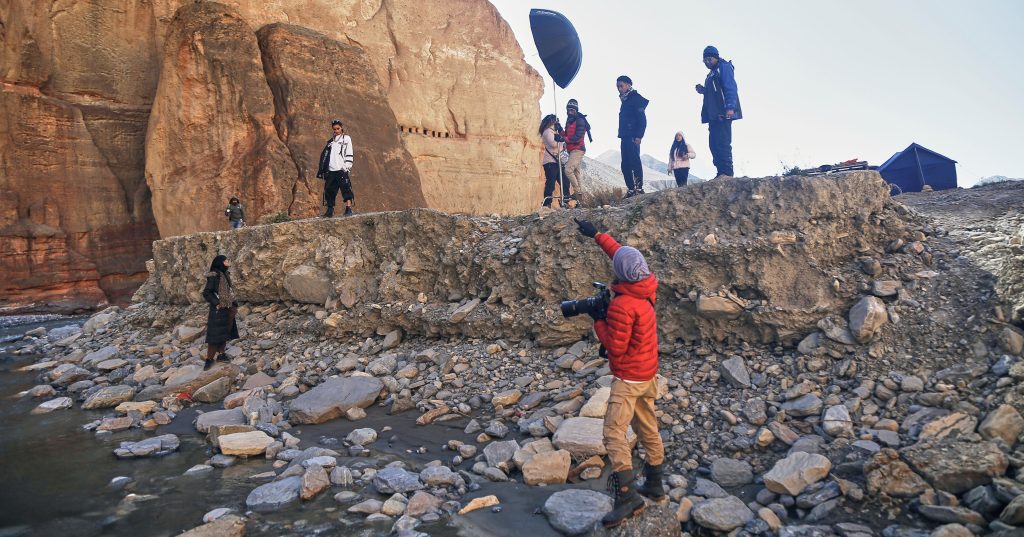
Nepal’s idea of its visitor economy could also benefit from a wider lens. Tourism promotion still leans heavily on trekking, mountaineering, adventure and familiar images of the Himalayas. These remain important, but they are not the only reasons people might visit or the only activities capable of bringing money into local economies. Fashion, photography, advertising and design attract a different kind of visitor. They also create paid work for local specialists whose skills are not always counted as part of tourism.
Independent initiatives such as Himalayan Fashion Adventure have explored the possibilities of fashion photography and location-based creative production in Nepal. They demonstrate what can be done, but expanding this work requires more than individual efforts. International productions need a process they can understand before committing people, money and equipment to a location.
Nepal often speaks about its extraordinary landscapes as though their existence alone were an economic strategy. They are certainly an advantage, but one that remains underused without the systems to support the industries interested in them. International fashion houses will continue looking for places that offer something their competitors cannot easily reproduce. Nepal has no shortage of such places.
A remarkable landscape may catch a creative director’s eye, but it cannot organise a shoot. Whether a production happens depends on what follows: permissions, transport, accommodation, equipment, local coordination and the ability to deliver on schedule. Nepal’s challenge is no longer simply to convince the world that it is worth looking at. It is to make sure that, when the world wants to work here, it can.