

Biratnagar, November 2
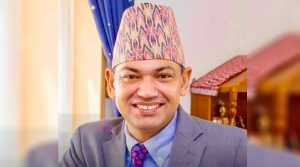
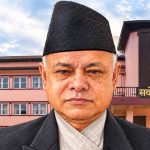
When Parshuram Khapung was appointed chief of the then Province 1 (now Koshi) on November 9, 2021, he may hardly have expected to complete his five-year tenure. However, he is now preparing to leave office after serving his full term.
The coalition government led by then Prime Minister Sher Bahadur Deuba had appointed him provincial head under the quota of the Janata Samajbadi Party Nepal. Given the country’s political instability, frequent changes in power alliances and the tendency to replace provincial heads whenever the federal government changed, Khapung would often tell his close associates after arriving in Biratnagar, “I will continue working until I am called back.”
However, despite political upheavals and uncertainty, Khapung has successfully completed his constitutionally mandated five-year term.
First provincial head to complete full tenure
Since the implementation of federalism and promulgation of the Constitution, Khapung is the first provincial head to serve a complete five-year term. He is scheduled to leave office on November 10.
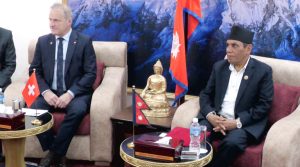
Koshi Chief Minister Hikmat Kumar Karki paid him a farewell visit on Sunday and thanked him for his five years of service.
Steady amid political upheavals
Nepal witnessed several unexpected political upheavals during Khapung’s tenure as Koshi provincial head. Power alliances and coalitions changed repeatedly at the federal level. Pushpa Kamal Dahal ‘Prachanda’ and KP Sharma Oli succeeded Deuba as prime ministers. However, regardless of who led the federal government, Khapung’s position in Koshi remained secure.
The provincial political situation was even more unstable. Koshi saw five changes of government during his tenure. Having worked with chief ministers ranging from the first, Sherdhan Rai, to the outgoing Rajendra Rai, Khapung also served under governments led by Hikmat Kumar Karki, Uddhav Thapa and Kedar Karki following the 2022 provincial assembly elections.
Despite protests over the naming of Koshi Province, complicated parliamentary arithmetic and repeated disputes over majority and minority governments, Khapung was not drawn into major constitutional controversies. However, two of his decisions concerning government formation were challenged in the Supreme Court.
The Supreme Court overturned the government led by Uddhav Thapa, which had been formed by using the signature of then Speaker Baburam Gautam to secure a majority. Hearing a writ petition filed by CPN-UML parliamentary party leader Hikmat Kumar Karki, the court on July 27, 2023, ruled that the government formation process was unconstitutional.
Subsequently, Khapung removed Kedar Karki, who had become chief minister under Article 168(5) of the Constitution, and appointed UML’s Hikmat Kumar Karki as chief minister. Kedar Karki challenged the decision in the Supreme Court, but the court dismissed his writ petition on July 1, 2024.
Apart from these cases, Khapung was not involved in major political controversies. However, he faced criticism recently after receiving a traditional ceremonial salute from security personnel while seated on a stool at his residence during Dashain.
Political leaders say Khapung maintained balanced relations with both the ruling and opposition parties because of his simple and courteous manner.
“Although there were some party-level disagreements, he fulfilled his constitutional responsibilities competently,” says Indra Bahadur Angbo, parliamentary party leader of the Nepali Communist Party. “He also maintained balanced relations with both the provincial and federal governments.”
Angbo described Khapung as the best among the three provincial heads who have served Koshi, adding that he never went beyond his constitutional responsibilities.
CPN-UML provincial assembly member and former minister Rewati Raman Bhandari also said Khapung had competently discharged his constitutional duties.
“He demonstrated maturity when making decisions and consulted others when matters were unclear,” Bhandari said. “He maintained balanced and mature relations with both the federal and provincial governments.”
He added that Khapung had made positive contributions towards implementing the Constitution during his five-year tenure.
Articles 163 to 174 of the Constitution of Nepal 2015 outline the qualifications, functions, duties, powers and tenure of provincial heads. Although the Constitution provides for a five-year term, most provincial heads have been removed before completing their tenure due to political retaliation. Khapung, however, is preparing to return to Kathmandu after serving his full term in keeping with the spirit of the Constitution.
Born in 1952 in Menchhayayem-5 of Tehrathum, Khapung began his political career in the pro-monarchy camp before later joining the leftist movement.
He was elected a member of the Rastriya Panchayat from Tehrathum in 1986 and served as assistant minister for water supply during the 1990 People’s Movement.
A pattern of instability in other provinces
While Khapung completed five years in Koshi, other provinces became grounds for frequent changes of provincial heads.
Since the implementation of federalism, Koshi has had only three provincial heads. Khapung succeeded its founding provincial head, Dr Govinda Bahadur Tumbahang, and Somnath Adhikari ‘Pyasi’.
In contrast, Madhesh Province has seen six provincial heads during the same period: Ratneshwar Lal Kayastha, Tilak Pariyar, Dr Rajesh Jha ‘Ahiraj’, Harishankar Mishra, Sumitra Subedi Bhandari and the incumbent Surendralabh Karna.
In Bagmati Province, Anuradha Koirala, Bishnu Prasad Prasai and Yadav Chandra Sharma served before the current provincial head, Deepak Prasad Devkota. In Gandaki, Baburam Kunwar, Amik Sherchan, Sita Kumari Poudel and Prithviman Gurung preceded the incumbent, Dilli Raj Bhatta.
In Lumbini Province, Umakanta Jha, Dharmanath Yadav and Amik Sherchan served before the current provincial head, Krishna Bahadur Gharti Magar. Sherchan served as provincial head in both Gandaki and Lumbini.
Similarly, Karnali Province has had Durgakeshar Khanal, Govinda Prasad Kalouni and Tilak Pariyar before the incumbent, Yagyaraj Joshi. In Sudurpaschim Province, Mohan Raj Malla, Sharmila Kumari Panta, Ganga Prasad Yadav and Devraj Joshi preceded the current provincial head, Nazir Miya.
The history of provincial appointments shows that most provincial heads in other provinces had to leave office without completing even two years due to political changes.
Political leaders say Khapung’s completion of a full five-year term in Koshi sets a positive example for the practice of federalism in Nepal.