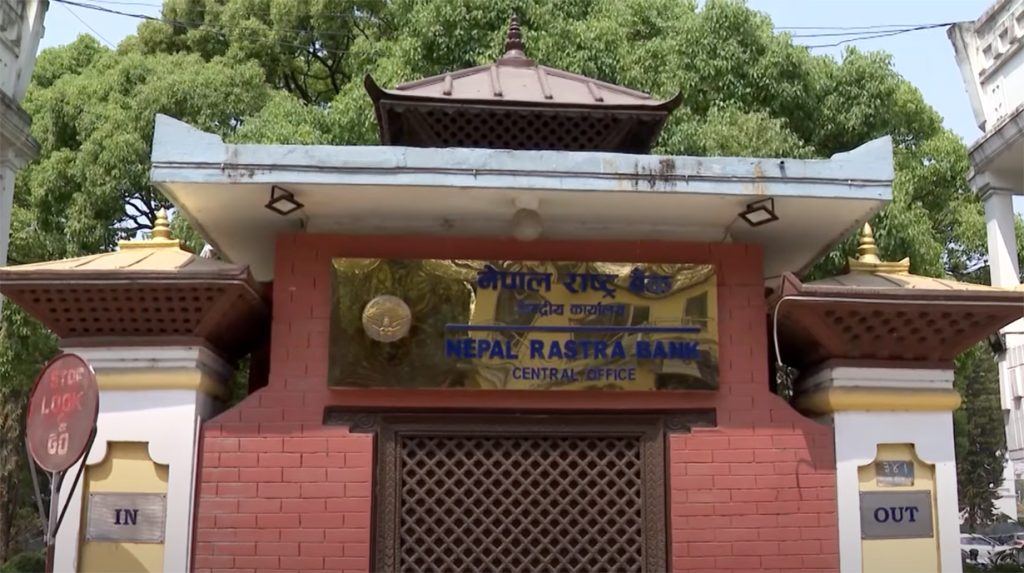
Kathmandu, August 24
Nepal Rastra Bank will be required to issue its monetary policy on the first day of every fiscal year under a proposed amendment to the Nepal Rastra Bank Act.
The amendment bill currently under clause-by-clause discussion at the House of Representatives’ Finance Committee proposes that the central bank release its monetary policy every year on Shrawan 1, the first day of Nepal’s fiscal year.
The Finance Committee decided to include the provision during its meeting on Monday, committee chair Dr Krishna Hari Budhathoki said.
The committee also discussed and decided on proposed amendments to several provisions, including Sections 25 and 41 of the bill.
The committee also began discussions on provisions concerning the Nepal Rastra Bank’s authority to take general action against banks, including declaring individuals ineligible to hold banking positions.
However, officials from Nepal Rastra Bank suggested that the issue should instead be addressed through amendments to the Banks and Financial Institutions Act.
Officials from the Ministry of Law also said the committee could not discuss or amend provisions for which no amendment had been proposed.
Bankers seek changes to disqualification provision
Chair Budhathoki said the Nepal Bankers’ Association and chief executive officers of various banks had expressed serious concerns about Section 100 of the Nepal Rastra Bank Act.
According to him, bankers have demanded changes to the provision, arguing that it allows individuals to be declared ineligible for banking positions even on the basis of general disciplinary action.
The concern follows a recent Supreme Court ruling that individuals serving as directors of banks and financial institutions can be disqualified from holding their positions if they have faced action from Nepal Rastra Bank.
The ruling has created concerns in the banking sector because even individuals who have received warnings or written cautions from the central bank could be barred from continuing in their positions.
The bankers have therefore requested that the relevant legal provisions be amended.
The Supreme Court had ruled that such individuals could be considered ineligible under Section 18 of the Banks and Financial Institutions Act 2017. The ruling has raised concerns among chief executive officers and directors of banks and financial institutions.