
Kathmandu, December 17
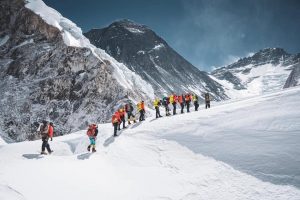
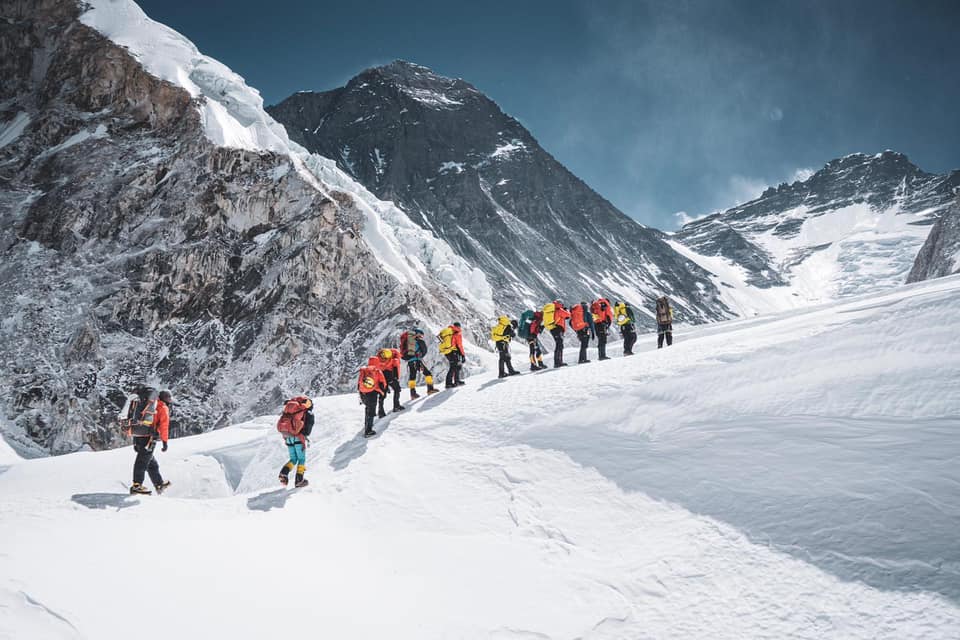
To keep mountains clean, the government will now determine the number of climbers and the climbing period based on each mountain’s capacity or carrying ability.
With the aim of clearing accumulated waste in the mountains and reducing new waste, the Ministry of Culture, Tourism and Civil Aviation has implemented a five-year action plan to keep the mountains clean. Approved through a ministerial-level decision on Mangsir 28, the plan states that climbing permits will no longer be issued without limit.
According to the action plan, legal and policy arrangements will be made to fix climber numbers and timing by considering a mountain’s capacity, the short window of favourable weather for climbing, and the possibility of overcrowding.
Complaints have been raised that excessive permits, including on Mount Everest, have caused management problems. To reduce such risks, the government has introduced a new action plan (2082/86) that includes stricter waste management, changes to the deposit system, greater use of technology, priority to human resource development, and tougher measures on waste disposal.
Commercial mountaineering began after New Zealander Edmund Hillary and Nepal’s Tenzing Norgay Sherpa successfully summited Everest on May 29, 1953. Since then, the number of climbers on Everest and other high Himalayan regions has steadily increased, leading to a rise in both biodegradable and non-biodegradable waste, the ministry noted.
Nepal is home to eight of the world’s 14 mountains higher than 8,000 meters and has 28 mountain ranges, which are the source of more than 6,000 rivers and streams. There are 5,358 lakes and 2,232 glacial lakes across the country, while 1,310 peaks above 6,000 meters lie within Nepal. However, with the growing number of climbers, challenges related to the local environment, biodiversity, pollution, and waste generation have intensified.
The ministry warned that improper management of human waste, dead bodies, cans, bottles, plastic, tents, pouches, and bags used by climbers and trekkers could severely harm the Himalayan environment, making a new action plan necessary.
According to the ministry, if temperatures continue to rise at the current rate, there is a risk that 36 per cent of snow could melt within this century, rising to 64 per cent if carbon emissions remain unchanged. Veteran climbers report that old waste is resurfacing at higher camps on Everest due to melting ice.
Under the five-year plan, climbers will receive mandatory orientation on mountain cleanliness during pre-expedition briefings, and team leaders, members, agencies, and liaison officers will be required to provide written commitments. Equipment used to fix routes to the summit must be brought back after expeditions.
For Everest, a temporary waste collection centre will be established at Camp 2, and climbers will be required to return a minimum specified amount of waste. The plan also includes converting the existing waste deposit into a mountain cleanliness fee, allocating separate budgets for mountain cleaning at all levels of government, annual cleanup campaigns for old waste and human remains, feasibility studies on using ropeways and drones for waste collection, GPS tracking to identify the location of bodies, and the formation of trained ranger teams.
The government also plans to seek long-term funding for mountain conservation, including access to international climate finance and loss-and-damage funds through climate diplomacy. A feasibility study on relocating the Everest Base Camp has also been made public.